Info
Often called the Star-capped Coprinus or the Desert Shaggy Mane, this mushroom looks like a rugged adventurer wearing a tiny, weathered badge of honor. Unlike its moisture-loving cousins that hide in deep forests, this hardy fungus is a specialist of the arid plains and sun-baked roadsides, often surprising hikers by popping up through dry, sandy soil.
🔍 How to Identify
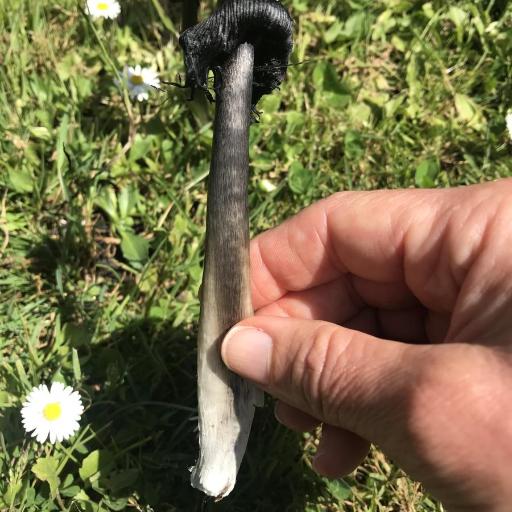
- 🎓 The "Calyptra": Its most famous feature is a thick, star-shaped or cross-shaped patch of tissue (a remnant of its protective veil) that stays firmly attached to the very top of the cap.
- 🕯️ Shape & Texture: It begins as a white, scaly cylinder, looking much like a tall marshmallow, before expanding into a narrow bell shape. The surface is covered in brownish, recurved scales.
- 🖋️ Inky Gills: As the mushroom matures, the white gills underneath turn black and eventually dissolve into a dark, gooey liquid—a process known as deliquescence that helps disperse its spores.
🌲 Habitat & Ecology
- 🏜️ The Desert Survivor: While most mushrooms crave damp moss, Coprinus calyptratus thrives in dry, sandy soils. It is a common sight in the Western United States, often appearing in disturbed ground or along gravel paths.
- ⏳ A Brief Appearance: This mushroom is an "ephemeral" species. It waits for brief desert rains to trigger its growth, blooming and "melting" away into ink within just a few days to maximize its chances in the dry heat.
⚠️ Safety & Toxicity
- 🛑 WARNING: Never consume any wild mushroom unless you are 100% certain of its identity. Many white mushrooms, such as certain Amanita species, are deadly.
- 🍳 Edibility Assessment: While technically considered edible when very young (when the flesh is still pure white and firm), it is not a choice gourmet mushroom. As soon as the gills begin to turn dark or "inky," it becomes unpalatable.
- 🐾 Pet Safety: Mushrooms in the "inky cap" family can cause significant stomach upset or vomiting in dogs if ingested. It is best to keep curious pets away from them.
✨ Fun Fact
The "ink" produced by this mushroom family was historically used as actual writing ink! In some species, the ink is so stable that it was even used to sign important documents to prevent forgery, as the microscopic spores within the ink acted as a unique biological fingerprint.
More Details







