Info
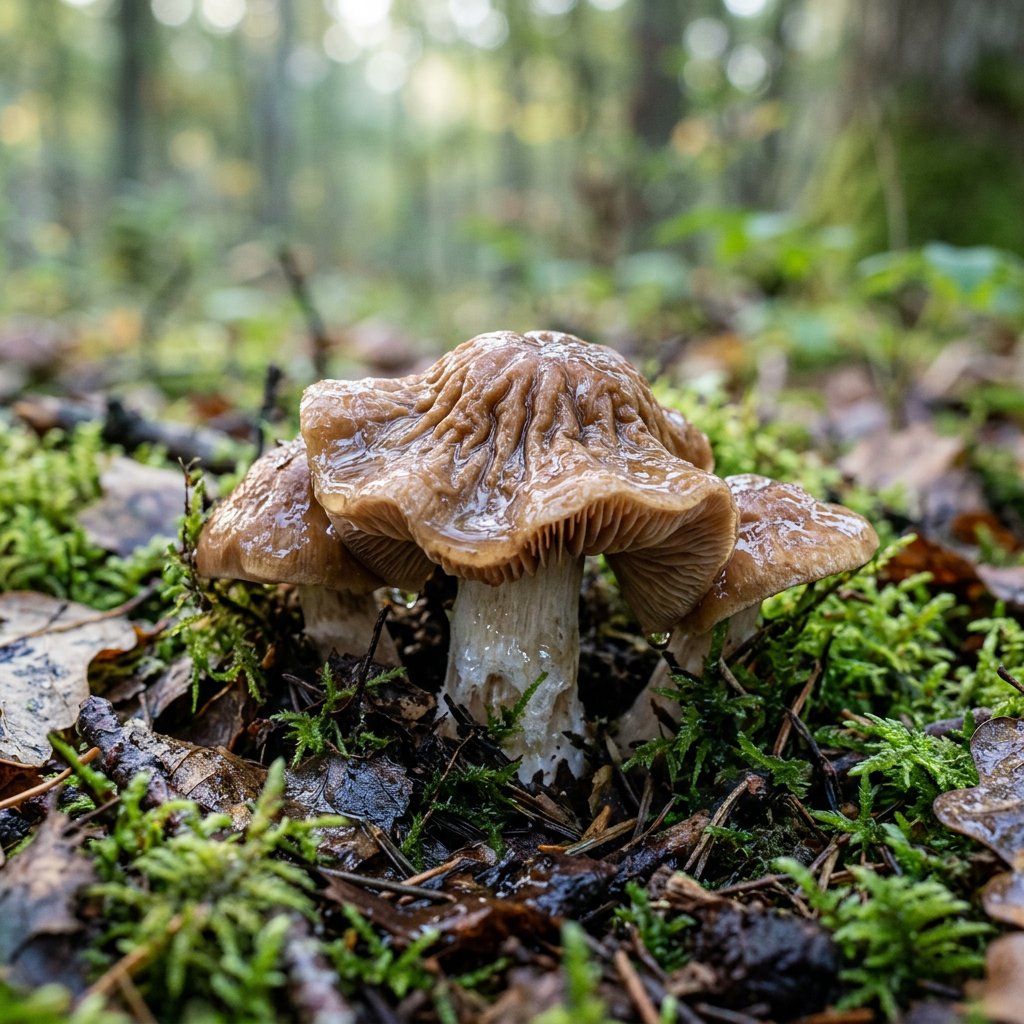
Known as the Honey-coloured Webcap, Cortinarius elatior is a majestic and elegant resident of ancient broadleaf woodlands. It earns its name from its distinctively tall, slender stature and a cap that looks as though it has been dipped in glistening, dark honey. While its shimmering appearance is a highlight for forest photographers, it belongs to a "shady" family of fungi notorious for their hidden dangers.
🔍 How to Identify
- 🍄 The Cap: Usually a rich ochre or honey-brown, the cap is famously "viscid" (extremely slimy) when damp. It often features deep, radial wrinkles or furrows that run from the center toward the edge.
- 🕸️ The Cortina: As a "Webcap," young specimens possess a delicate, cobweb-like veil called a cortina that protects the gills. As the mushroom grows, this veil breaks, often leaving rusty-brown spore streaks on the stem.
- 🎨 The Stem: Notably long and tapered at the base. It often displays a beautiful, faint violet or bluish tint near the top, which contrasts sharply with the brownish cap.
- 🍂 The Gills: Crowded and broad, the gills start as a pale clay color but transform into a deep cinnamon or rusty brown as the spores mature.
🌲 Habitat & Ecology
- 🌳 Tree Symbiosis: This mushroom is mycorrhizal, meaning it lives in a complex, "sugar-for-minerals" partnership with trees. It is most frequently found growing alongside Beech (Fagus) and Oak (Quercus).
- 🌧️ Rain Lovers: You are most likely to spot them in late summer and throughout autumn, particularly after heavy rainfall when their slimy coating becomes most prominent and "glassy."
⚠️ Safety & Toxicity
- 🛑 WARNING: The Cortinarius genus contains some of the most deadly mushrooms in the world (containing orellanine, a toxin that causes permanent kidney failure).
- 🚫 Status: While Cortinarius elatior is not specifically listed as deadly, it is considered inedible and potentially toxic.
- 🤚 Expert Advice: Due to the extreme difficulty in distinguishing "safe" Webcaps from "lethal" ones, the golden rule for foragers is to never consume any mushroom with a cobweb-like veil or rusty-brown spores.
✨ Fun Fact
The "slime" on the cap isn't just for show! This mucilaginous coating helps protect the developing mushroom from drying out and can also act as a deterrent to certain crawling insects that might try to eat the fungal tissue before the spores are ready to fly.
More Details







