Info
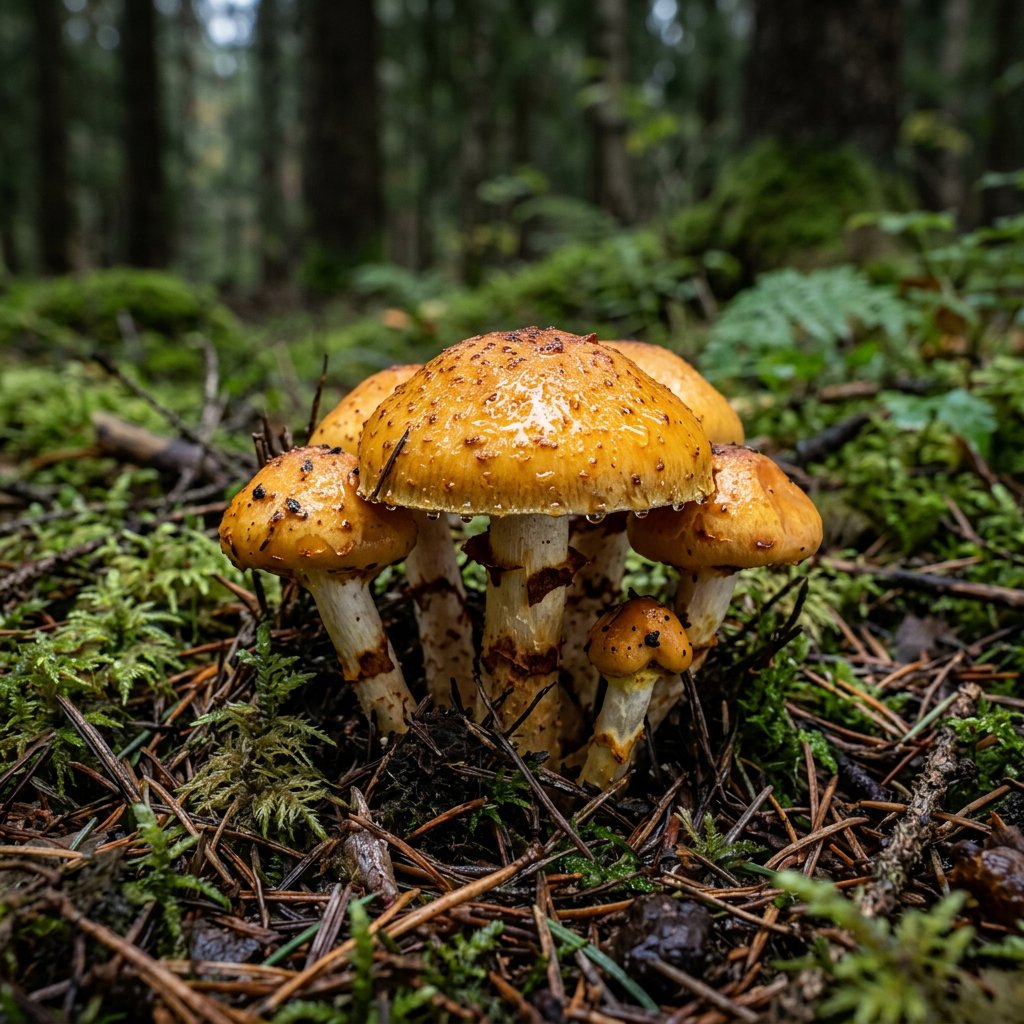
Known as the Tomentose Webcap, Cortinarius limonius is a deceptive beauty of the northern woods. Its name is derived from its vibrant, lemon-to-orange hues, but don't let the cheerful, citrusy color fool you. This member of the vast and complex Cortinarius family carries a dark reputation as one of the most dangerous fungi a hiker might encounter.
🔍 How to Identify
- 🍄 The Cap: Typically 3 to 8 cm wide, the cap is dry and covered in tiny, brownish scales that give it a "tomentose" or fuzzy texture. It ranges from a bright saffron yellow to a deep, rusty orange.
- 🕸️ The Cortina: Like all webcaps, young specimens feature a delicate, cobweb-like veil (the cortina) stretching from the cap edge to the stem. As the mushroom grows, this "web" collapses, often leaving a faint, rusty ring of spores on the stalk.
- 🎨 The Gills: The gills are spaced relatively far apart and start as a tawny yellow before turning a rich, cinnamon brown as the spores mature.
🌲 Habitat & Ecology
- 🌲 Coniferous Companion: This mushroom is a specialist of the evergreen forest. It forms a symbiotic (mycorrhizal) relationship with the roots of trees, particularly Pine and Spruce, helping them absorb nutrients in exchange for sugars.
- 🌿 Acidic Terrain: You are most likely to spot these glowing orange caps in damp, mossy areas with acidic soil. They often hide nestled deep within thick carpets of Sphagnum moss during the late summer and autumn months.
⚠️ Safety & Toxicity
- 🚫 DEADLY POISONOUS: WARNING. Cortinarius limonius contains orellanine, a potent and slow-acting toxin that causes irreversible kidney failure. It is considered one of the most dangerous mushrooms in the world.
- ⏳ Delayed Reaction: The true danger lies in the timing; symptoms of poisoning often do not appear for 2 to 14 days after ingestion. By the time a person feels ill, the kidneys may already be permanently damaged.
- 🐾 Strict Hands-Off: Due to the risk of misidentification with edible "chanterelles" by beginners, this mushroom should never be handled by children or allowed near pets.
✨ Fun Fact
The genus name Cortinarius comes from the Latin word cortina, meaning "curtain." This refers to the fragile, spider-web-like veil that protects the gills of the mushroom while it is young—a feature that looks like a tiny, gossamer stage curtain!
More Details







