Info
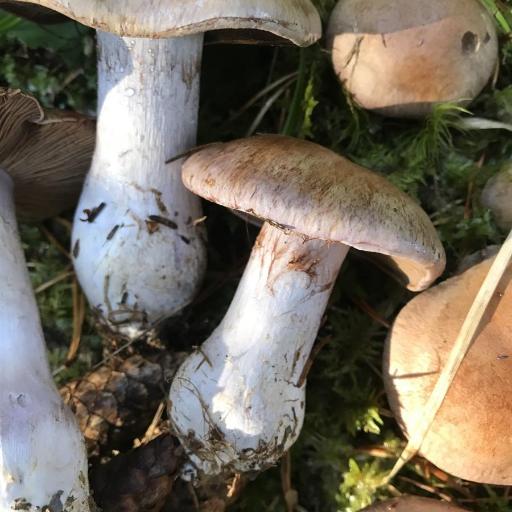
Known to many as the Contrary Webcap, this mushroom is a true chameleon of the forest floor. It begins its life dressed in regal shades of lilac and violet, but as it matures, it slowly "tanned" by the sun into a clay-like brown. The name variecolor literally translates to "of various colors," perfectly capturing its habit of changing its appearance as it ages, often leaving foragers scratching their heads.
🔍 How to Identify
- 🟣 The Cap: Starts as a rounded, deep purple or lilac dome. As it expands, the color fades to a rusty-brown or ochre, often leaving only a faint purple tint along the very edge.
- 🕸️ The Cortina: Look closely under the cap of young specimens; you’ll see delicate, silvery-white threads resembling a spider’s web stretching from the stem to the cap edge.
- 🟤 The Gills: Initially a pale, ghostly violet, the gills eventually turn a rich cinnamon or rusty brown as the mushroom’s spores mature.
- 🥔 The Scent: If you bruise the flesh or sniff the gills, you’ll notice a distinct, earthy odor often compared to raw, dusty potatoes.
🌲 Habitat & Ecology
- 🌲 Tree Partners: This mushroom is a "mycorrhizal" species, meaning it lives in a symbiotic relationship with trees. It is most commonly found nestled in the moss under spruce, pine, or occasionally beech trees.
- 🍂 Cooler Weather: It prefers the damp, crisp air of late summer and autumn. You’ll often find them growing in small, scattered groups rather than solitary individuals.
⚠️ Safety & Toxicity
- 🚫 WARNING: Do not consume. While some historical texts list it as edible, it is now strictly categorized as "suspect" or inedible due to the high risk of misidentification.
- 💀 The Genus Risk: The Cortinarius family contains some of the most lethally toxic mushrooms in the world, such as the Deadly Webcap. Many of these species contain orellanine, a toxin that causes permanent kidney failure.
- 🛑 Lookalikes: Because so many purple-hued mushrooms are dangerously toxic, this species should only be admired and never put on the dinner plate.
✨ Fun Fact
The "web" (cortina) that gives this genus its name isn't just for show! It acts as a protective curtain for the developing gills, shattering into tiny threads as the cap expands, often leaving a "rusty" ring of fallen spores on the stem.
More Details







