Info
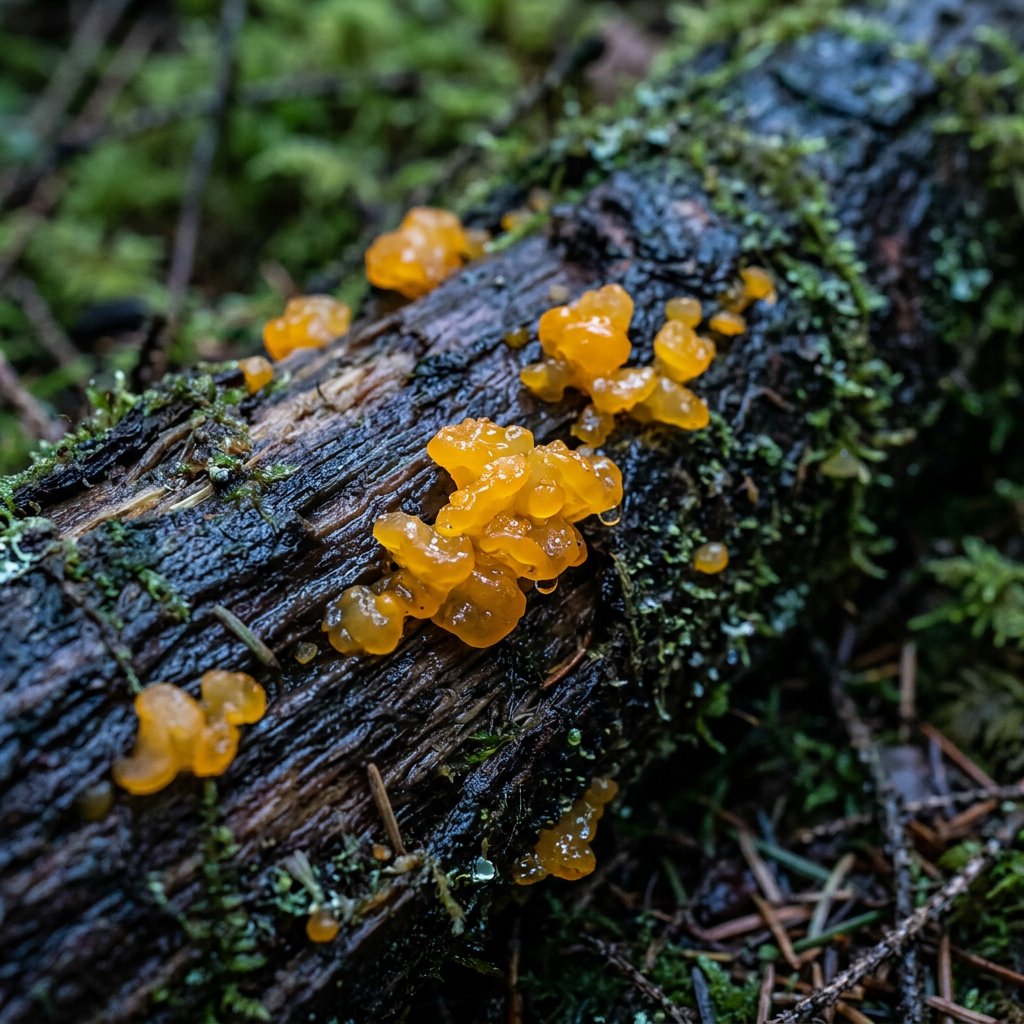
Often called the Common Jellyspot, Dacrymyces stillatus looks like tiny drops of molten amber or bright orange marmalade scattered across old wood. These resilient little fungi are masters of the "reappearing act," shriveling up into nearly invisible crusts during dry spells and swelling back into vibrant, jelly-like beads as soon as it rains. In older folklore, jelly fungi were sometimes thought to be "star jelly," a mysterious substance deposited on Earth during meteor showers.
🔍 How to Identify
- 🟠 Body Shape: They appear as small, rounded, or slightly brain-like "blobs" (pustules), usually measuring only 1–4mm across.
- 🎨 Color Palette: They are typically a brilliant, translucent orange when young and moist, often fading to a duller yellow or pale orange as they age.
- 💧 Texture: These fungi have a firm, rubbery, or gelatinous feel. Unlike certain slime molds that look similar, they are quite tough and do not "smear" easily when touched.
🌲 Habitat & Ecology
- 🪵 The Wood Specialist: Unlike many mushrooms that grow from the soil, these specialists thrive on dead, barkless wood. You will frequently find them colonizing "worked" timber, such as garden fences, picnic tables, and old wooden railings.
- 🌧️ Year-Round Presence: They are incredibly hardy and can be found in any season. Even in the dead of winter, a mild rainy day can cause these bright spots of color to "rehydrate" and become visible on damp logs.
⚠️ Safety & Toxicity
- 🛑 WARNING: Strictly for observation. Never consume any wild mushroom unless it has been identified in person by a professional mycologist.
- 🚫 Edibility: While the Common Jellyspot is not known to be toxic, it is considered "inedible." Due to its tiny size, lack of flavor, and rubbery consistency, it has no culinary value.
- 🐾 Home Safety: It is generally not considered a threat to pets or children, but its presence indicates that the wood it is growing on is decaying, which could potentially house other more harmful fungal species.
✨ Fun Fact
- 🧬 Double Life: This fungus is a biological overachiever. It can produce two different types of spores: one type is produced asexually for rapid "cloning" and spreading, while the other is produced sexually to ensure genetic diversity!
More Details







