Info
Known as the Common Stippleback or Leather Lichen, this fascinating organism is a master of disguise. While it belongs to the fungal kingdom, it lives a dual life as a lichen, partnering with algae to survive on sun-drenched, spray-misted rocks. It is often called the "chameleon of the cliffs" because of its dramatic color transformation when it encounters water.
🔍 How to Identify
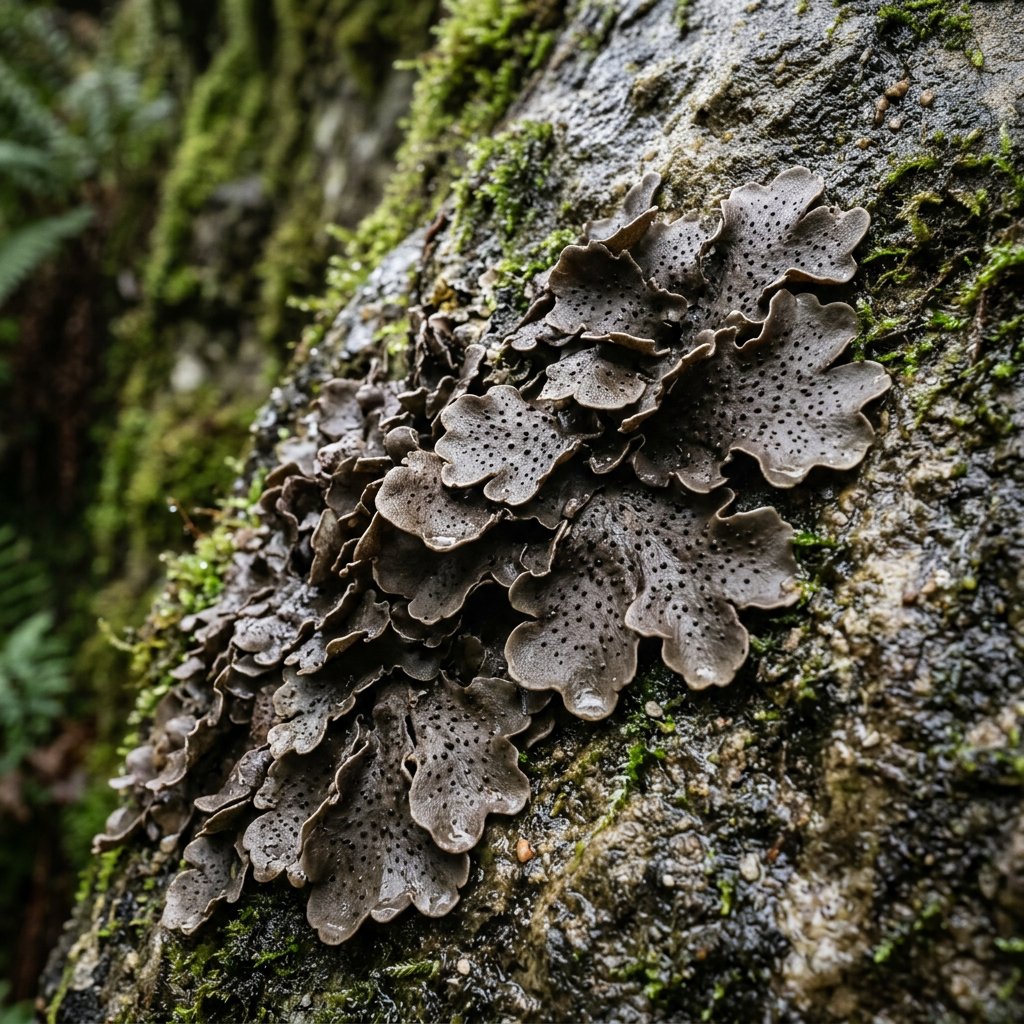
- 🦎 The Thallus: The main body consists of leathery, leaf-like lobes that are usually circular or ear-shaped. It is "umbilicate," meaning it is attached to the rock at a single central point, much like a belly button.
- 🕳️ The "Stipples": Look closely at the surface to find hundreds of tiny, embedded black dots. These are perithecia—the fruiting bodies of the fungus that give it a "peppered" or "stippled" appearance.
- 🎨 Color Change: When dry, the lichen is a somber, chalky gray or brownish-tan. As soon as it rains or is splashed by a stream, it instantly turns a brilliant, deep grass-green.
🌲 Habitat & Ecology
- 🌊 Water Lovers: You will almost always find the Common Stippleback on limestone or other alkaline rocks near water. It thrives in seepage areas, waterfalls, and the "splash zones" of lakes.
- 🤝 The Perfect Partnership: This isn't just a fungus; it’s a symbiotic team. The fungus provides a tough, protective leathery home, while the internal algae manufacture food through photosynthesis, allowing it to grow on bare stone where other plants would wither.
⚠️ Safety & Toxicity
- 🟢 Status: Generally considered non-toxic and safe to touch.
- 🤚 Precaution: While it has no known dangerous toxins, it is not considered "edible" due to its tough, leathery texture and potential to absorb minerals or pollutants from the rocks it grows on. Always wash your hands after exploring wild specimens.
✨ Fun Fact
The "stipples" on the surface of the lichen act like tiny cannons. When the lichen becomes saturated with water, the pressure builds up inside those black dots until they literally shoot their spores out into the air to find new rocks to call home!
More Details







