Info
Often called the Beautiful Climacodon, this mushroom is a true showstopper in the forest. Its scientific name, pulcherrima, literally translates to "most beautiful," a nod to the vibrant, sunset-orange shelves it forms on decaying trees. Looking like a stack of fuzzy, apricot-colored pancakes, it is a striking example of nature’s architectural variety.
🔍 How to Identify
- 🍄 The Cap: Broad, fan-shaped shelves that are noticeably "hairy" or velvety to the touch when young.
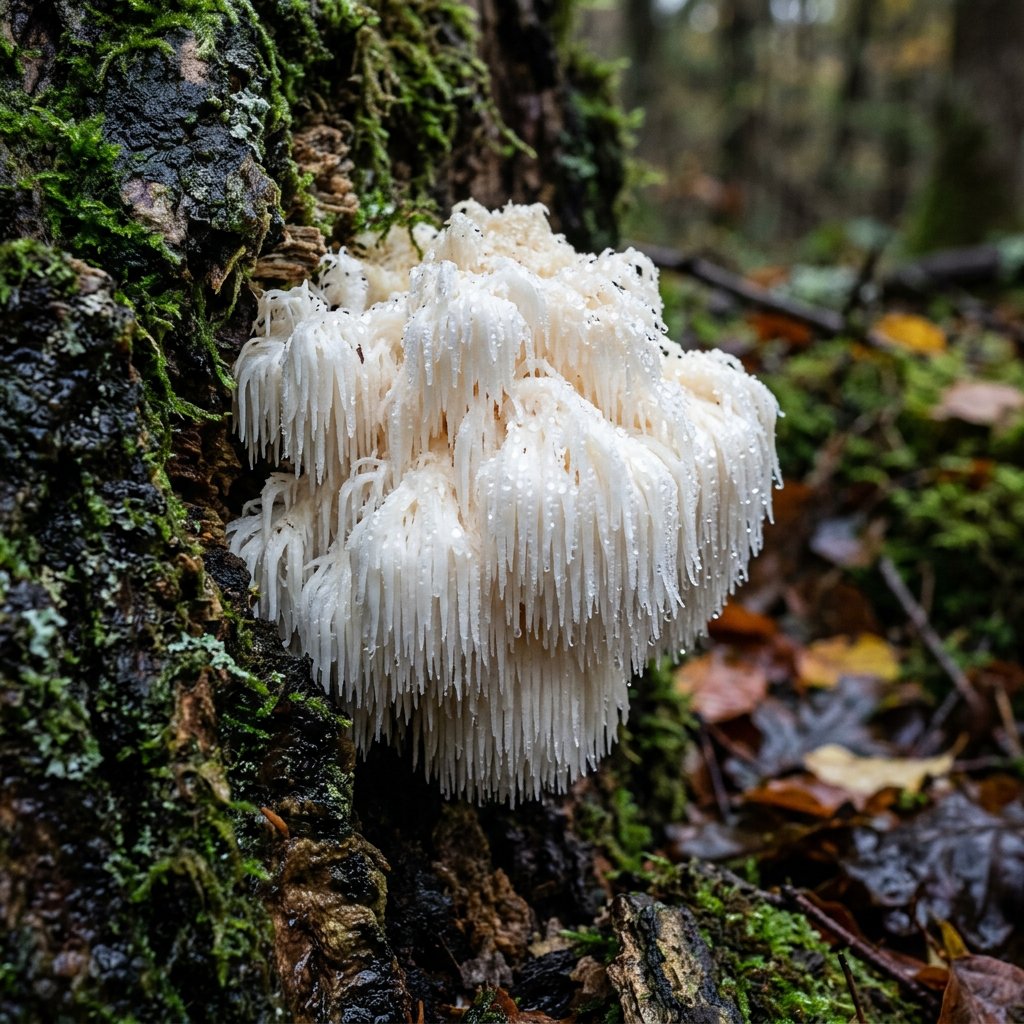
- 🦷 The "Teeth": Look underneath! Instead of gills or pores, it has long, fragile spines (teeth) that hang downward like tiny icicles.
- 🎨 Color Gradient: Starts as a brilliant, saturated orange or peach color, but fades to a duller cream or tan as the mushroom matures and dries.
🌲 Habitat & Ecology
- 🌳 Hardwood Specialist: You will almost always find this species growing on decaying hardwood logs or stumps, particularly Oak and Sweetgum.
- ☀️ Warmth Seeker: It thrives in warm, humid climates and is a common sight in the Southeastern United States and tropical regions during late summer and autumn.
- 🍂 Nature’s Recycler: As a saprobic fungus, it plays a vital role in the ecosystem by breaking down tough wood fibers and returning nutrients to the forest floor.
⚠️ Safety & Toxicity
- 🚫 Status: INEDIBLE.
- 👅 Texture & Taste: While not recorded as a deadly species, it is considered inedible due to its tough, corky, and fibrous texture. As it ages, it becomes very bitter and unpleasant.
- 🐾 General Warning: Never consume wild mushrooms without expert identification. Keep pets away from these fungi, as their tough structure can cause digestive blockages or distress.
✨ Fun Fact
Unlike the common "Hedgehog Mushroom," which also has teeth and is a choice edible, Donkia pulcherrima belongs to a different family entirely. It is a prime example of convergent evolution, where two unrelated fungi evolved "teeth" independently because it is an efficient way to increase the surface area for releasing spores!
More Details