Info
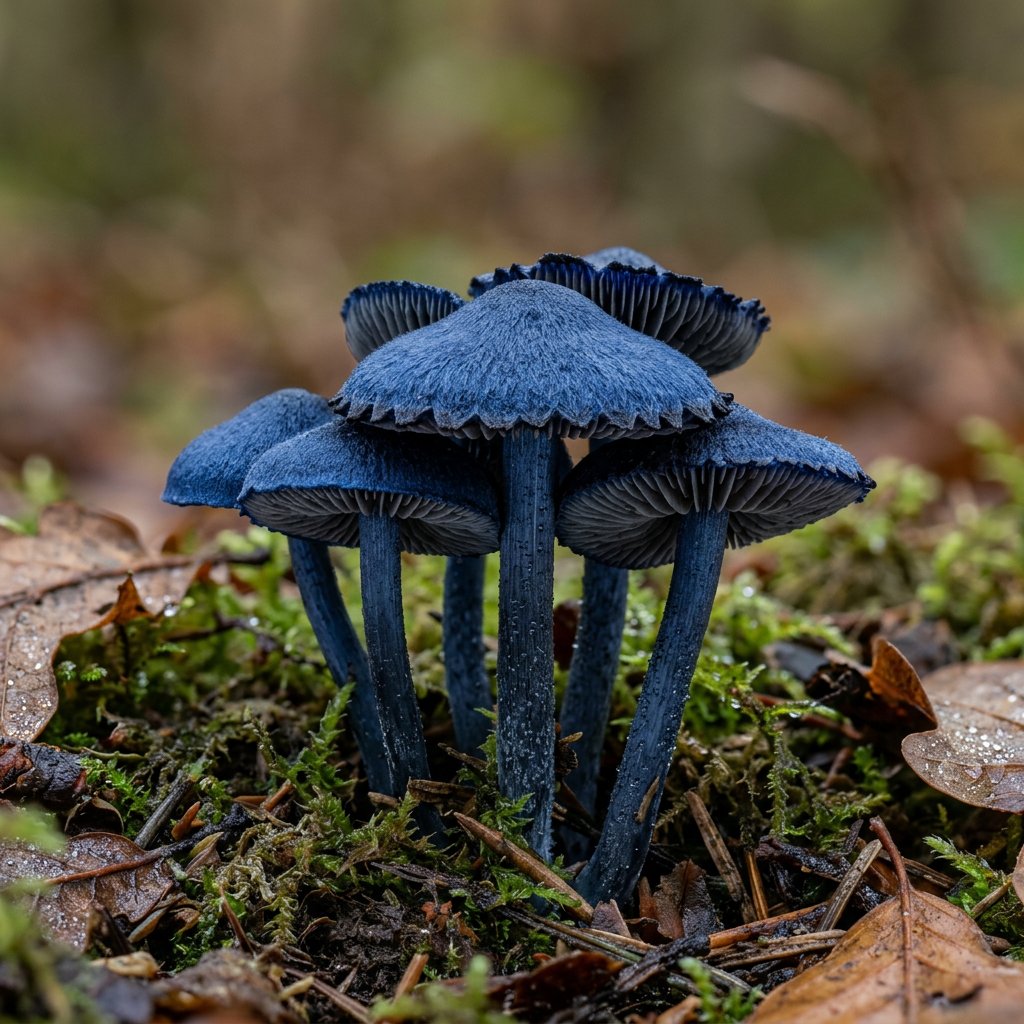
Often called the Blue-edge Pinkgill, this tiny mushroom is a rare indigo jewel hidden in mossy meadows. Unlike many duller fungi, it sports a striking midnight-blue coat that makes it a favorite among nature photographers. Its name "serrulatum" refers to its most unique secret—gill edges that look like they were finely cut by a tiny, dark-toothed saw.
🔍 How to Identify
- 🔵 The Cap: Deep indigo to blackish-blue, often with a small dip in the center. The surface has a matte, slightly velvety or scaly texture that doesn't get slimy when wet.
- 🪚 The Gills: This is the giveaway! The gill edges are finely jagged (serrated) and stained a dark blue-black. This creates a sharp contrast against the gill "faces," which turn from pale bluish-white to a dirty pink as the spores mature.
- 🧵 The Stem: A slender, brittle stalk that matches the cap's dark blue color. It is usually smooth but may have tiny dark scales near the top and white fuzz at the very base.
🌲 Habitat & Ecology
- 🌿 The Neighborhood: You’ll typically find these beauties in "unimproved" grasslands—ancient meadows that haven't been treated with artificial fertilizers. They also thrive on mossy banks and at the edges of deciduous forests.
- 🍄 Ecological Role: While many mushrooms form partnerships with trees, Entoloma species like this one are often "saprobic," meaning they play a vital role in breaking down organic matter in the soil to keep the ecosystem healthy.
⚠️ Safety & Toxicity
- 🚫 STATUS: WARNING! Strictly inedible. While it is not as famously lethal as some of its relatives, the Blue-edge Pinkgill is considered toxic and should never be consumed.
- 🤢 The Risk: Most members of the Entoloma genus cause "gastrointestinal syndrome," leading to severe stomach cramps, vomiting, and dehydration. There is no known culinary use for this species, and it is best admired through a camera lens.
✨ Fun Fact
The "Pinkgill" family gets its name from its spore print. Even though this mushroom starts out looking completely blue, its spores are salmon-pink! As the mushroom matures, the pink spores cover the blue gills, creating a beautiful, dusty rose color that contrasts sharply with the dark, serrated edges.
More Details







