Info
Often referred to as the "Fly Destroyer," Entomophthora muscae is the stuff of insect nightmares. Rather than growing in the soil like a typical mushroom, this pathogenic fungus acts as a puppeteer, turning common houseflies into "zombies." It is a fascinating example of nature’s biological controls, often found right on your windowsill or in your garden shed.
🔍 How to Identify
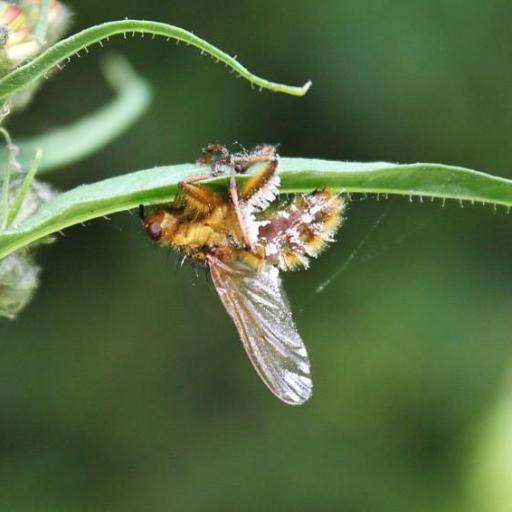
- 🧟 The Death Pose: Look for dead flies stuck to windows or leaves with their wings spread wide and their legs stiffly extended. This "summit" position is a hallmark of the infection.
- ⚪ White Abdominal Bands: As the fungus matures, it erupts through the fly's body segments, appearing as fuzzy, white-to-cream colored stripes across the fly’s abdomen.
- 💨 The Spore Halo: You will often see a fine, white "dusting" or halo on the surface immediately surrounding the dead fly. These are the primary spores (conidia) that have been forcibly launched from the fly’s body to catch the next victim.
🌲 Habitat & Ecology
- 🏠 Domestic Settings: This fungus is most frequently encountered indoors on windowsills or in barns and stables where houseflies congregate. Sunlight helps the fungus time its spore release for maximum impact.
- 🕸️ Nature's Population Control: By targeting common flies (Musca domestica), this fungus plays a vital role in keeping fly populations from exploding. It is a natural pesticide that operates silently in the background of our daily lives.
⚠️ Safety & Toxicity
- ✅ Status: Harmless to Humans and Pets.
- 🛡️ Details: While the "zombie" aspect sounds frightening, Entomophthora muscae is host-specific. It has evolved specifically to infect flies and cannot survive or cause illness in mammals, birds, or even most other types of insects. You can safely clean up infected flies with a tissue.
✨ Fun Fact
This fungus is a master of mind control! Before the fly dies, the fungus invades its brain and forces it to climb to a high point (a behavior called "summiting"). By dying in an elevated, breezy spot, the fly ensures that the fungus can catapult its spores over a much wider area, increasing the chances of infecting the next passing fly.
More Details







