Info
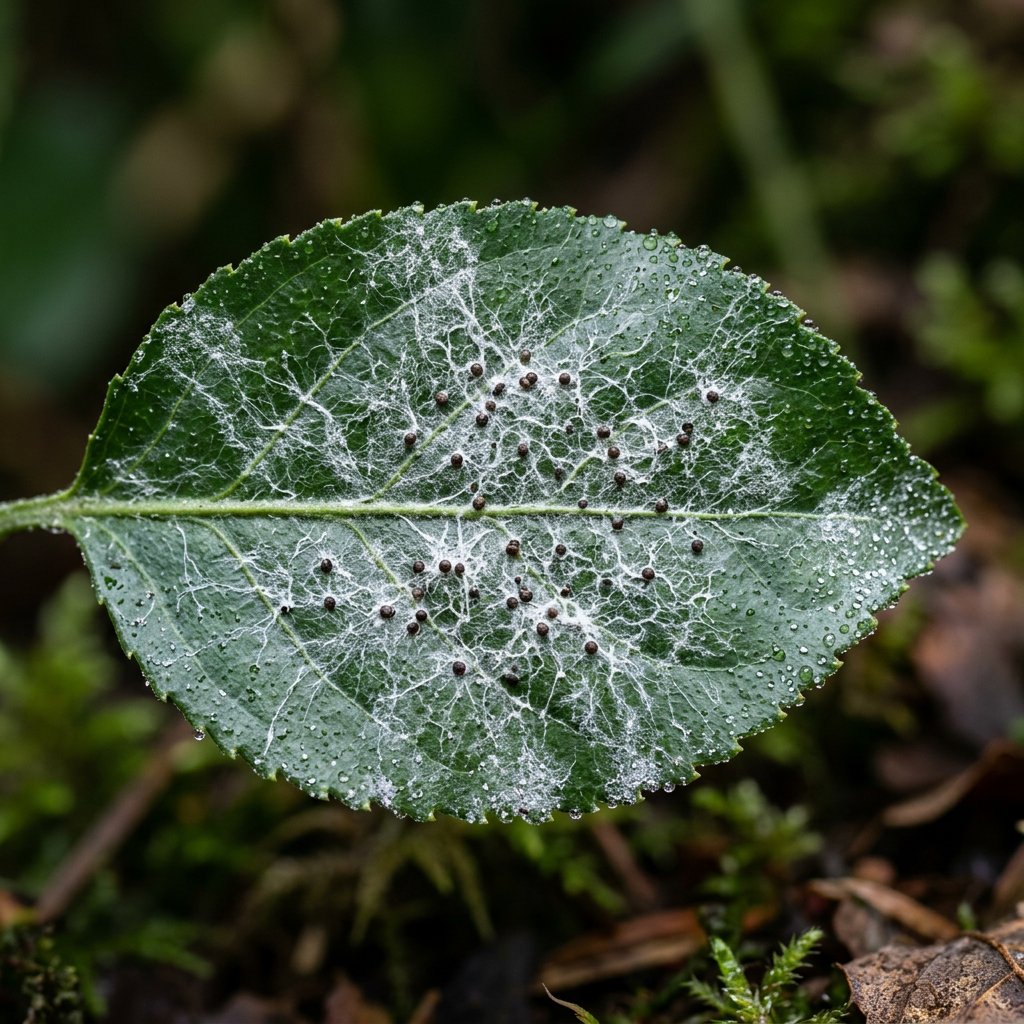
Often called the "White Ghost of the Spindle," Erysiphe euonymicola is a species of powdery mildew that acts like a specialized parasite. Rather than popping up from the soil like a typical mushroom, this fungus covers the vibrant green leaves of Euonymus shrubs in a ghostly, flour-like dust. It is a master of stealth, living entirely on the surface of the leaf while secretly siphoning off the plant's energy.
🔍 How to Identify
- ☁️ Powdery Coating: Look for white to light-grey patches that look like spilled talcum powder or flour on the upper surface of the leaves.
- 🍂 Leaf Distortion: Infected leaves may curl, twist, or turn yellow prematurely as the fungus disrupts the plant's ability to photosynthesize.
- 🌑 Tiny Black Orbs: Late in the season, you might see microscopic black dots (cleistothecia) embedded in the white fuzz; these are the fungus's "survival pods" for winter.
🌲 Habitat & Ecology
- 🌿 Host Specificity: This fungus is an "obligate parasite," meaning it cannot survive without a living host. It specifically targets Euonymus species, such as the Burning Bush or the Japanese Spindle.
- 🌬️ Weather Preferences: Unlike many fungi that love rain, this mildew thrives in high humidity but dry leaf surfaces. It spreads rapidly through wind-blown spores during warm days followed by cool, damp nights.
⚠️ Safety & Toxicity
- [Status]: NON-TOXIC BUT PATHOGENIC.
- 🤚 For Humans: It is not known to be toxic to humans or pets if touched. However, those with mold allergies or asthma should avoid inhaling the dust-like spores when pruning infected plants.
- 🪴 For Gardens: While it won't kill a mature shrub overnight, a heavy infection weakens the plant, making it more susceptible to frost damage and pests.
✨ Fun Fact
This fungus uses "vampire straws" called haustoria. It doesn't actually enter the leaf cells; instead, it sits on the surface and sends these tiny, specialized tubes into the plant's skin to suck out nutrients without killing the cell immediately!
More Details







