Info
Known as the Tulip Tree Powdery Mildew, this fungus is a seasonal visitor that makes the majestic Tulip Tree look as if it has been dusted with a fine layer of confectioner's sugar. While it might look alarming to gardeners, it is a fascinating example of a specialist parasite that has evolved to live almost exclusively on one specific host. It doesn't sprout from the ground like a typical mushroom, but instead "blooms" across the foliage.
🔍 How to Identify
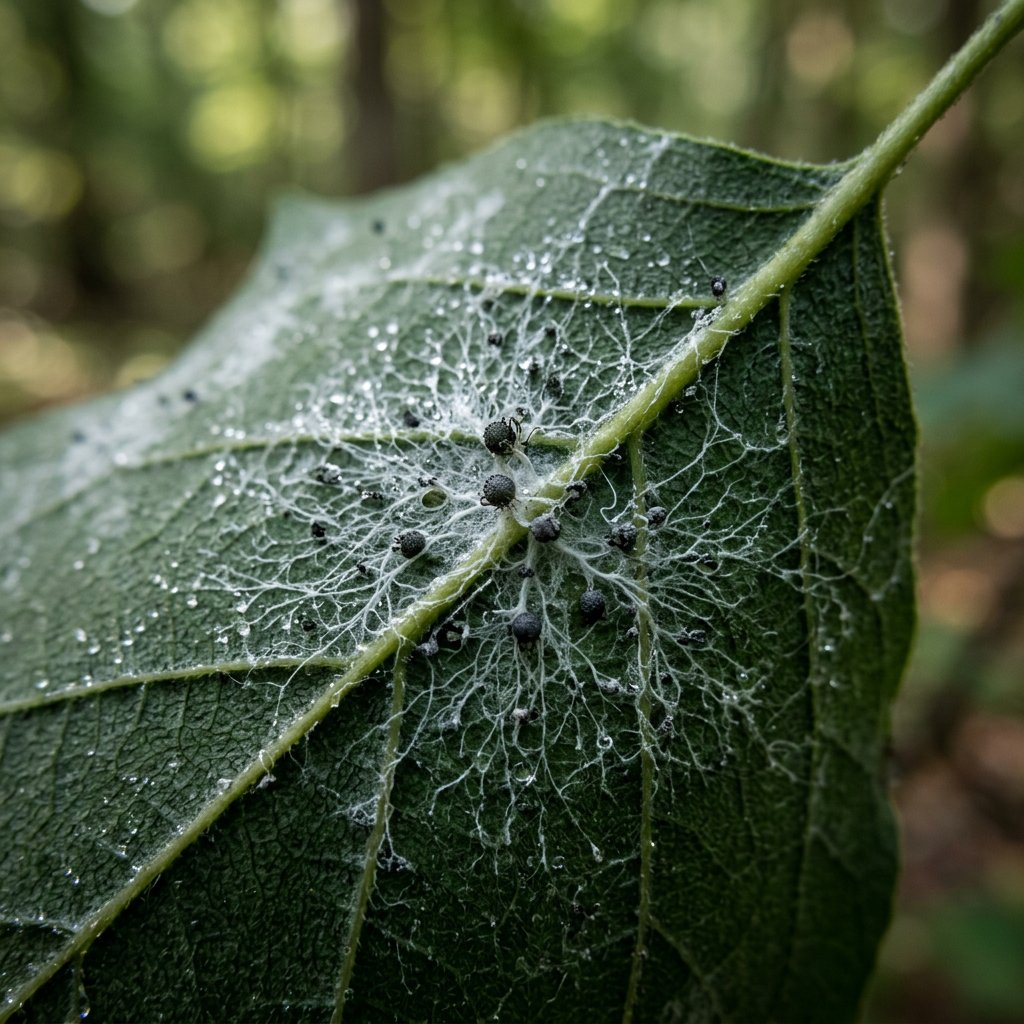
- 👻 The "Frost" Effect: It appears as white, fuzzy, or powdery circular patches on the upper surface of leaves, often spreading until the entire leaf looks pale and ghostly.
- 🌳 Host Specificity: You will almost exclusively find this fungus on the Liriodendron tulipifera (Tulip Poplar or Tulip Tree). Its presence is a surefire way to confirm the tree's identity!
- ⚫ Microscopic "Pearls": In late summer, look closely for tiny, pinhead-sized yellow-to-black dots (chasmothecia) nestled in the white fluff. These are the hardy structures that protect the fungus during winter.
🌲 Habitat & Ecology
- 🌤️ Climate Preference: This fungus loves "Goldilocks" weather—warm, humid days followed by cool nights. It actually dislikes heavy rain, which can wash its spores away; it prefers dry leaf surfaces with high atmospheric moisture.
- 🍽️ The Stealthy Parasite: Unlike mushrooms that break down dead wood, Erysiphe liriodendri is an obligate parasite. It uses tiny "straws" called haustoria to reach into the leaf cells and sip nutrients without immediately killing the leaf.
- 💨 Airborne Travelers: It spreads via microscopic spores that catch even the slightest breeze, allowing it to "jump" from one tree to the next throughout the growing season.
⚠️ Safety & Toxicity
- 🛑 WARNING: This is a microscopic fungus and is not edible. It is not a culinary mushroom and should never be consumed.
- 🐾 Pet & Human Safety: It is generally harmless to humans and pets. However, if you have a heavy infestation, avoid shaking the branches, as inhaling a large concentration of any fungal spores can irritate the respiratory system or trigger allergies.
- 🌳 Tree Health: While it looks dramatic, it rarely kills a mature tree. It is mostly a cosmetic issue, though it can weaken young saplings by reducing their ability to photosynthesize.
✨ Fun Fact
The survival structures (chasmothecia) of this fungus are equipped with tiny, ornate "arms" called appendages that act like Velcro, helping the fungus latch onto the bark of the tree so it doesn't fall off during harsh winter winds!
More Details