Info
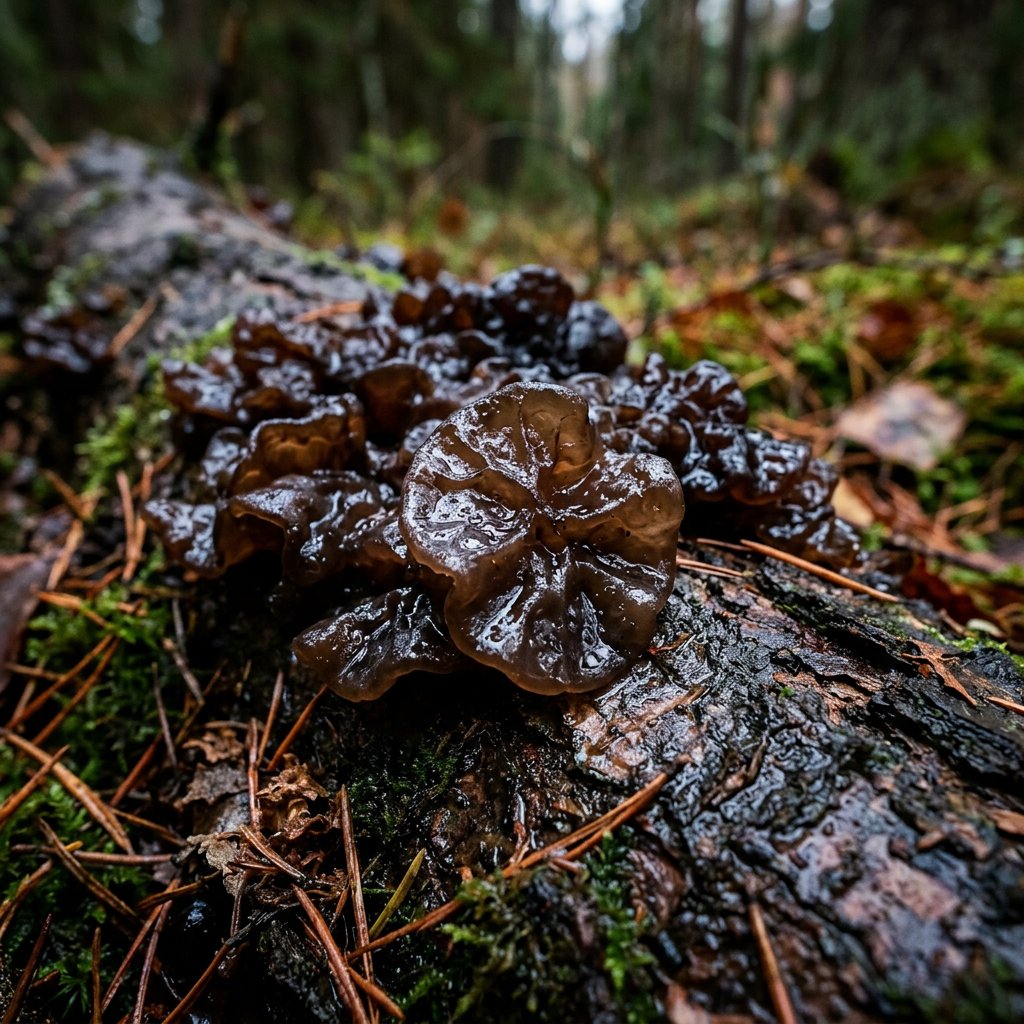
Often called the "Tar-spot," Exidia pithya looks like someone spilled a bottle of shimmering black ink across a fallen log. These gelatinous "blobs" are masters of disguise, shrinking into a thin, brittle black crust during dry weather only to swell up into translucent cushions after a fresh rain. In various northern cultures, jelly fungi like these were once whispered to be "star jelly," mysterious remnants of fallen meteors found in the woods.
🔍 How to Identify
- 💧 Texture: Gelatinous, rubbery, and soft when moist. When the forest dries out, it dehydrates into a hard, paper-thin black film that is easily overlooked.
- 🖤 Color: A deep charcoal black to brownish-black, often possessing a slight oily or vitreous sheen when saturated with water.
- 🔘 Surface: The fruit body is usually flattened and spreading, featuring tiny, pimple-like bumps (papillae) that are visible upon close inspection with a hand lens.
🌲 Habitat & Ecology
- 🌲 The Conifer Specialist: While many jelly fungi prefer hardwoods, Exidia pithya is a specialist. You will almost exclusively find it on the dead, barkless wood of conifers, particularly Spruce (Picea) and occasionally Pine or Fir.
- ♻️ Forest Recycler: It lives as a saprobe, meaning it feeds on dead organic matter. It plays a vital role in the ecosystem by breaking down tough lignin in fallen branches, eventually turning wood back into nutrient-rich soil.
⚠️ Safety & Toxicity
- ❗ WARNING: Never consume any wild mushroom unless you are 100% certain of its identification through an expert.
- 🚫 Status: Exidia pithya is generally considered inedible. While it is not known to contain deadly toxins like some of its fungal neighbors, it has no culinary value, a bland "muddy" taste, and a texture that most find unappealing.
- 🐾 Pets & Kids: It is not considered a high-risk species for accidental poisoning, but its presence on rotting wood means it could be associated with bacteria or other molds that could cause digestive upset if swallowed.
✨ Fun Fact
These mushrooms are essentially "resurrectionists." They can survive multiple cycles of completely drying out and rehydrating. Even after weeks of being a dry, crusty smear on a branch, they can begin releasing spores within just a few hours of the first raindrops hitting them!
More Details







