Info
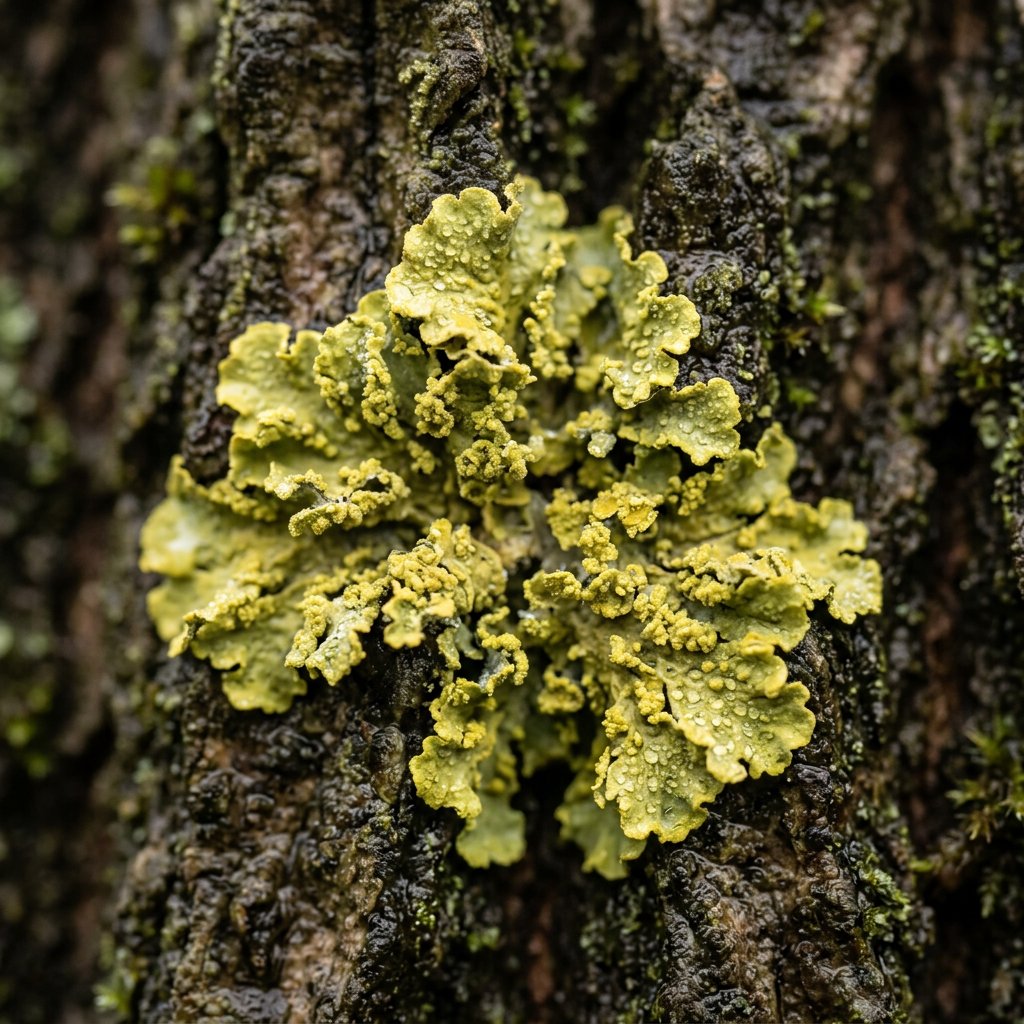
Known as the Powdery Greenshield, Flavoparmelia soredians is a fascinating "living wallpaper" often found decorating the bark of old trees. While frequently called a mushroom or moss by casual observers, it is actually a lichen—a complex partnership between a fungus and an alga working together to survive in harsh environments.
🔍 How to Identify
- 🟢 The Body (Thallus): It forms leaf-like, circular patches that are a distinct "pistachio" or pale yellow-green color when dry, turning a deeper green when wet.
- 🍃 The Lobes: The edges are ruffled and rounded, looking somewhat like tiny, flattened lettuce leaves pressed tightly against the bark.
- 🌫️ The Texture: The center of the lichen is usually covered in a fine, granular powder called soredia. These are tiny packages of fungus and algae that break off to start new colonies elsewhere.
🌲 Habitat & Ecology
- 🌳 Preferred Hosts: You will most commonly find it on the rough bark of deciduous trees, particularly Oak and fruit trees, in sunny, open woodlands or even suburban gardens.
- 🌬️ Air Quality Indicator: Like many lichens, the Powdery Greenshield is sensitive to its environment. Its presence usually indicates relatively clean air, as it struggles to survive in areas with heavy sulfur dioxide pollution.
- ☀️ Light Lover: Unlike many forest fungi that prefer deep shade, this species thrives in bright, filtered sunlight where its internal algae can photosynthesize efficiently.
⚠️ Safety & Toxicity
- 🚫 Status: NOT EDIBLE. While lichens are not typically "deadly" in the way some mushrooms are, they contain complex acids that are indigestible and can cause severe stomach upset.
- 🧤 Skin Sensitivity: Some individuals may experience mild skin irritation (contact dermatitis) if handling large amounts of lichen frequently, due to the unique "lichen acids" they produce for protection.
✨ Fun Fact
Lichens like the Powdery Greenshield are among the slowest-growing organisms on Earth; a patch the size of your palm could easily be decades old, patiently expanding by only a few millimeters each year!
More Details