Info
Often referred to as the Weaver's Larch Bolete, this mushroom is a specialized forest dweller that shares a deep, symbiotic bond with Larch trees. It is a member of a unique group of "pored" mushrooms that favor the cool, damp climates of northern forests. While it may not have the colorful fame of a garden flower, its deep mahogany tones and delicate veil make it a prized find for those trekking through mossy bogs.
🔍 How to Identify
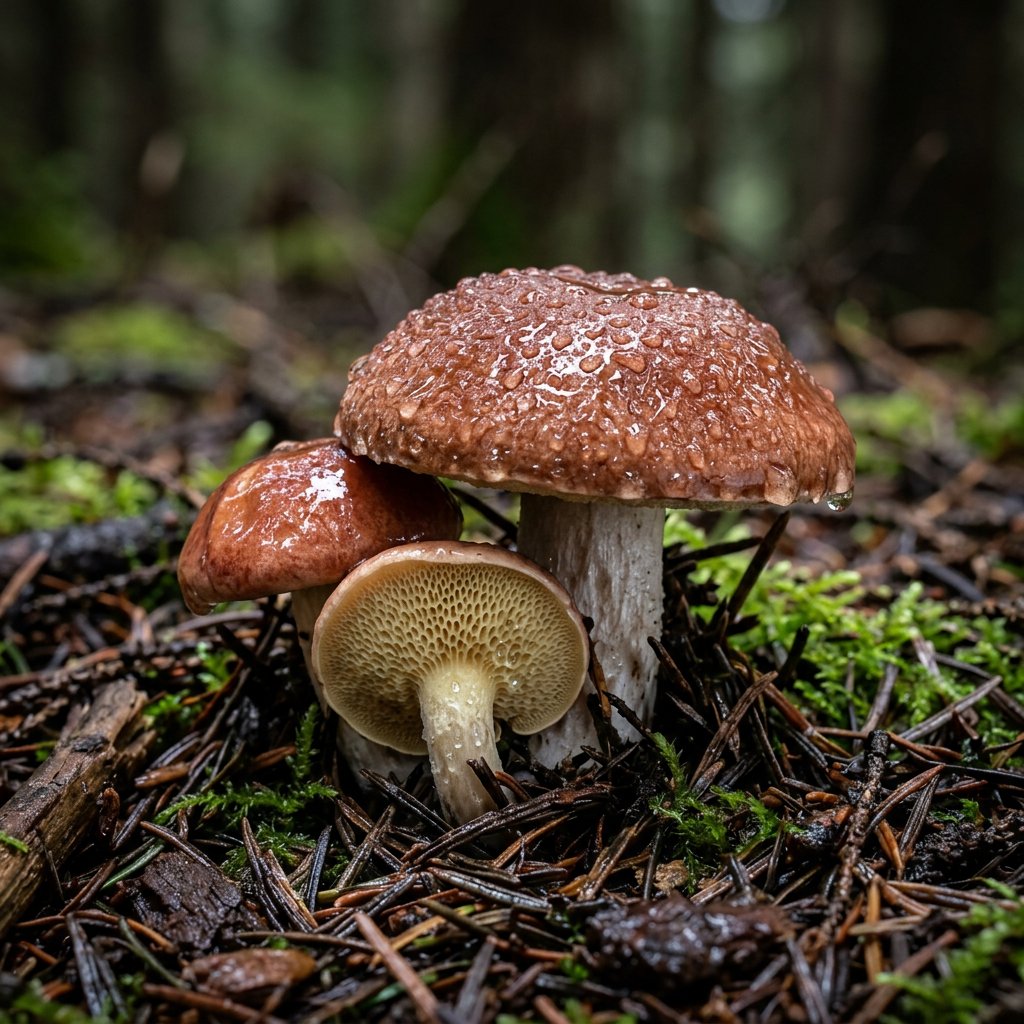
- 🍄 The Cap: Features a rich reddish-brown to dark mahogany surface. It starts out rounded like a button and flattens with age, often becoming slightly sticky or "viscid" when the weather is damp.
- 🕳️ The Pores: Instead of traditional gills, the underside has a spongy layer of tiny tubes. These pores are initially pale yellow or whitish and are often hidden by a thin, cottony white veil when the mushroom is young.
- 💍 The Stem: The stalk is sturdy and typically features a distinct, persistent ring (annulus) left behind by the veil. Below this ring, the stem often mirrors the brownish color of the cap.
🌲 Habitat & Ecology
- 🧪 The Larch Connection: This fungus is "host-specific," meaning it is rarely found far from its partner, the Larch (Tamarack) tree. They share an ectomycorrhizal relationship, where the mushroom provides the tree with minerals in exchange for sugars.
- 💧 Soggy Bottoms: You are most likely to spot this mushroom in late summer or autumn, growing in the acidic, needle-littered soil of peat bogs or swampy coniferous woods where Larch trees thrive.
⚠️ Safety & Toxicity
- 🛑 WARNING: Never consume any wild mushroom unless it has been identified by a professional mycologist. Many Boletes look nearly identical to the untrained eye.
- 🤢 Digestive Upset: While some sources list this species as edible, many people report gastrointestinal distress after eating members of this genus. The slimy skin on the cap is known to have laxative properties and should always be peeled off if being handled for study.
✨ Fun Fact
This species was named in honor of Gertrude Weaver, a dedicated amateur mycologist. Her contributions to the field remind us that nature lovers and hobbyists often play a crucial role in discovering and documenting the world's biodiversity!
More Details







