Info
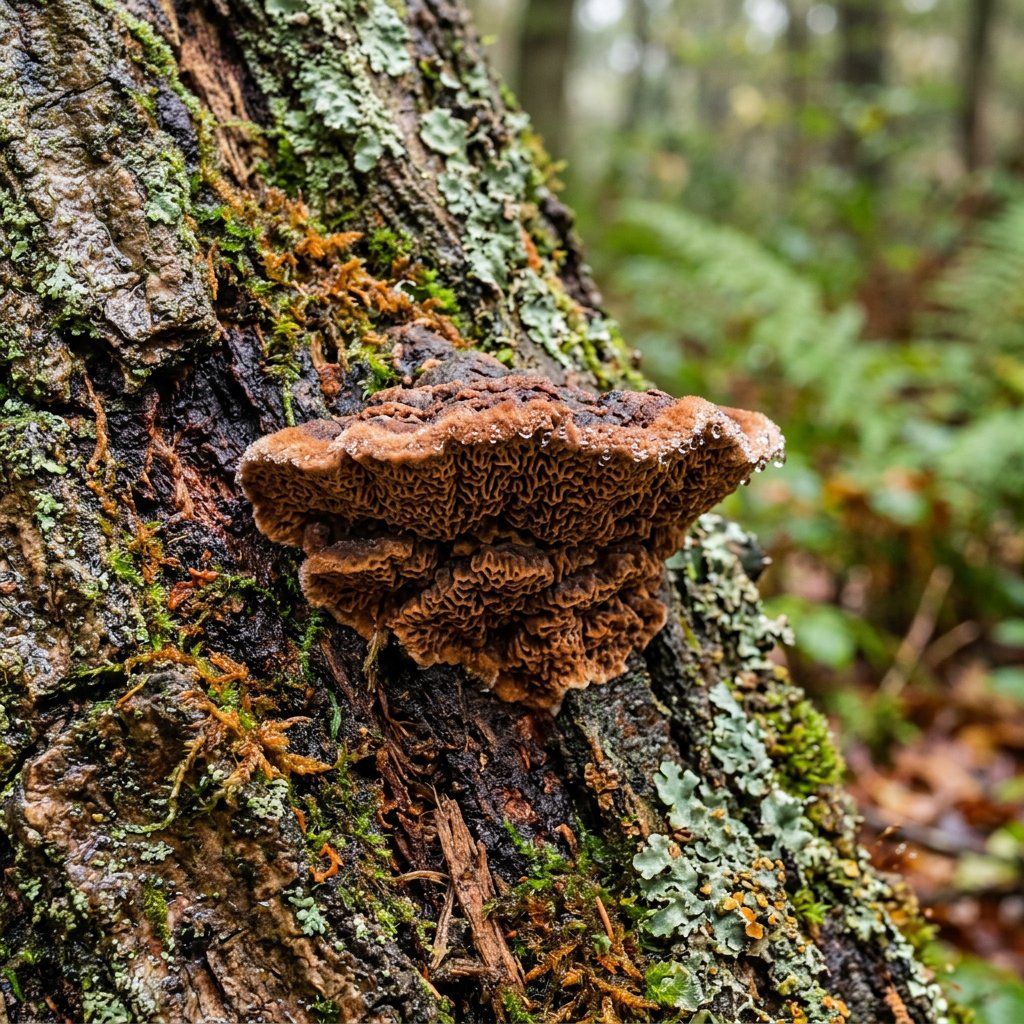
Known as the Rusty Porecrust, this fungus looks less like a traditional mushroom and more like a splash of weathered iron across a fallen branch. It is a master of disguise, often mistaken for a simple stain on the wood until you look closer at its intricate, velvet-like surface. In the secret language of the forest, this fungus acts as a vital recycler, silently turning dead wood back into nutrient-rich soil.
🔍 How to Identify
- 🪵 Growth Habit: This is a "resupinate" fungus, meaning it grows flat against its substrate. It lacks a traditional cap or stem, spreading out like a crusty carpet on the underside of logs.
- 🎨 Rusty Hues: True to its name, it features a rich cinnamon to deep rusty-brown color. The edges are often paler or yellowish when the fungus is young and actively growing.
- 🕳️ Micro-Pores: Instead of gills, the surface is covered in tiny, circular pores (roughly 5–7 per millimeter). To the naked eye, it looks like soft suede, but under a magnifying glass, it reveals a complex honeycomb structure.
🌲 Habitat & Ecology
- 🌳 Hardwood Specialist: You will almost exclusively find the Rusty Porecrust on the dead wood of broadleaf trees, particularly Oak, Beech, and Hazel. It prefers fallen branches that are in contact with the damp forest floor.
- 🍄 The White Rotter: It is a saprobic powerhouse. It breaks down both lignin and cellulose in wood, causing what is known as "white rot," which leaves the remaining timber feeling soft, stringy, and bleached.
⚠️ Safety & Toxicity
- 🚫 Status: NON-EDIBLE.
- 🦷 Details: While the Rusty Porecrust is not considered a "deadly" mushroom, it is entirely inedible. Its texture is tough, corky, and woody, making it impossible to chew or digest.
- 🐾 Pets & Kids: Because it grows flat on wood and doesn't look like "food," it is rarely a target for grazing pets, but it should still be left undisturbed to do its ecological work.
✨ Fun Fact
The specific epithet ferruginosa is derived from the Latin word "ferrugo," which literally translates to "iron rust." If you touch a dry specimen, it can sometimes feel surprisingly warm and fuzzy, earned from the microscopic, hair-like structures called setae that cover its surface!
More Details







