Info
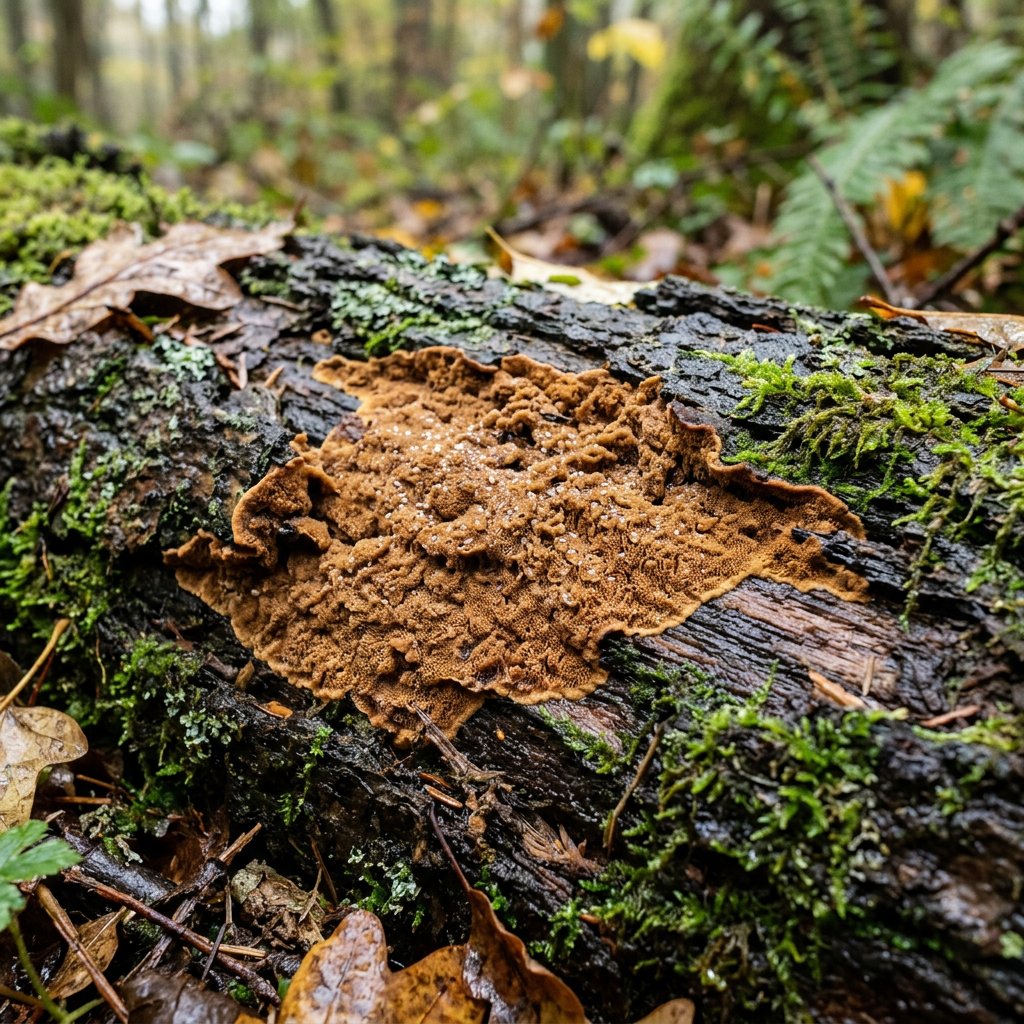
The Fuscopostia fragilis, commonly known as the Staining Cheese Polypore, is a master of transformation. Starting its life as a pristine, snowy-white bracket on fallen logs, it quickly reveals a "sensitive" side—any touch or bump causes the fungus to bruise a deep, rusty reddish-brown. This dramatic color change makes it look as though the mushroom is slowly oxidizing or rusting in the damp forest air.
🔍 How to Identify
- 🍄 The Cap: It typically grows as a soft, fleshy shelf or bracket. The surface is finely hairy or fuzzy when young and starts pure white before developing those characteristic cinnamon-brown stains.
- 🕳️ The Pores: Instead of gills, the underside is covered in tiny, circular pores. These also start white and will bruise brown almost immediately if pressed with a finger.
- 🍂 The Texture: True to its name, the flesh is watery and soft when fresh, but as it ages or dries out, it becomes incredibly brittle and fragile, crumbling easily between your fingers.
🌲 Habitat & Ecology
- 🌲 Conifer Specialist: You will almost exclusively find this mushroom growing on the decaying wood of coniferous trees, particularly pine, spruce, and fir. It plays a vital role in the ecosystem by breaking down dead timber.
- 🪵 Brown Rot Agent: This fungus is a "brown rot" specialist. It breaks down the cellulose in wood but leaves the lignin behind, causing the logs it inhabits to crack into dark, crumbly cubes—a process often called "cubical brown rot."
⚠️ Safety & Toxicity
- 🚫 WARNING: The Staining Cheese Polypore is considered inedible. While it isn't known to be "deadly" in the way some Amanitas are, it has no culinary value and a very unpleasant, bitter taste.
- 🤢 Digestive Risk: Consuming wild polypores can lead to significant gastrointestinal distress. Furthermore, its ability to absorb minerals from its substrate means it may contain concentrated toxins from the wood it grows on. Always admire this one with your eyes, not your stomach.
✨ Fun Fact
The genus name Fuscopostia comes from the Latin word fuscus, meaning "dark" or "dusky." This refers to the mushroom's tendency to turn from a ghostly white to a dark, somber brown as it matures or is handled.
More Details







