Info
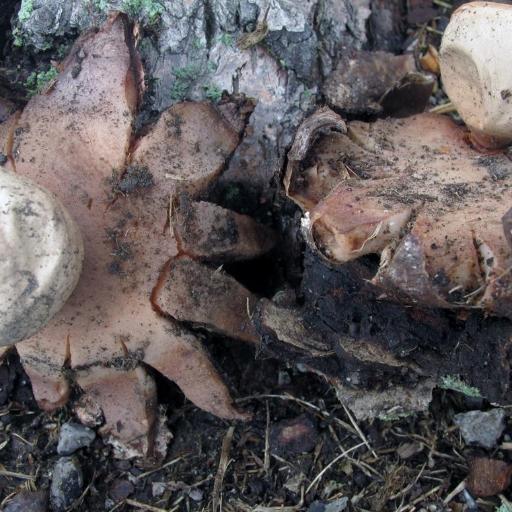
Known as the Rosy Earthstar, this fungus looks like a celestial body that has fallen from the sky and taken root in the forest floor. It begins its life as a buried, onion-shaped bulb before the outer skin splits and peels back into a dramatic star shape, lifting a central spore sac into the air. In many cultures, these "stars of the earth" were once viewed as mystical symbols of the ground's connection to the heavens.
🔍 How to Identify
- 🌟 Star-Shaped Rays: The outer layer (exoperidium) splits into 5 to 9 thick, fleshy "arms" that curl downward to prop the mushroom up.
- 🎨 Rosy Hue: True to its name, the inner surface of the rays often features a distinct pinkish, reddish-buff, or flesh-colored tint, which darkens with age.
- 🎈 Central Spore Sac: A round, papery, stalkless globe sits in the center, featuring a small, fringed hole (ostiole) at the very top.
🌲 Habitat & Ecology
- 🍂 Leaf Litter Explorer: You will most likely find this mushroom tucked away in the rich humus of deciduous or coniferous forests, often hidden under a layer of fallen needles or leaves.
- ♻️ The Great Recycler: As a saprobic fungus, it survives by breaking down dead organic matter, turning forest debris into nutrient-rich soil for the trees around it.
⚠️ Safety & Toxicity
- 🛑 WARNING: The Rosy Earthstar is classified as inedible.
- 👅 Texture & Taste: It is not known to be deadly, but its tough, leathery, and woody consistency makes it completely unpalatable for humans and pets alike.
- 🐾 Pet Safety: While not highly toxic, ingesting tough fungi can cause digestive upset in dogs; it is best to leave this "star" where it lies.
✨ Fun Fact
The Rosy Earthstar acts like a biological bellows! When a raindrop hits the central sac, the pressure forces a tiny puff of spores out of the top hole—a clever "rain-powered" method of reproduction that helps the mushroom spread its offspring across the forest.
More Details







