Info
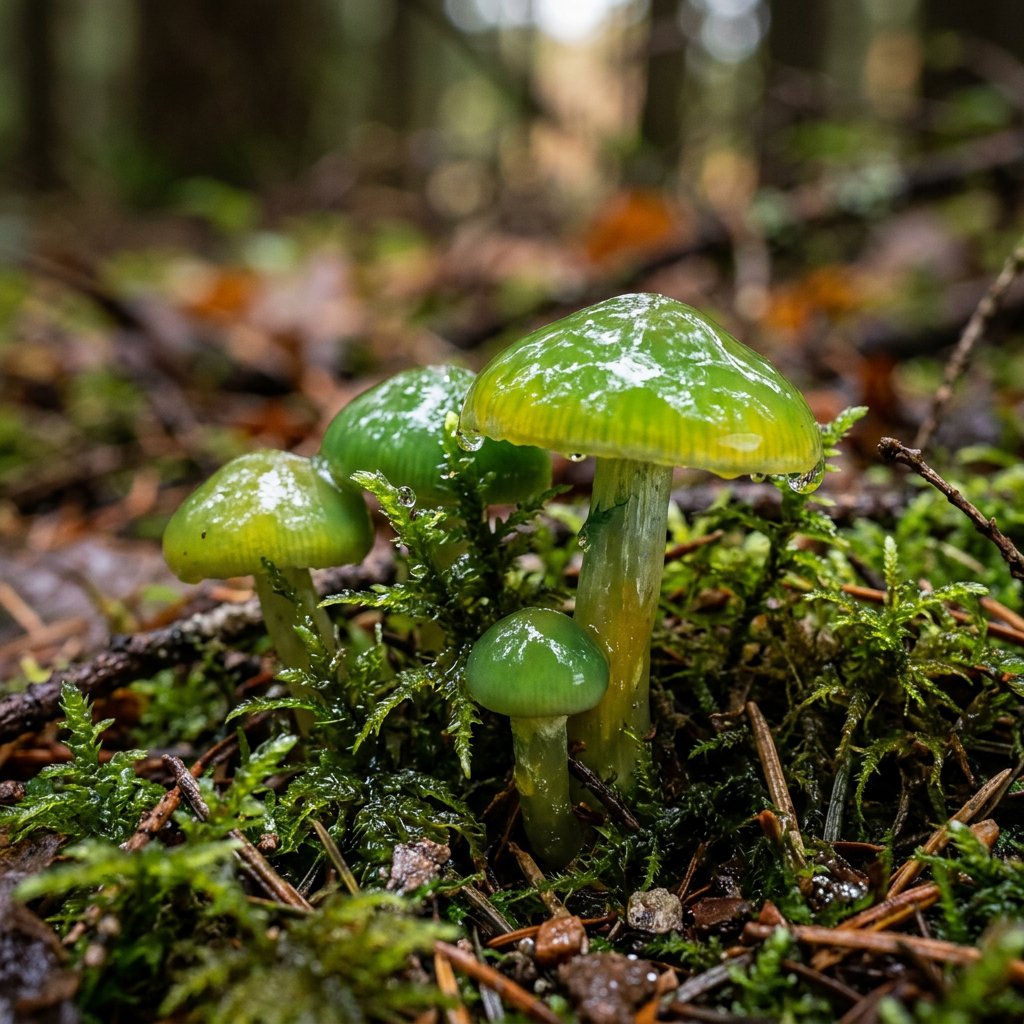
Often called the Parrot Toadstool, this fungus is the literal gemstone of the mushroom world. It is famous for its almost neon, jewel-toned green slime that shifts into vibrant oranges, yellows, and even purples as it matures. Finding one tucked into the grass feels like discovering a piece of tropical candy hidden in a mossy field.
🔍 How to Identify
- 🟢 The "Slime" Layer: Both the cap and the stem are covered in a thick, translucent, jelly-like coating (viscid) that makes the mushroom look perpetually wet and glossy.
- 🎨 Chameleon Colors: It starts as a deep emerald or parrot green. As it ages or dries, it transitions through a spectrum of lemon yellow, orange, and sometimes pinkish-red, often keeping a green streak at the very top of the stem.
- 🍃 The Gills: The gills are thick, widely spaced, and "adnate" (attached squarely to the stem). They often retain a greenish tint even when the cap has turned yellow.
- 🍄 The Stem: The stem is fragile and hollow, usually matching the cap’s color and sharing its signature slippery texture.
🌲 Habitat & Ecology
- 🌿 Grassland Specialist: Unlike many common mushrooms, you won't usually find these in deep, dark forests. They prefer "unimproved" grasslands, ancient pastures, mossy lawns, and old churchyards.
- 🧪 Soil Indicator: They are considered "indicator species." Their presence tells you that the soil is healthy, ancient, and has not been treated with chemical fertilizers for many years.
- 🍂 Seasonal Appearance: They typically emerge in late summer through late autumn, often hiding amongst the moss where their green color provides surprisingly good camouflage.
⚠️ Safety & Toxicity
- 🚨 WARNING: While some older guidebooks list the Parrot Waxcap as edible, it is not recommended for consumption.
- 🤢 Digestive Risk: Its small size and gelatinous, slimy texture make it unappealing, and it has been known to cause mild gastrointestinal upset in some people.
- 🛑 Lookalikes: Because waxcaps come in many brilliant colors, they can easily be confused with other species. Always enjoy this mushroom with your camera, not your plate.
✨ Fun Fact
Because a single cluster of Parrot Waxcaps can contain individual mushrooms at different stages of life, you can often find green, yellow, and orange specimens all growing from the same patch of moss—creating a "rainbow" effect on the ground!
More Details







