Info
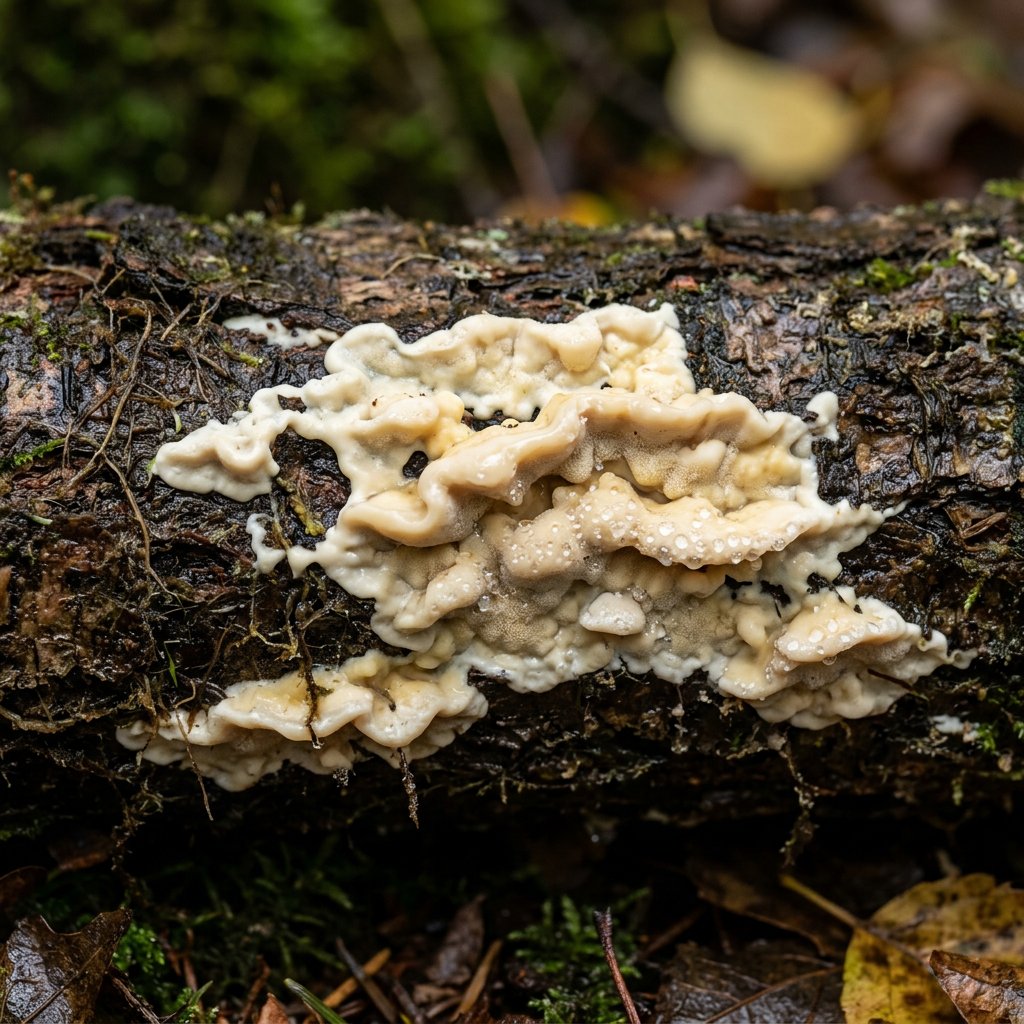
Often overlooked as mere "stains" on a log, Gloeocystidiellum belongs to the fascinating world of resupinate (crust) fungi. These organisms don't sprout traditional caps and stems; instead, they spread across fallen wood like living wallpaper or spilled candle wax. They are nature’s subtle recyclers, quietly breaking down tough fibers in the damp shadows of the forest floor.
🔍 How to Identify
- 🎨 Growth Habit: It grows "resupinate," meaning it lays completely flat against its host surface, looking more like a coat of thick paint than a typical mushroom.
- 🕯️ Surface Texture: The surface is typically waxy, smooth, or slightly bumpy (tuberculate). When fresh, it can feel somewhat oily or rubbery to the touch.
- ☁️ Color Palette: Most species in this genus appear in shades of creamy white, pale yellow, or soft buff, occasionally darkening to an ochre or tan as they age or dry out.
🌲 Habitat & Ecology
- 🪵 The Wood Recycler: You will almost exclusively find this fungus on the underside of fallen hardwood or coniferous logs and branches, where the environment stays consistently moist.
- 🍄 White Rot Warrior: It plays a vital role in forest health by causing "white rot." It breaks down the tough lignin in wood, leaving behind soft, white cellulose that returns nutrients to the soil.
⚠️ Safety & Toxicity
- 🚫 WARNING: While not known to be a "deadly" genus, Gloeocystidiellum is considered inedible. Its tough, leathery, or waxy consistency makes it impossible to use for culinary purposes.
- 🔬 Identification Risk: Many crust fungi look identical to the naked eye. Some species of crust-like fungi can harbor toxins or cause respiratory irritation if handled improperly, so they are best left alone and admired in their natural habitat.
✨ Fun Fact
The name Gloeocystidiellum comes from "gloeocystidia," which are specialized, oily cells hidden within the fungus. Under a microscope, mycologists apply a chemical called sulfovanillin to these cells, which causes them to turn a dramatic dark blue or black—a secret "chemical signature" used to identify the species!
More Details







