Info
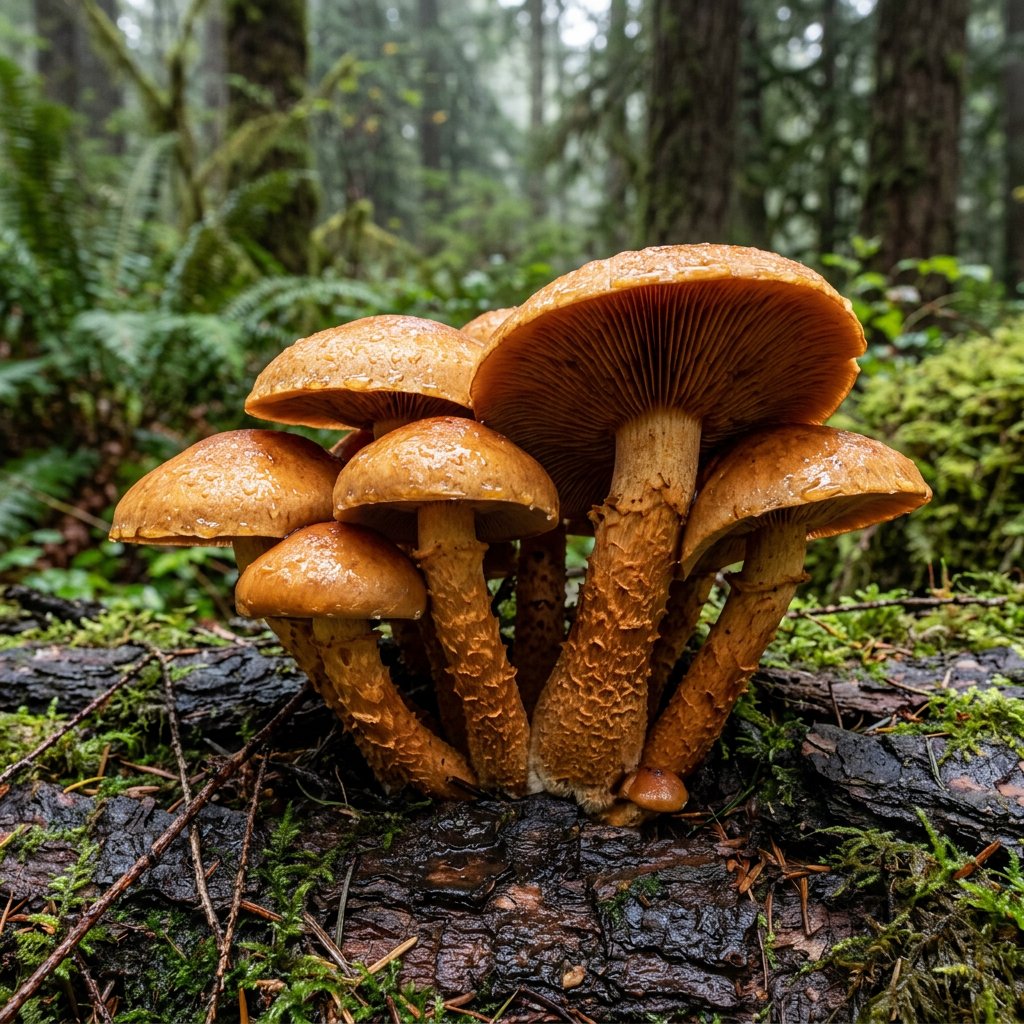
Known as the "Jumbo Gym," Gymnopilus ventricosus is a true titan of the fungal world, often growing to the size of a dinner plate. Found predominantly in the Pacific Northwest of North America, these massive, golden-orange mushrooms emerge from decaying wood like buried treasure. While they belong to the famous "Big Laughing Gym" group, their imposing size and bitter taste make them more of a visual spectacle than a forest snack.
🔍 How to Identify
- 🍄 The Cap: Massive and fleshy (up to 8–12 inches across), the surface is dry and varies from a warm yellow-orange to a deep rusty brown. It often starts convex and flattens out with age.
- 🍂 The Gills: The gills are crowded and start out yellow, but as the mushroom matures, they turn a distinct rusty-orange due to the heavy spore load.
- 📏 The Stem: Thick, solid, and often "ventricose" (swollen in the middle or base). It usually features a delicate, papery ring (annulus) near the top that becomes dusted with orange spores.
🌲 Habitat & Ecology
- 🪵 Wood Dweller: This is a saprobic species, meaning it feeds on dead organic matter. You will almost always find it growing directly on conifer logs, stumps, or from buried wood in the forest floor.
- 🌲 Tree Associations: It has a particular fondness for Douglas fir and Pine forests, appearing in large clusters during the wet autumn months.
⚠️ Safety & Toxicity
- 🚫 WARNING: Do not consume. While not usually considered "deadly" like some Amanitas, Gymnopilus ventricosus is inedible due to its extreme, lingering bitterness.
- 🧠 Toxicity: Many members of the Gymnopilus genus contain neurotoxic compounds (psilocybin), though levels vary wildly between individual mushrooms. Ingesting them can cause gastrointestinal distress and unpredictable hallucinogenic effects.
- 🐾 Pets: Keep curious dogs away; the large size of these mushrooms makes them an enticing but dangerous "chew toy" that can lead to severe vomiting and neurological confusion in animals.
✨ Fun Fact
The species name ventricosus is Latin for "pot-bellied," referring to the mushroom’s thick, swollen stem that looks like it’s had a bit too much to eat!
More Details
| Hymenium Type | Lamella |
| Mushroom Cap Shape | Convex Mushroom Cap |
| Hymenium Attachment | Adnexed Hymenium Attachment |
| Mushroom Ecological Type | Saprobiont |







