Info
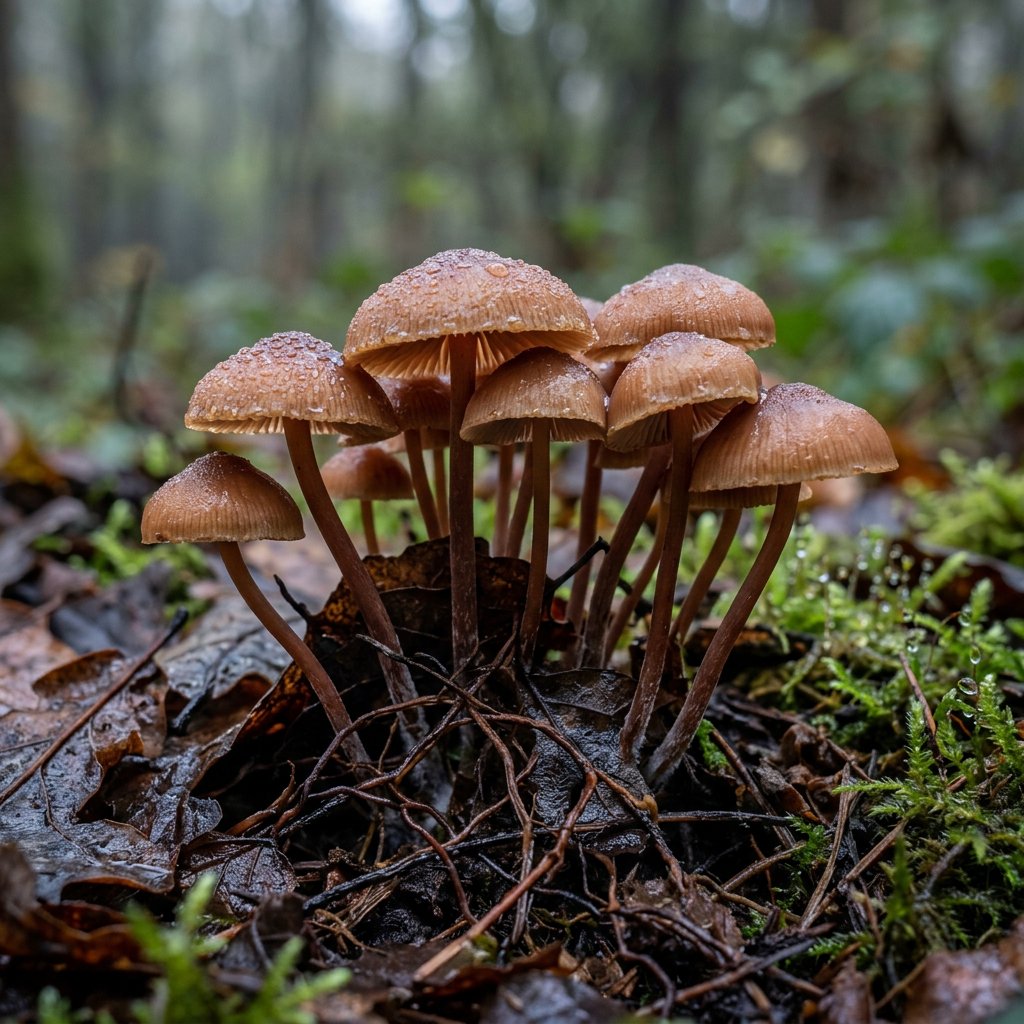
Known as the Cabbage Parachute, this small, unassuming mushroom is a master of sensory surprises. While it might look like a typical "little brown mushroom" (LBM) at first glance, its true identity is revealed the moment you step on it or pick it up. It is famous—or perhaps infamous—for its powerful, lingering scent of rotting cabbage or pungent, old garlic that can fill the air of a damp woodland.
🔍 How to Identify
- 🍄 The Cap: Small (1–4 cm), initially convex but flattening with age. The color is a dull reddish-brown to tan, often appearing slightly translucent or wrinkled at the edges when wet.
- 🥢 The Gills: Very crowded, thin, and narrow. They are usually a pale cream or buff color, often developing brownish spots as they mature.
- 🦵 The Stem: Tough, slender, and distinctively bicolored. It is pale at the very top but transitions into a dark, velvety brownish-black toward the base, which is often hidden under leaves.
- 👃 The Scent: Its primary identifier. When the flesh is crushed or the mushroom is disturbed, it releases a potent, unpleasant odor of decaying cabbage or spoiled garlic.
🌲 Habitat & Ecology
- 🍂 Leaf Litter Specialist: This mushroom is saprobic, meaning it survives by decomposing dead organic matter. You will almost always find it growing in clusters on deep layers of decaying broadleaf litter, with a strong preference for Beech and Oak forests.
- 🌧️ Seasonal Presence: It typically emerges in late summer and throughout autumn, particularly after heavy rains when the forest floor is saturated and the decomposition process is at its peak.
⚠️ Safety & Toxicity
- 🛑 WARNING: DO NOT CONSUME. While not considered a "deadly" species, it is strictly classified as inedible.
- 🤢 Effects: The foul odor is nature’s way of saying "stay away." Consuming this mushroom is likely to lead to severe nausea and gastrointestinal upset.
- 🐾 Pets: Due to its strong smell, most animals avoid it, but it should still be considered a risk for curious dogs who may be attracted to pungent scents.
✨ Fun Fact
🧪 Stinky Science: The chemical compound responsible for the mushroom's "rotting cabbage" smell is dimethyl trisulfide. This is the same volatile compound that gives overcooked cabbage, "stinky" French cheeses, and even the "Corpse Flower" their characteristic pungency!
More Details







