Info
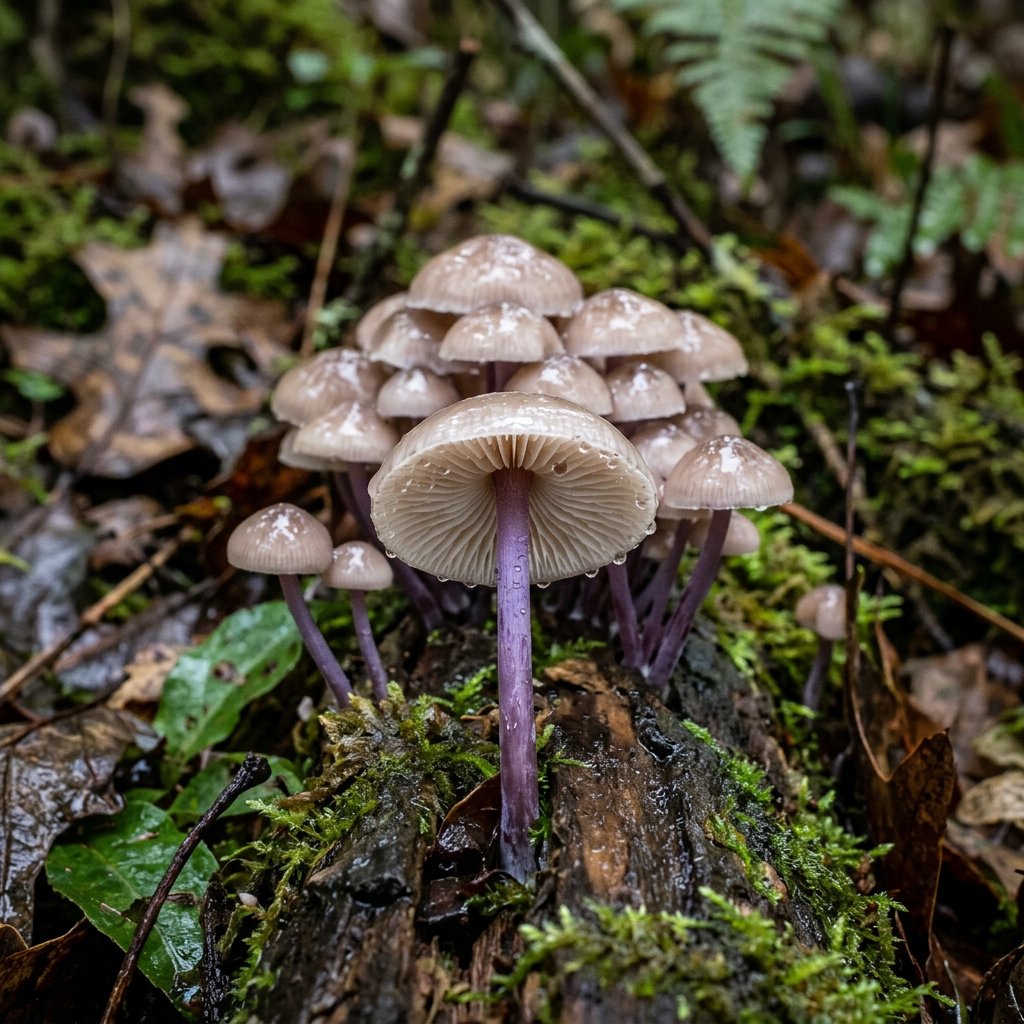
Often called the Garlic-scented Purple Gymnopus, this mushroom is a forest floor gem that surprises the senses. While its vibrant violet hues might suggest a fairy-tale snack, its intense, sulfurous aroma tells a much more pungent story. It plays a vital role in the deep woods, working tirelessly to break down fallen leaves and return nutrients to the soil.
🔍 How to Identify
- 🎨 The Cap: Usually 1 to 4 cm wide, the cap starts as a deep, velvety violet or lilac-purple. As it ages or dries out, the color often fades to a duller brownish-grey or tan.
- 🥢 The Gills: Look for very thin, crowded gills underneath. They often retain a soft purple tint even after the cap has begun to lose its color.
- 🧵 The Stem: The stalk is slender, tough, and fibrous. If you look closely at the base, you’ll often see a "fuzzy" coating of white or pale lilac mycelium where it grips the leaf litter.
🌲 Habitat & Ecology
- 🍂 Leaf Litter Specialist: This fungus is a "saprobe," meaning it survives by decomposing dead organic matter. It is most commonly found in eastern North America, growing in clusters among the fallen leaves of hardwood trees like Oak and Beech.
- 🧄 The Smell Test: This is its most famous trait! If you crush a small piece of the cap, it releases a powerful, unmistakable odor of rotting garlic or pungent onions. This scent is a key field mark for hikers and foragers.
⚠️ Safety & Toxicity
- 🚫 WARNING: The Gymnopus iocephalus is considered inedible and potentially toxic. It should never be consumed.
- 🤢 Details: Beyond the risk of gastrointestinal distress, the mushroom is naturally unpalatable. The same sulfur compounds that give it a garlic scent produce a bitter, acrid taste that lingers unpleasantly on the palate.
✨ Fun Fact
🧪 Chemical Warfare: The intense garlic smell isn't just a coincidence; it’s a sophisticated defense mechanism. The mushroom produces specific sulfur-based compounds to discourage slugs, insects, and small mammals from eating it before it can release its spores!
More Details







