Info
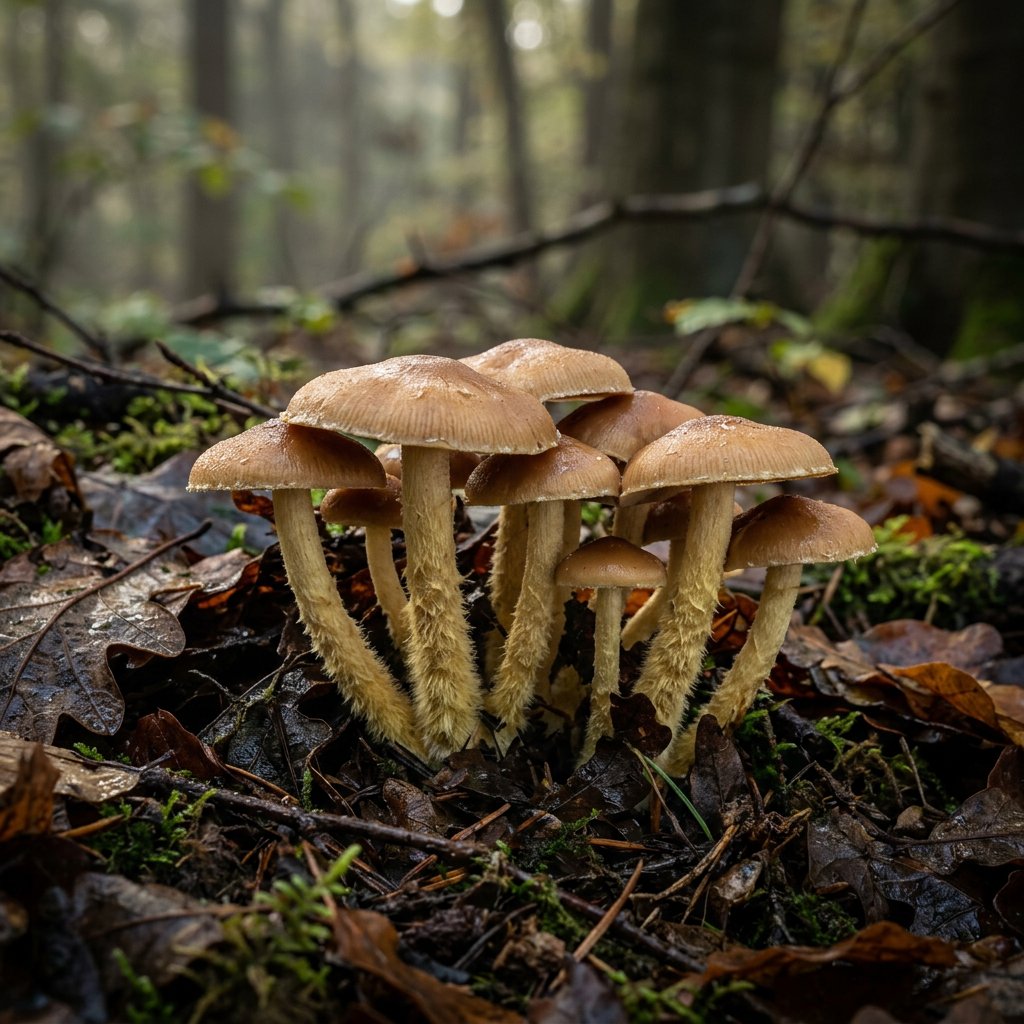
Often referred to as the Wood Woollyfoot, this fungus is a staple of the autumn forest floor. It earns its whimsical name from the dense, shaggy "carpet" of hairs at the base of its stem, looking as though it’s wearing a pair of fuzzy yellow socks. While it doesn't have a role in the kitchen, it is one of nature’s most hardworking recyclers, specialized in breaking down tough leaf litter.
🔍 How to Identify
- 🍄 The Cap: Usually 3–6 cm wide, it starts convex and flattens out with age. Its color ranges from a warm leather-tan to a reddish-brown, often looking slightly wrinkled or "puckered" at the edges.
- 🧶 The "Woolly" Base: The most defining feature. The bottom of the stem is covered in coarse, yellowish-white mycelial hairs that firmly grip onto decaying leaves.
- 🍂 The Gills: Look underneath to find crowded gills. They start off a pale cream or yellow but turn a darker, dingy brown as the mushroom matures.
- 💪 The Texture: Unlike many brittle mushrooms, the Wood Woollyfoot is remarkably tough and flexible; you can often bend the stem significantly without it snapping.
🌲 Habitat & Ecology
- 🍂 Leaf Litter Specialist: You will almost always find this mushroom growing directly out of deep layers of broadleaf mulch, particularly under Oak and Beech trees, though it occasionally pops up in pine needles.
- 👥 Social Growers: They rarely travel alone. They typically appear in "troops" or large scattered groups, sometimes forming a literal carpet across the woodland floor during a damp October.
⚠️ Safety & Toxicity
- 🚫 Status: WARNING! Inedible.
- 👅 The Sting: While not considered deadly, it is classified as inedible due to its extremely acrid and peppery taste. If nibbled (and spat out), it leaves a lingering, unpleasant burning sensation on the tongue. It may cause gastric distress if swallowed.
- 🐾 Pets: Keep curious dogs away; the tough fibers and acrid compounds can cause vomiting or digestive irritation in pets.
✨ Fun Fact
The Wood Woollyfoot is a "saprobic" powerhouse. It possesses specific enzymes that allow it to break down lignin—the incredibly tough organic polymer that makes wood and leaves "woody"—which many other organisms find impossible to digest.
More Details