Info
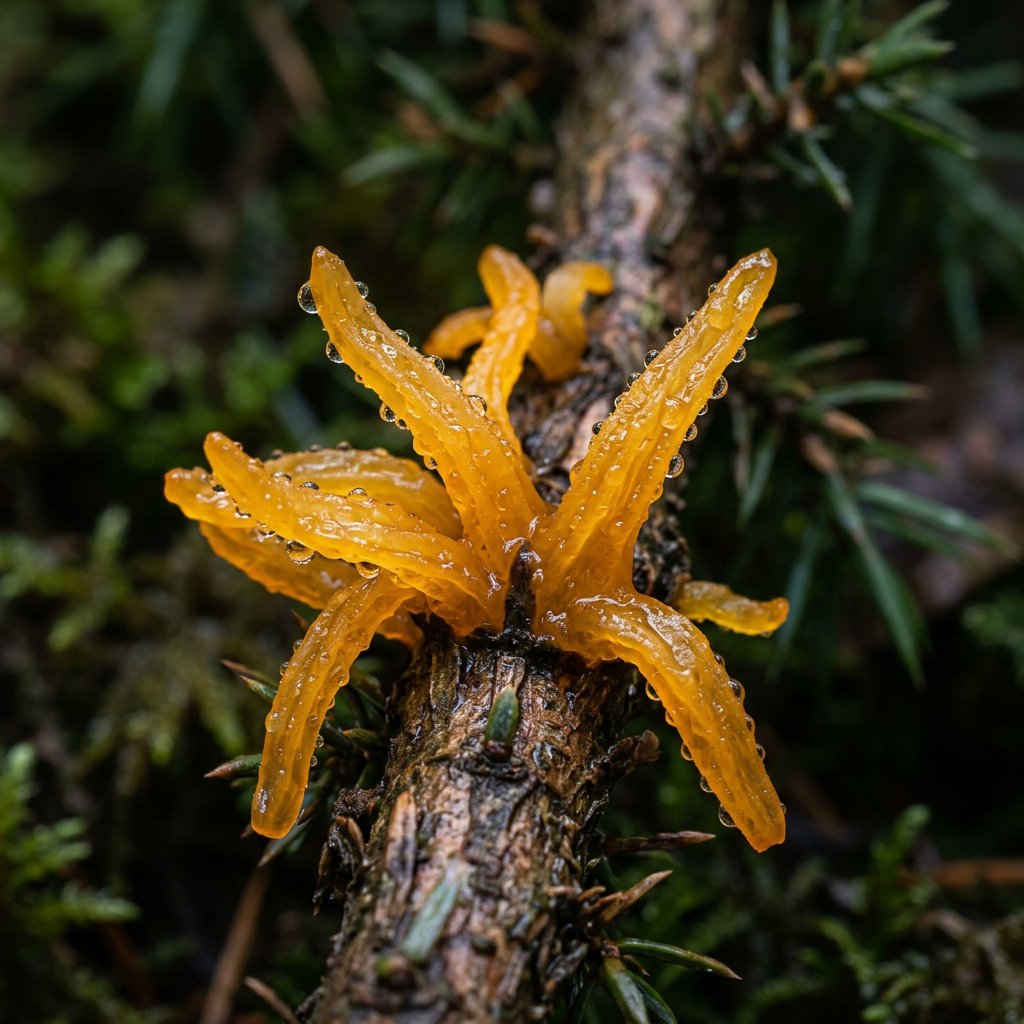
Known famously as the Pear Rust or European Pear Rust, this fungus is a masterful biological hitchhiker that leads a double life. It is a "heteroecious" rust, meaning it requires two completely different host plants—Junipers and Pear trees—to complete its fascinating but destructive life cycle. In the spring, it transforms into strange, orange jelly-like masses that look like they belong in a sci-fi movie.
🔍 How to Identify
- 🟠 The Gelatinous Horns: In early spring, look at Juniper branches for "telia"—bright orange, tongue-shaped gelatinous growths that swell significantly after a rainstorm.
- 🍂 The Fiery Leaf Spots: On Pear trees during summer, the fungus manifests as vivid, glowing orange or red spots on the upper surface of the leaves, often with a tiny black dot in the center.
- 🏺 The Spore Cages: By late summer, look at the underside of the infected pear leaves. You will see weird, brownish, acorn-shaped protrusions called "aecia" that eventually split open like tiny cages to release spores.
🌲 Habitat & Ecology
- 🔄 The Great Migration: This fungus cannot survive on just one tree. It spends its winters as galls on Juniper wood and its summers on the foliage of Pear trees. If you have both trees within a few hundred meters of each other, the rust is almost guaranteed to find them.
- 🌬️ Wind-Borne Travelers: The spores are incredibly light and are designed to be picked up by the wind, traveling several miles to find their secondary host. It doesn't kill the trees immediately, but it can severely weaken them and ruin the pear harvest.
⚠️ Safety & Toxicity
- 🚫 Status: WARNING: NOT EDIBLE.
- 🧤 Details: While Gymnosporangium sabinae is not toxic to human skin and won't harm your pets if they sniff it, it is strictly a plant pathogen and is never to be eaten. The main "danger" here is to your garden's health, as it can cause significant "die-back" on juniper branches and premature leaf drop on pear trees.
✨ Fun Fact
The "horns" seen on Juniper trees are essentially "spore factories" that only activate when wet. Within minutes of a spring rain, these dry, dark crusts rehydrate into bright orange jelly, doubling in size to catch the wind more effectively!
More Details