Info
Often called the Smooth-stemmed Bolete, this cheerful forest dweller is a favorite among mushroom foragers for its reliable presence in the summer and fall. Unlike many of its "bruising" cousins, this mushroom remains steadfast in color when handled, making it a bright, sunny find amidst the leaf litter of broadleaf forests.
🔍 How to Identify
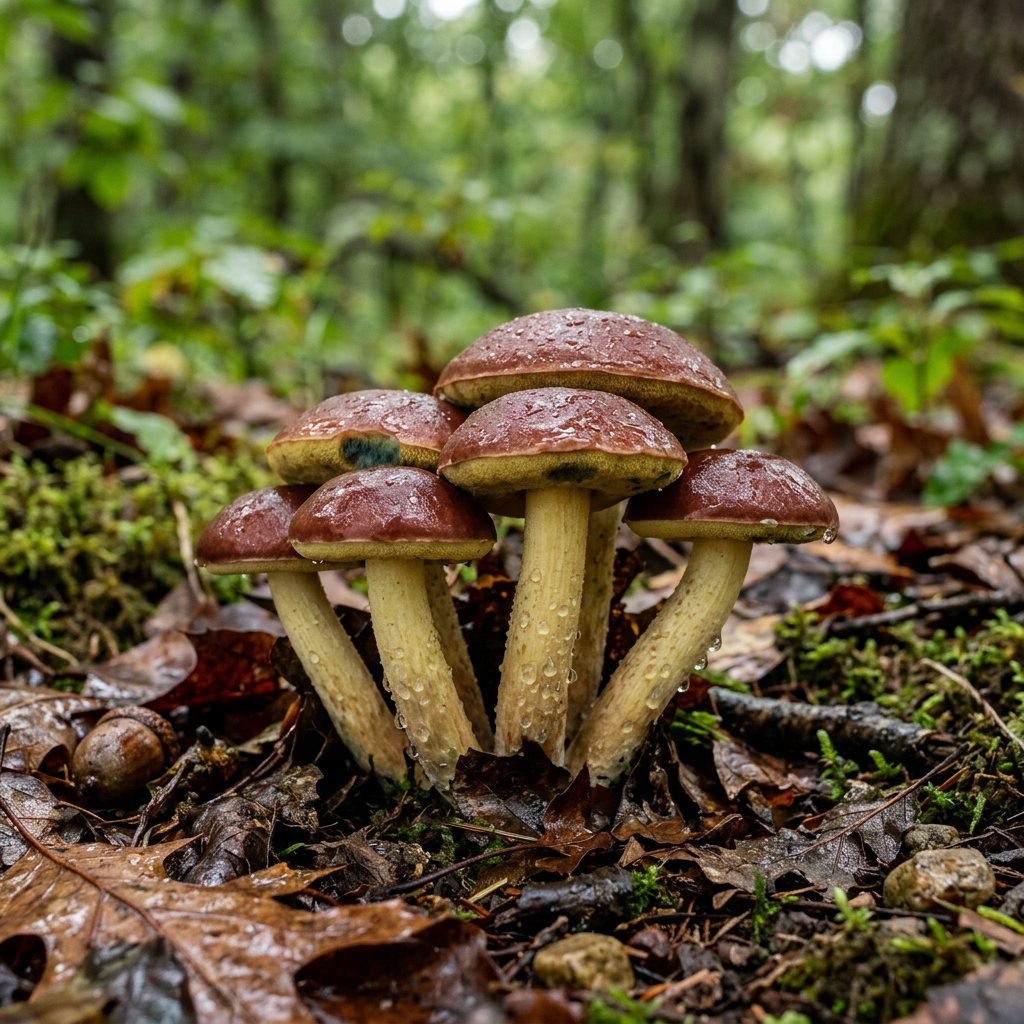
- 🍄 The Cap: Typically ranges from reddish-brown to a warm toasted-yellow. The surface is smooth and can feel slightly tacky or "kid-leather" soft when moist.
- 🧽 The Pores: Instead of gills, it features a sponge-like layer of bright yellow pores underneath. These do not change color or turn blue when bruised, which is a key identifying trait.
- 🦵 The Stem: The stem is pale yellow and relatively smooth, lacking the dark, shaggy "scabers" found on true Leccinum species, though it may have very fine, tiny dots near the top.
🌲 Habitat & Ecology
- 🌳 Hardwood Companion: This mushroom is mycorrhizal, meaning it forms a symbiotic relationship with trees. You are most likely to find it growing on the ground near Oak or Beech trees.
- 🍂 Summer Harvest: It thrives in the warm, humid months of mid-to-late summer, often popping up in small scattered groups shortly after a heavy rain.
⚠️ Safety & Toxicity
- 🛑 WARNING: While generally considered a choice edible, never consume any wild mushroom unless you are 100% certain of its identity. Always cook thoroughly before eating.
- 🐕 Pet Safety: While not known to be deadly, many wild boletes can cause significant gastrointestinal distress in dogs and cats if eaten raw.
- 🧪 The "No-Blue" Rule: One of the reasons foragers like this species is that it lacks the blue-staining reaction common in many toxic or "look-alike" boletes, though this rule is not a universal guarantee of safety.
✨ Fun Fact
The scientific name subglabripes translates literally to "somewhat smooth-footed." This refers to its lack of the rough, hairy texture found on the stems of many other mushrooms in the bolete family!
More Details







