Info
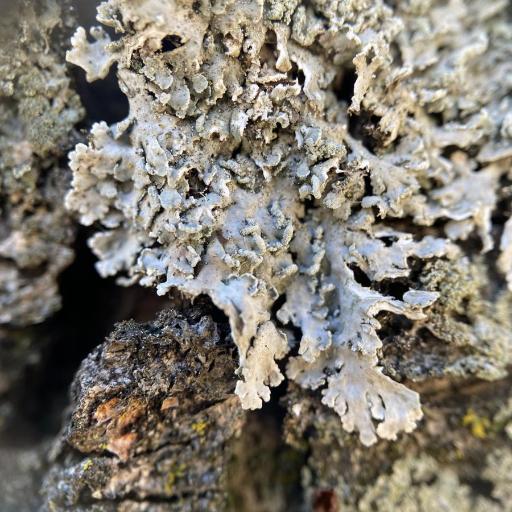
Often called the Powdery Fringe Lichen, this organism is a delicate masterpiece of nature’s design. It looks like a frost-covered lace ornament clinging to tree bark, adding a touch of silver-gray elegance to the forest floor. While it is technically a fungus, it lives in a beautiful partnership with algae, allowing it to survive on nothing but air, rain, and sunlight.
🔍 How to Identify
- 🌿 The Thallus: It features a "foliose" or leafy body that grows in small, flat rosettes. The lobes are narrow, elongated, and often overlap like tiny shingles.
- ⚪ Powdery Edges: The most identifying feature is the "soredia"—a fine, white, flour-like powder that gathers at the tips and edges of the lobes, giving it a fringed appearance.
- 🎨 Cool Tones: The upper surface is a pale mineral-gray or greenish-white, while the underside is usually white to tan, lacking the dark "root-like" anchors (rhizines) found in similar-looking species.
🌲 Habitat & Ecology
- 🌳 Tree Hugger: You will most often find it decorating the trunks of deciduous trees, such as Oaks and Maples, in humid, temperate forests. It occasionally spreads its "wings" onto moss-covered rocks.
- 🌬️ Air Quality Sentinel: This lichen is highly sensitive to sulfur dioxide and industrial pollutants. If you spot a healthy colony of Powdery Fringe Lichen in your backyard, it is a living certificate that your local air is clean and fresh.
⚠️ Safety & Toxicity
- 🛑 Status: Generally considered non-toxic, but strictly inedible.
- 🐾 Details: While it won't harm you if you touch it, lichens contain complex secondary metabolites (acids) that can cause stomach upset in humans or curious pets if ingested. It is best left on the tree to continue its job of cleaning the air.
✨ Fun Fact
The species name speciosa is Latin for "beautiful" or "showy." In the world of lichenology, it is considered one of the most aesthetically "perfect" examples of leafy lichens because of its symmetrical growth and bright, clean coloration.
More Details