Info
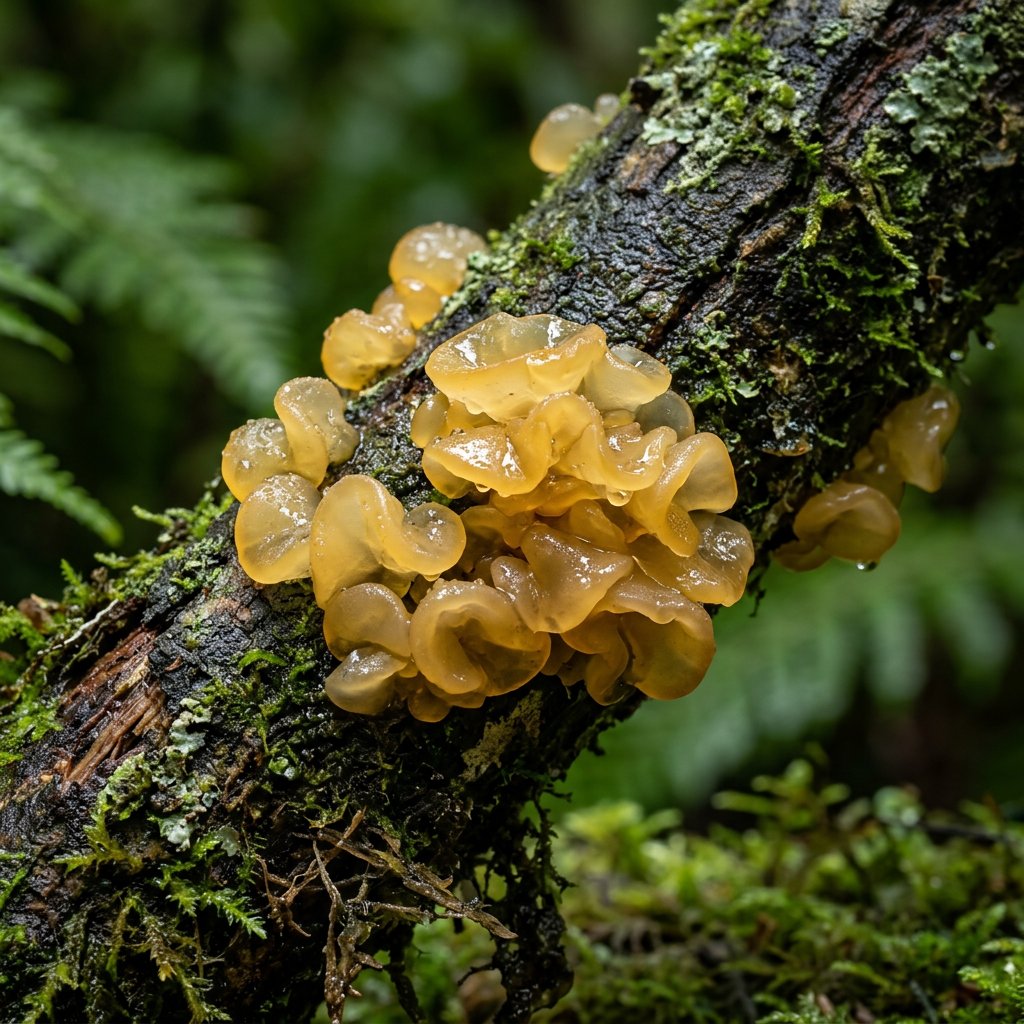
Often called the Yellow Jelly Cup or the Golden Jelly Bell, these tiny fungi look like miniature neon gumdrops scattered across old logs. They bring a splash of brilliant sunshine to the dark, damp floors of coniferous forests. In folklore, such brightly colored jelly fungi were sometimes thought to be "star-jelly," remnants of fallen meteors left behind on the earth.
🔍 How to Identify
- 🔔 The Shape: These mushrooms are shaped like tiny cups or inverted bells. They are usually very small, rarely exceeding 1 centimeter in diameter.
- 🍮 The Texture: They have a distinct gelatinous, rubbery consistency when moist. If you poke one, it will bounce back like a firm gummy bear.
- 🎨 The Color: They sport a vivid, translucent yellow to bright orange hue. When they dry out, they shrivel into dark, inconspicuous crusts, only to "reanimate" when it rains.
- 🪵 The Base: They usually lack a true stem, instead attaching to their wooden home by a very narrow, pinched point at the bottom of the cup.
🌲 Habitat & Ecology
- 🌲 Conifer Lover: You will almost exclusively find these growing on the decaying wood of coniferous trees, such as pine, fir, or spruce. They play a vital role in breaking down tough wood fibers.
- ☁️ Weather Reactive: These fungi are masters of moisture. During dry spells, they become almost invisible, shrinking into a hard film. After a heavy rain, they swell up and regain their brilliant color and shape within hours.
⚠️ Safety & Toxicity
- 🚫 WARNING: While the Yellow Jelly Cup is not known to be dangerously toxic, it is not considered edible. Its tiny size and rubbery texture make it worthless for the kitchen.
- 🍄 Identification Risk: Many jelly-like fungi look similar. Never consume any wild mushroom unless you are with a professional mycologist, as some orange fungi can cause severe digestive distress.
✨ Fun Fact
The Yellow Jelly Cup is a "resurrection" specialist! It can survive being completely dehydrated for months. As soon as it comes into contact with water, its cells rehydrate, and it continues to drop spores as if nothing happened.
More Details