Info
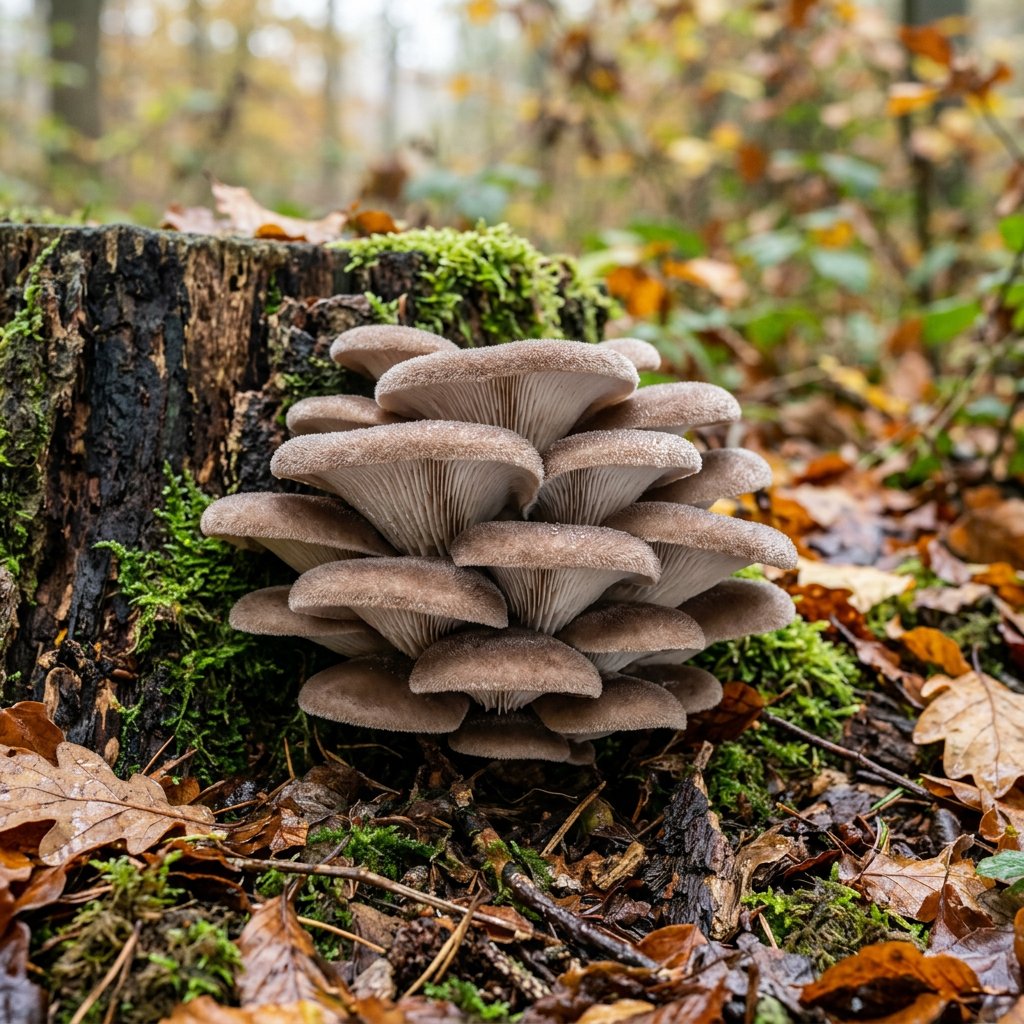
Known to many as the Shoehorn Oyster or the Leaflike Hohenbuehelia, this mushroom is a master of disguise, often looking more like a cluster of fallen petals or a piece of discarded leather than a typical fungus. While it shares a family resemblance with the common Oyster mushroom, it has a secret "predatory" side that makes it a fascinating addition to any garden or woodland path.
🔍 How to Identify
- 🍄 Shape & Form: It typically grows in a funnel, fan, or spatula shape. Unlike mushrooms with a central stalk, the stem is off-center or non-existent, making the whole fungus look like a tiny, upright shoehorn.
- ⚪ The Gills: The gills are white to creamy-tan, very crowded, and run all the way down the base of the mushroom (decurrent).
- 💧 Gelatinous Layer: If you slice the cap, you’ll find a thin, rubbery, jelly-like layer just beneath the surface skin. This is a primary identifying feature for the Hohenbuehelia genus.
- 🎨 Color Palette: The surface is usually a soft beige, brownish-grey, or tan, often covered in a fine, whitish "bloom" when young.
🌲 Habitat & Ecology
- 🍂 Woodland & Mulch: While most Oyster-like mushrooms grow directly on tree trunks, Hohenbuehelia petaloides is usually found on the ground. However, it is actually growing from buried wood, wood chips, or heavily mulched garden beds.
- 🪱 The Micro-Hunter: This mushroom is "nematophagous." Because wood is low in nitrogen, the fungus has evolved to hunt microscopic worms (nematodes) in the soil. It uses specialized sticky knobs on its mycelium to paralyze and consume them!
⚠️ Safety & Toxicity
- ❗ WARNING: Never consume any wild mushroom unless you are 100% certain of its identity. Many white or brown "LBMs" (Little Brown Mushrooms) can be toxic.
- 🍴 Edibility: Hohenbuehelia petaloides is generally considered edible, but it is not highly prized. Its texture is often described as rubbery or tough, and it may have a faint "mealy" (farinaceous) smell that some find unappealing.
- 🚫 Lookalikes: It can be confused with the "Angel Wings" mushroom (Pleurocybella porrigens), which grows directly on coniferous wood and has been linked to serious poisonings in individuals with kidney issues.
✨ Fun Fact
Despite its delicate, flower-like appearance, this mushroom is a silent assassin of the underworld. It is one of the few fungi in the world that supplements its "vegan" diet of wood with "meat" by trapping and digesting tiny worms!
More Details







