Info
Affectionately known as the "Bleeding Tooth Fungus" or the "Devil’s Tooth," this mushroom is one of nature’s most jarring visual spectacles. When young and moist, it appears to ooze a thick, ruby-red liquid through its white, velvety surface, making it look like a gourmet dessert—or a scene from a horror movie. Despite its alarming appearance, it is a fascinating partner to the forest, forming deep underground connections with the trees above.
🔍 How to Identify
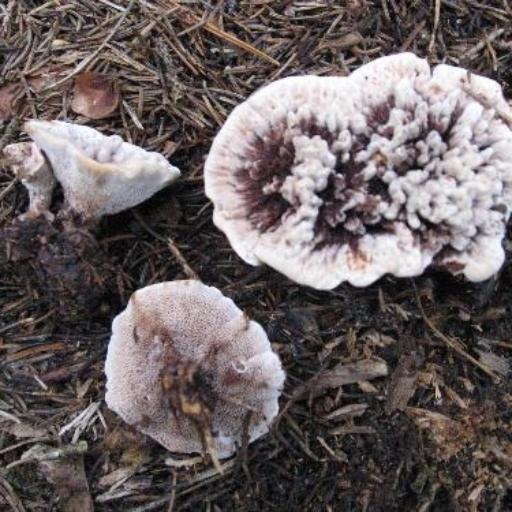
- 🩸 The "Blood" (Guttation): In its juvenile stage, the mushroom's white, corky cap exudes bright red droplets of fluid. This is actually a process called guttation, where the fungus rids itself of excess moisture and minerals.
- 🦷 Spiny Underside: Unlike common mushrooms with gills or pores, the Hydnellum peckii has tiny, tooth-like projections (spines) hanging from the underside where its spores are produced.
- 🍄 Body Texture: The cap is tough, fibrous, and "felty" to the touch. As it ages, it loses its white color and red droplets, turning a drab, woody brown that is much harder to spot on the forest floor.
🌲 Habitat & Ecology
- 🤝 Tree Partnerships: This fungus is mycorrhizal, meaning it lives in a symbiotic relationship with coniferous trees like pines and spruces. It helps the tree absorb minerals from the soil in exchange for sugars produced by the tree's photosynthesis.
- 📍 Where to Look: You will typically find it nestled among moss and pine needles in old-growth coniferous forests across North America and Europe. It prefers sandy, nutrient-poor soils where its ability to help trees is most needed.
⚠️ Safety & Toxicity
- 🚨 WARNING: Not Recommended for Consumption.
- 👅 The Taste Test: While not known to be deadly poisonous, the Bleeding Tooth Fungus is considered inedible. It has an extremely bitter, acrid taste that lingers on the tongue and a tough, corky texture that makes it impossible to chew or digest.
- 🚫 Pet Safety: While it is unlikely a pet would eat much due to the bitterness, it is best to keep curious dogs away to avoid stomach upset.
✨ Fun Fact
The red "blood" of this mushroom isn't just for show! It contains a chemical called atromentin, which has properties similar to the medicine heparin. Scientists have discovered it can act as a natural anticoagulant, preventing blood from clotting, and it also possesses antibacterial properties.
More Details
| Hymenium Type | Teeth |
| Mushroom Cap Shape | Semi-Spherical Mushroom Cap |