Info
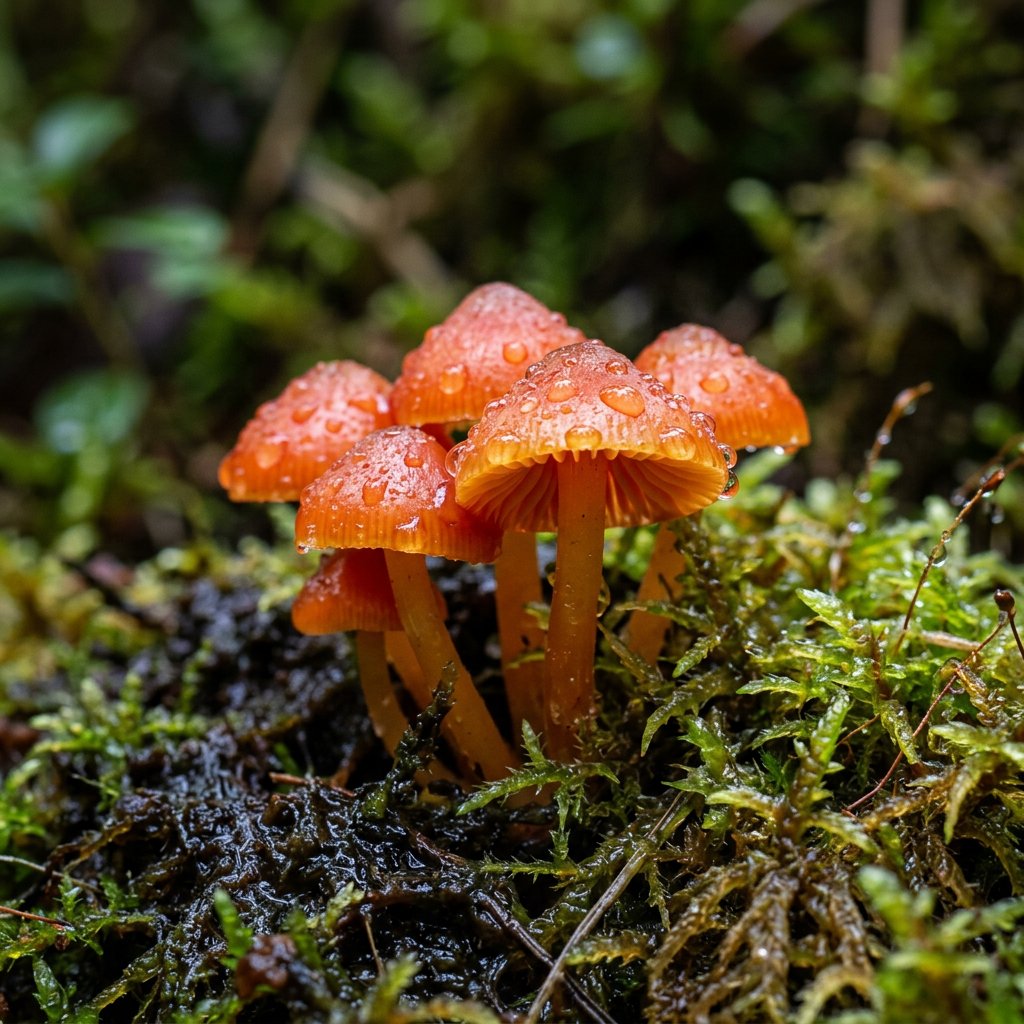
Known as the Garlic Waxcap, this tiny, scarlet jewel is a hidden gem of the damp meadows. Unlike many of its cousins that look like they’ve been dipped in oil, Hygrocybe helobia has a distinctive dry, scurfy texture that makes it stand out to the keen-eyed forager. Its most surprising trait, however, is the pungent aroma of fresh garlic it releases when bruised or as it begins to dry.
🔍 How to Identify
- 🍄 The Cap: Small (1–3 cm), initially convex then flattening out. It is a vivid blood-red to orange-red and notably "scurfy" or minutely scaly, rather than slimy.
- 🏮 The Gills: Widely spaced and thick. They are usually a pale yellow or pinkish-red, often attached broadly to the stem or slightly running down it (decurrent).
- 📍 The Stem: Slender, fragile, and dry. It typically matches the cap color or is slightly paler toward the base, lacking any ring or veil.
🌲 Habitat & Ecology
- 🌿 Damp Grasslands: This species is a specialist of "unimproved" mossy grasslands, bogs, and heaths. It loves moisture and is often found peeking through Sphagnum moss.
- 🧪 Soil Indicators: Like many waxcaps, it is an indicator of ancient, healthy ecosystems. These mushrooms disappear if the soil is treated with artificial fertilizers, making them a sign of a high-quality, natural environment.
⚠️ Safety & Toxicity
- 🚫 Status: DO NOT EAT. While not specifically listed as deadly, most small waxcaps are considered "inedible" or their toxicity is unknown.
- 🛑 Identification Risk: Many red mushrooms are toxic, and the small size of the Garlic Waxcap makes it easy to confuse with more dangerous species. Furthermore, waxcaps are becoming increasingly rare in many regions and should be left in the ground to spread their spores.
✨ Fun Fact
The specific epithet helobia comes from the Greek words for "marsh-dwelling." If you find one, try gently rubbing the cap between your fingers—the unmistakable scent of a Mediterranean kitchen will bloom in the middle of a wild, damp field!
More Details