Info
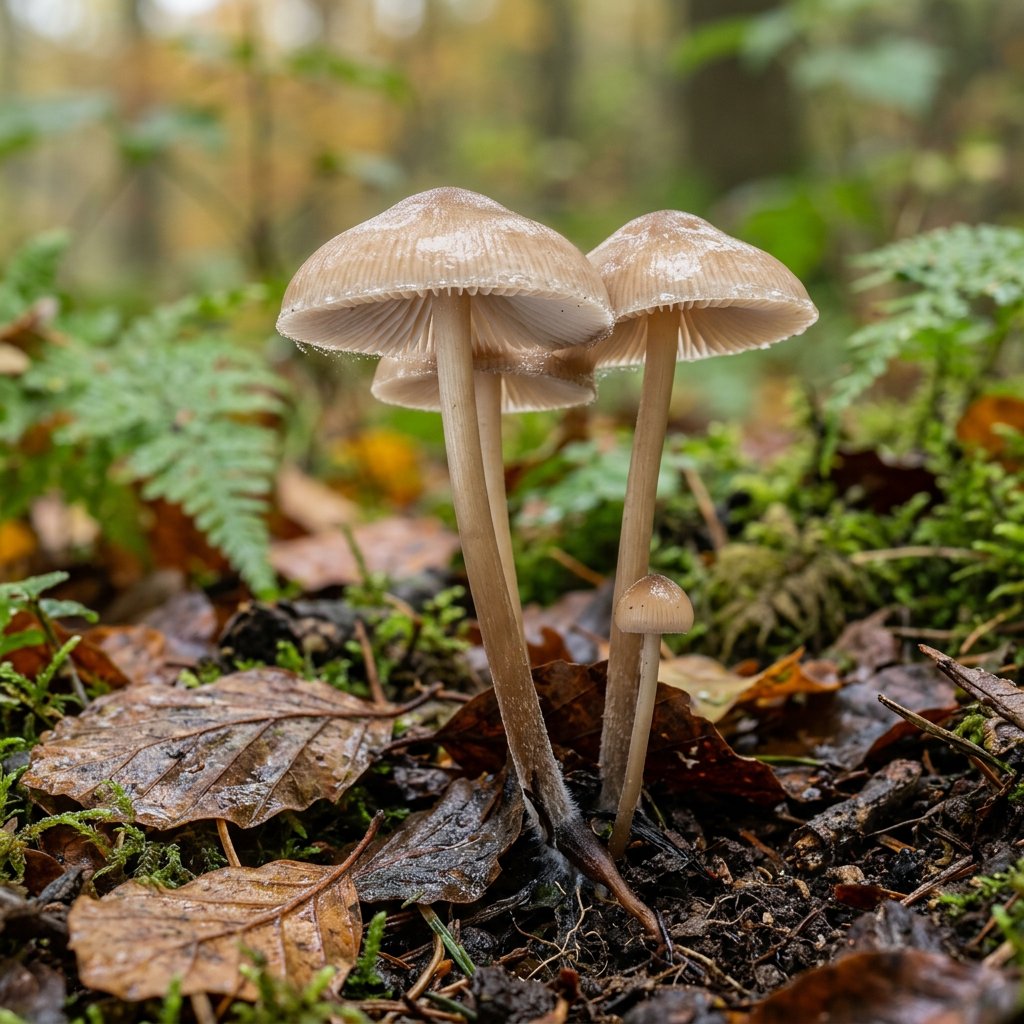
Often called the Rooting Shank or the Deep Rooter, this elegant mushroom is the "iceberg" of the fungal world. While it looks like a typical woodland mushroom on the surface, it hides a long, tapering "tail" that reaches deep underground to find its food. It is a common sight in summer and autumn, often standing solitary like a tiny, pale sentinel guarding the base of a majestic oak tree.
🔍 How to Identify
- 🍄 The Wrinkled Cap: The cap is typically 3–10 cm wide, ranging from grayish-brown to olive-tan. When wet, it becomes incredibly slimy (viscid) and often develops a pattern of radiating wrinkles that look like aged skin.
- ⚪ The Spaced Gills: Underneath, you will find broad, white gills that are relatively far apart and "adnexed," meaning they are narrowly attached to the top of the stem.
- 🌱 The Hidden "Root": The most iconic feature is the long, tough stem that tapers into a "pseudorhiza"—a root-like structure that can tunnel several inches into the soil to reach buried wood.
🌲 Habitat & Ecology
- 🌳 Hardwood Companion: You will almost exclusively find the Rooting Shank near the stumps or buried roots of deciduous trees, with a very strong preference for Beech and Oak forests.
- 🍂 The Decomposer: Unlike mushrooms that help trees grow (mycorrhizal), this fungus is saprobic. It acts as one of nature’s recyclers, slowly breaking down dead, buried wood and returning nutrients to the forest floor.
⚠️ Safety & Toxicity
- 🛑 WARNING: While some guidebooks list the Rooting Shank as edible, it is considered poor quality and "not recommended" for beginners. It is far too easy to confuse with other "Little Brown Mushrooms" (LBMs), many of which are dangerously toxic.
- 🐾 Pet Safety: If your dog consumes these in the yard or woods, they may experience gastrointestinal upset. It is best to discourage pets from snacking on any wild fungi.
- 🧤 Skin Contact: Simply touching the mushroom is safe, though the slimy cap can be a bit messy!
✨ Fun Fact
The Rooting Shank is a master of the "long game." Its underground root can sometimes be twice as long as the stem you see above ground, allowing it to tap into moisture and food sources that other mushrooms simply can't reach during dry spells!
More Details
| Hymenium Type | Lamella |
| Stipe Character | Bare Stipe |
| Spore Print Color | White |
| Mushroom Cap Shape | Flat Mushroom Cap |
| Mushroom Ecological Type | Saprobiont |







