Info
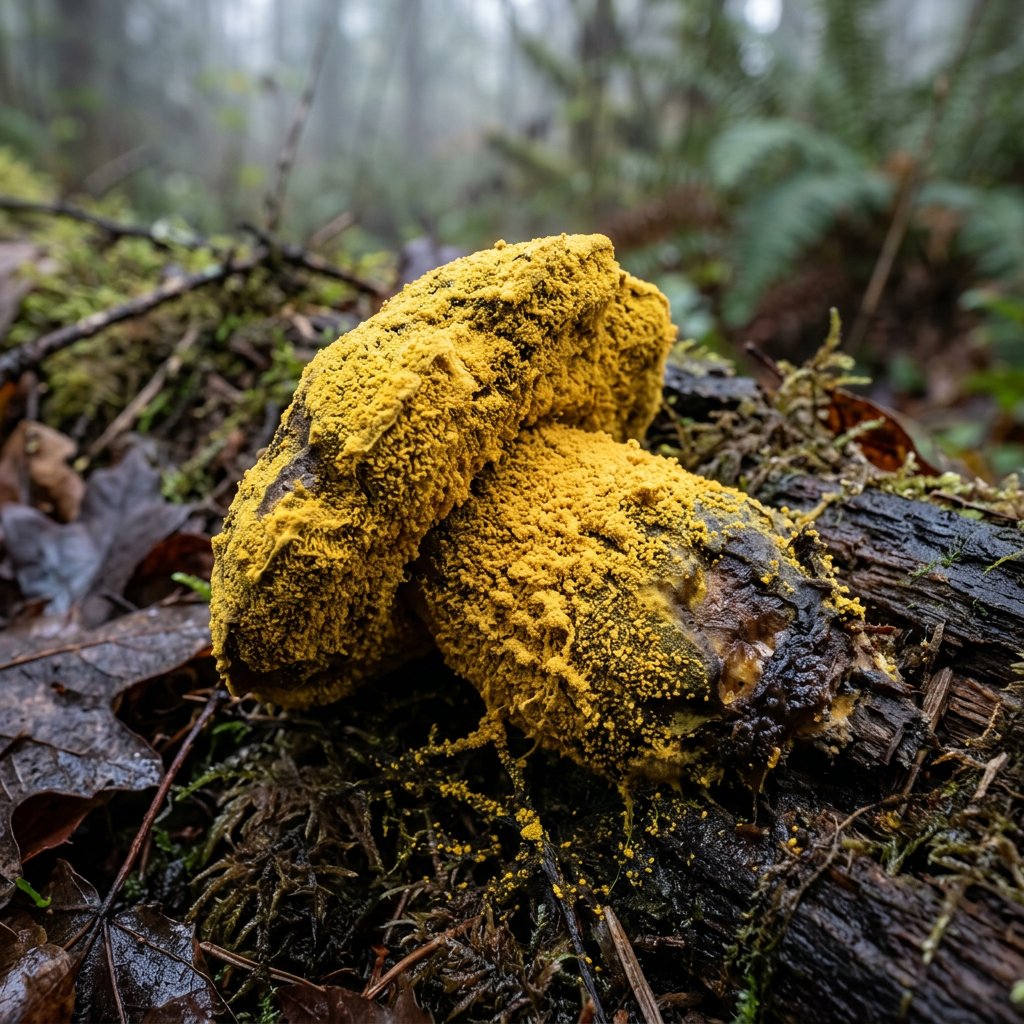
Often called the Bolete Eater, this parasitic fungus is the ultimate forest squatter. It doesn't grow from the soil itself but instead hijacks the bodies of other mushrooms, particularly those in the Bolete family. Watching its transformation is like witnessing a slow-motion gold rush on the forest floor, as it turns its host into a bright, powdery, and unrecognizable lump.
🔍 How to Identify
- ⚪ The White Blanket: In its early stage, it appears as a thin, white, velvety coating that begins to "swallow" the cap and pores of the host mushroom.
- 🟡 Golden Dust: As it matures, the fungus turns a brilliant, unmistakable sulfur-yellow. This is the stage where it produces its "golden seeds" (spores) that give it its scientific name.
- 🫠 Structural Decay: The host mushroom will lose its firm texture, becoming soft, distorted, and eventually dissolving into a brownish, foul-smelling mush.
🌲 Habitat & Ecology
- 🍄 The Perfect Host: You will exclusively find this fungus growing on other mushrooms, specifically Boletes (mushrooms with pores instead of gills) and occasionally Paxillus.
- 🌧️ Damp Woodlands: It thrives in moist, shaded forests during late summer and autumn, often appearing rapidly after heavy rainfall when its hosts are most abundant.
⚠️ Safety & Toxicity
- 🚫 WARNING: Strictly inedible. Do not consume any mushroom infected by this parasite.
- 🤢 The Danger: Even if the host mushroom was a choice edible (like a Porcini) before the infection, the presence of the Bolete Eater makes it toxic. Eating an infected specimen will likely result in severe gastrointestinal distress and nausea.
✨ Fun Fact
This fungus is a master of survival with a "triple threat" lifecycle; it actually produces three different types of spores! This allows it to spread rapidly in the summer, survive the harsh winter, and successfully find new hosts the following year.
More Details