Info
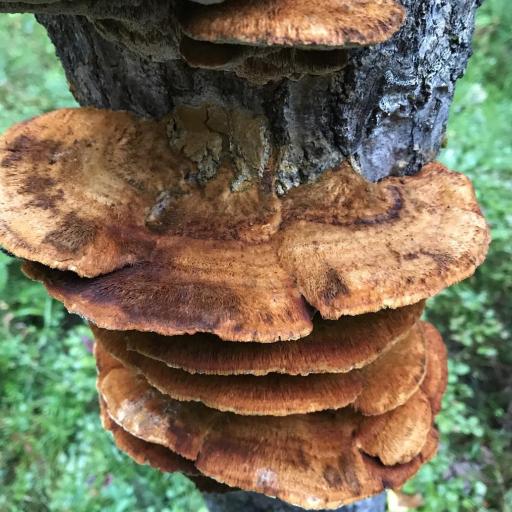
Often called the Fox-colored Polypore, this striking bracket fungus glows with a warm, rusty-orange hue against the bark of broadleaf trees. It looks almost like a small, fuzzy animal curled up on a trunk, earning it a reputation as one of the more "cuddly" looking (though very much wooden) shelf mushrooms in the woods. While it lacks the whimsical shape of a fairy-tale toadstool, its vivid "fox-fur" texture makes it a favorite for nature photographers.
🔍 How to Identify
- 🦊 The Cap Surface: Covered in dense, velvety hairs (tomentum) that start as a bright orange-brown and transition to a darker, shaggy cinnamon as the mushroom matures.
- 🪵 The Bracket Shape: It typically grows as a thick, semicircular shelf without a stem, protruding directly from the trunk of a tree.
- 🕳️ The Pore Surface: Instead of gills, the underside is covered in tiny, circular pores. These are initially a pale golden-brown and can appear slightly iridescent in the right light.
- 💎 The Secret Core: If broken open, this mushroom reveals a "mycelial core"—a hard, granular, and marbled center that feels like a knot of wood, distinguishing it from lookalikes.
🌲 Habitat & Ecology
- 🌳 Host Preferences: It is primarily found on living or recently fallen hardwoods. It has a particular affinity for Oak (Quercus), but is also commonly spotted on Beech and Poplar.
- 🏚️ White Rot Agent: As a "heart rot" fungus, it slowly breaks down the lignin in the tree's wood. While this can weaken a living tree over many years, it plays a vital role in forest ecosystems by recycling nutrients.
⚠️ Safety & Toxicity
- 🚫 Status: WARNING: INEDIBLE. The Fox-colored Polypore is not considered a food source.
- 👅 Texture: Its body is extremely tough, corky, and woody. Attempting to eat it would be similar to chewing on a piece of flavored bark, and it is likely to cause significant gastric distress if swallowed.
- 🐾 Pets & Kids: Because it grows high up on tree trunks, it is usually out of reach, but its tough texture generally makes it unappealing to curious dogs.
✨ Fun Fact
The species name rheades is derived from the Greek word for "poppy," likely referencing the vibrant, reddish-orange color of the young mushroom caps that stand out brilliantly against the drab grey of tree bark.
More Details







