Info
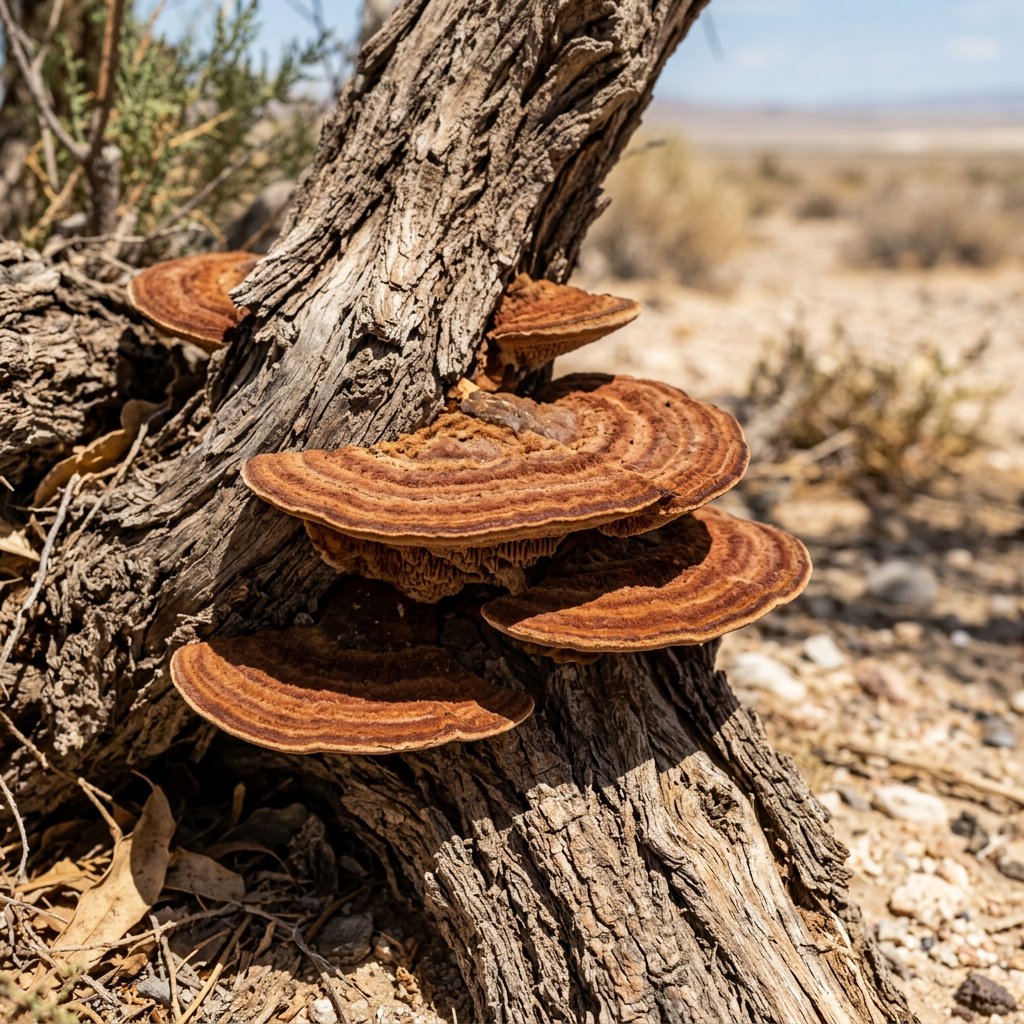
The Tamarisk Bracket is a specialist of the fungal world, known for its unwavering loyalty to the Tamarix tree. Often found in sun-drenched Mediterranean landscapes or arid riverbeds, this sturdy polypore acts as a quiet recycler, breaking down the tough wood of its host. While it might look like a simple woody shelf, it is a master of survival in harsh, salty environments where few other fungi dare to grow.
🔍 How to Identify
- 🍄 The Shelf Shape: It typically grows as a thick, hoof-shaped or semi-circular bracket that sits directly on the trunk without a stem.
- 🧶 Velvety Surface: When young, the top surface is covered in fine, velvety hairs (tomentose) and is a warm cinnamon or golden-brown color.
- 🕳️ Pore Surface: The underside consists of tiny, dense pores rather than gills. These start out yellowish and turn a deep, rusty brown as the mushroom matures.
🌲 Habitat & Ecology
- 🌳 Host Specificity: This fungus is almost exclusively found growing on living or dead Tamarisk trees (Tamarix spp.). If you see a similar bracket on an Oak or Pine, it is likely a different species!
- 🍂 Nature’s Recycler: It causes "white rot," a process where the fungus breaks down the lignin in the wood. This makes the tree's branches brittle over time, eventually returning nutrients to the sandy soils.
⚠️ Safety & Toxicity
- 🚫 Non-Edible: The Tamarisk Bracket is not considered edible. Its texture is extremely corky, woody, and tough, making it impossible to chew or digest.
- 🐾 General Caution: While not famously toxic, it is best to keep pets and children from playing with or chewing on the brackets, as the dense fibers can cause digestive blockage or irritation.
✨ Fun Fact
The genus name Inocutis comes from the Greek words for "fiber" and "skin," referring to the distinct, fibrous interior core of the mushroom that often looks like a marbled piece of wood when sliced open!
More Details







