Info
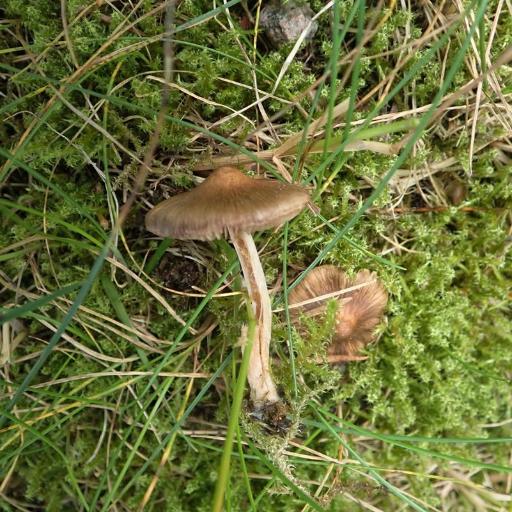
Known as one of the "Fiber-caps," Inocybe fuscidula is a master of camouflage on the forest floor. These small, unassuming mushrooms don't shout for attention with bright colors; instead, they wear a "hairy" brown coat that blends perfectly with fallen leaves and twigs. While they may look humble, they belong to a complex family of fungi that are famously difficult for even expert foragers to tell apart.
🔍 How to Identify
- 🍄 The Cap: Usually 2–5 cm wide, starting as a bell shape and flattening with age, often retaining a central bump (umbo). The surface is covered in fine, silky fibers that radiate outward, giving it a "combed" look.
- 🪜 The Gills: Closely packed underneath the cap, the gills start a pale grayish-white and turn a dull snuff-brown as the spores mature.
- 📏 The Stem: A slender, cylindrical stalk that is pale at the top and brownish toward the base. It is solid and does not have a ring (annulus), which is a key identifying feature.
🌲 Habitat & Ecology
- 🤝 Tree Partners: This fungus is mycorrhizal, meaning it lives in a symbiotic relationship with trees. It "trades" water and minerals for sugars, most commonly found under conifers like Pine and Spruce, though it occasionally visits broadleaf woods.
- 🍂 Pathside Dweller: You are most likely to spot these during the late summer and autumn. They have a habit of popping up along the mossy edges of woodland paths or in areas where the soil has been slightly disturbed.
⚠️ Safety & Toxicity
- 🚫 WARNING: Inocybe fuscidula is toxic and should never be consumed.
- 🧪 Muscarine Poisoning: This species, like many in the Inocybe genus, contains muscarine. Ingesting even a small amount can lead to "SLUDGE" syndrome (salivation, lacrimation, urination, defecation, gastrointestinal upset, and emesis). It is particularly dangerous for small pets and children who might find them in a backyard bordering the woods.
✨ Fun Fact
The genus name Inocybe literally translates to "fibrous head," perfectly describing the thread-like texture of the cap. Because so many of these mushrooms look identical, mycologists often call them "LBMs" (Little Brown Mushrooms)—a term used for the many small, brown fungi that require a microscope to truly identify!
More Details







