Info
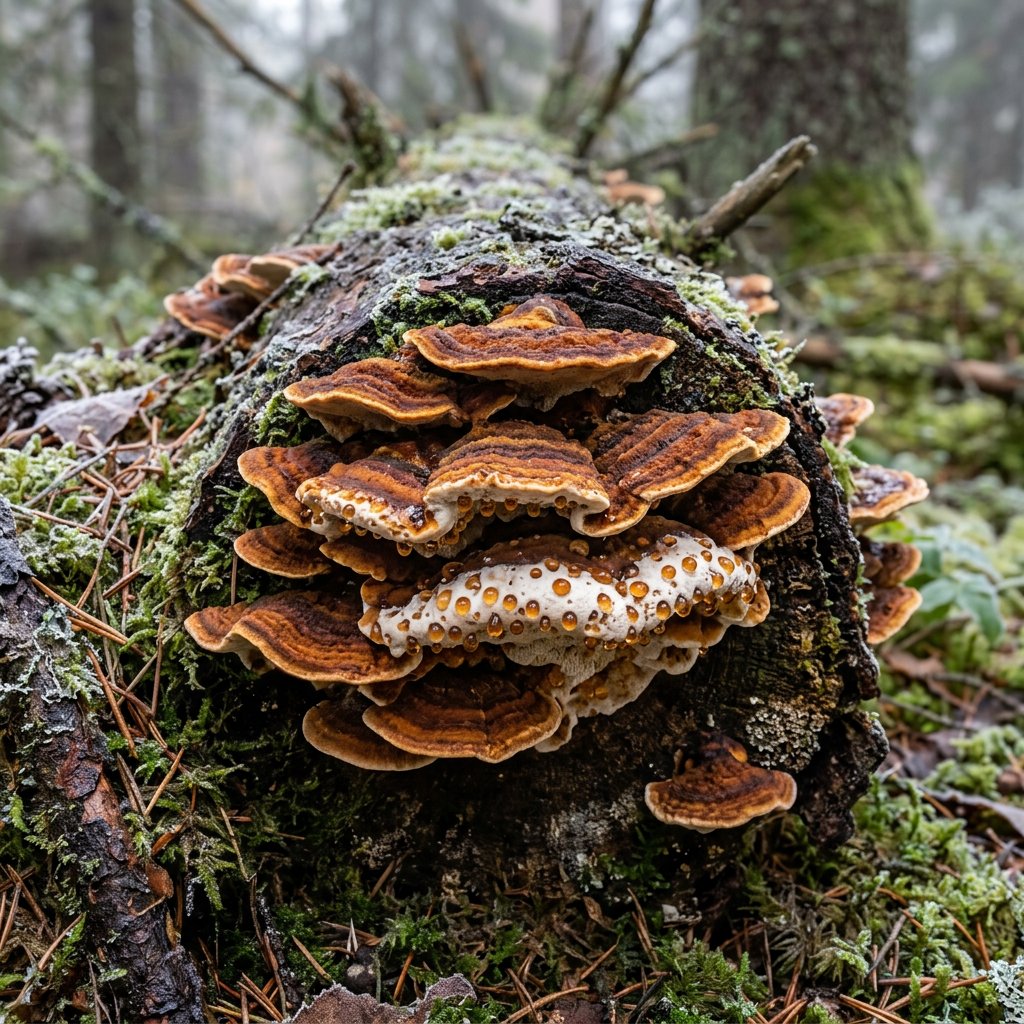
Known as the Benzoin Bracket or Resinous Polypore, this striking mushroom looks like a piece of charred wood or dark chocolate resting against a tree trunk. In its youth, it is remarkably soft and "weeps" amber-colored droplets, making it appear as though it is perspiring forest syrup—a process known as guttation.
🔍 How to Identify
- 🟤 The Cap: Semicircular or fan-shaped, featuring deep velvety brown or blackish zones. The growing edge is often thicker and lighter in color, ranging from cream to ochre.
- 💧 Guttation: When fresh and actively growing, the mushroom exudes clear to amber-colored liquid droplets from its pores and upper surface.
- 🍄 Texture Change: It begins its life soft, succulent, and heavy with moisture, but as it matures, it dries out to become hard, corky, and brittle.
🌲 Habitat & Ecology
- 🌲 Conifer Companion: This fungus is a specialist that primarily grows on the dead stumps, logs, and fallen trunks of conifers, particularly Spruce, Pine, and Fir.
- 🍂 The Recycler: It plays a vital role in the forest ecosystem as a "white rot" fungus, meaning it breaks down the tough lignin and cellulose of dead wood, returning nutrients to the soil.
- ❄️ Seasonal Cycle: It typically appears in late summer and autumn, but because of its tough, woody structure, the blackened brackets can often be seen persisting through the winter months.
⚠️ Safety & Toxicity
- 🚫 Status: WARNING: NOT EDIBLE.
- 👅 Details: While not known to be deadly, the Benzoin Bracket is considered inedible due to its extremely tough, corky texture and bitter, unpalatable taste. As with all wild fungi, never consume any mushroom unless you are 100% certain of its identity and safety.
✨ Fun Fact
The name "Benzoinum" refers to its distinct scent; when fresh or bruised, some people detect a faint, pleasant aroma similar to Benzoin resin, a balsamic incense used in perfumes and medicine for centuries.
More Details