Info
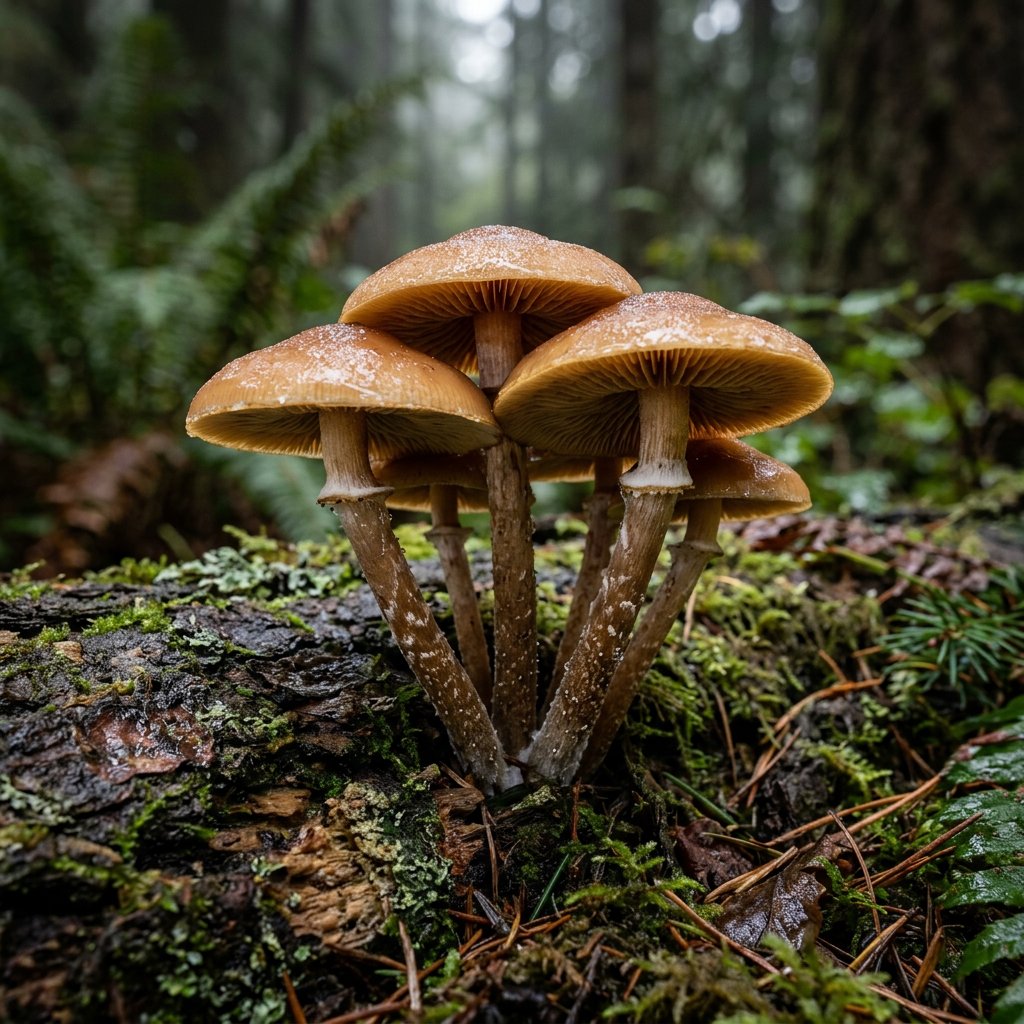
Known as a close relative to the more famous Sheathed Woodtuft, Kuehneromyces marginellus is a modest but fascinating decomposer. Often found huddled in small clusters on decaying wood, this mushroom is a master of disguise, changing its colors dramatically based on how much moisture it has soaked up. While it may look humble, it belongs to a group of fungi that demands extreme respect and caution from even the most seasoned foragers.
🔍 How to Identify
- 🍄 The Cap: Typically small and honey-brown to cinnamon. It is "hygrophanous," meaning it fades to a pale tan as it dries, often leaving a darker ring around the edge like a coffee stain.
- 🍂 The Gills: The gills are crowded and pale yellowish-brown, eventually turning a deeper cinnamon color as the spores mature.
- 🧣 The Stem & Ring: The stem is brownish and often features a thin, delicate ring (annulus) near the top, though this can sometimes disappear as the mushroom ages.
🌲 Habitat & Ecology
- 🪵 Woodland Scavenger: This species is saprobic, meaning it survives by breaking down dead organic matter. You will almost always find it growing directly on well-rotted logs or stumps of broadleaf trees.
- 🌿 Seasonal Appearance: It typically makes its debut in late summer and autumn, taking advantage of the damp, cool conditions of the forest floor to spread its spores.
⚠️ Safety & Toxicity
- 🚨 WARNING: Extremely Dangerous for Amateurs. This mushroom is part of a complex of species that are nearly identical to the Deadly Galerina (Galerina marginata), which contains lethal amatoxins.
- 🚫 Status: It is considered inedible and potentially toxic. Because the microscopic differences between this mushroom and deadly species are so minute, it should never be consumed.
- 🐾 Pets & Kids: Keep curious pets and children away from wood-dwelling "little brown mushrooms" (LBMs), as many species in this category can cause severe organ failure if ingested.
✨ Fun Fact
The term "hygrophanous"—which describes this mushroom’s color-changing cap—comes from the Greek words for "moisture" and "appearing." When it rains, the mushroom looks like a dark, glossy gem, but in a dry spell, it can look like an entirely different, pale species!
More Details







