Info
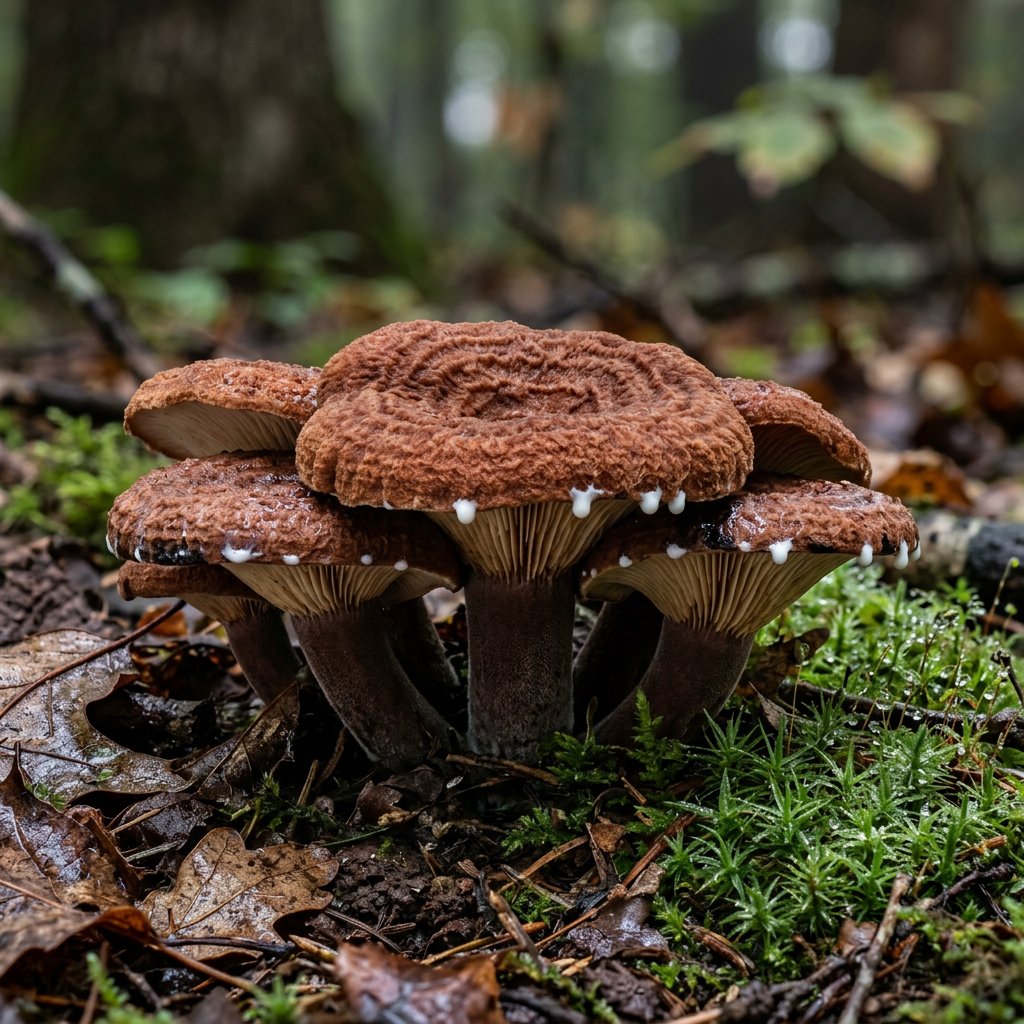
Known as the Corrugated-cap Milky, this mushroom looks like it was crafted from fine, dark cinnamon-colored suede. It is a favorite among woodland foragers for its substantial weight and the dramatic amount of white "milk" it produces when sliced. In the world of forest fungi, it’s often seen as the more rugged, wrinkled cousin of the smooth-capped Lactarius volemus.
🔍 How to Identify
- 🍄 The Cap: Deeply wrinkled (corrugated) surface, especially near the edges. It has a dry, velvety texture and ranges from dark reddish-brown to a burnt-orange hue.
- 🍦 The Gills: Close together and pale yellowish-cream. They stain a distinct dark brown almost immediately when touched or bruised.
- 🥛 The Latex: When cut, the mushroom exudes a thick, sticky white "milk" (latex) that remains white but stains the gills and flesh brown as it dries.
- 📏 The Stem: Solid and thick, usually the same color as the cap or slightly paler, without any ring or veil remnants.
🌲 Habitat & Ecology
- 🌳 Hardwood Companion: This mushroom is mycorrhizal, meaning it lives in a symbiotic "sugar-for-minerals" trade with trees. It specifically favors Oak and Beech forests.
- 🍂 Summer Resident: You are most likely to spot these pushing through leaf litter during the humid months of mid-summer through early autumn, especially after heavy rains.
⚠️ Safety & Toxicity
- 🛑 WARNING: Never consume any wild mushroom unless identified by a professional. While Lactarius corrugis is considered a "choice" edible by many experts, the Lactarius genus contains several species that cause severe digestive distress.
- 🧪 The Taste Test: Foragers often check for "acridity" (peppery bitterness), but this is not a foolproof safety test for beginners.
- 🐾 Pet Safety: Keep dogs away from these in the woods; while not typically "deadly" like the Destroying Angel, ingestion of wild milk-caps can cause vomiting and lethargy in pets.
✨ Fun Fact
The "milk" produced by this mushroom is so abundant that if you nick the gills of a fresh specimen, it can actually drip off the mushroom like heavy cream! This latex was historically studied for its unique chemical properties and natural rubber-like compounds.
More Details
| Hymenium Type | Lamella |
| Stipe Character | Bare Stipe |
| Spore Print Color | White |
| Hymenium Attachment | Adnate Hymenium Attachment |
| Mushroom Ecological Type | Mycorrhiza |







