Info
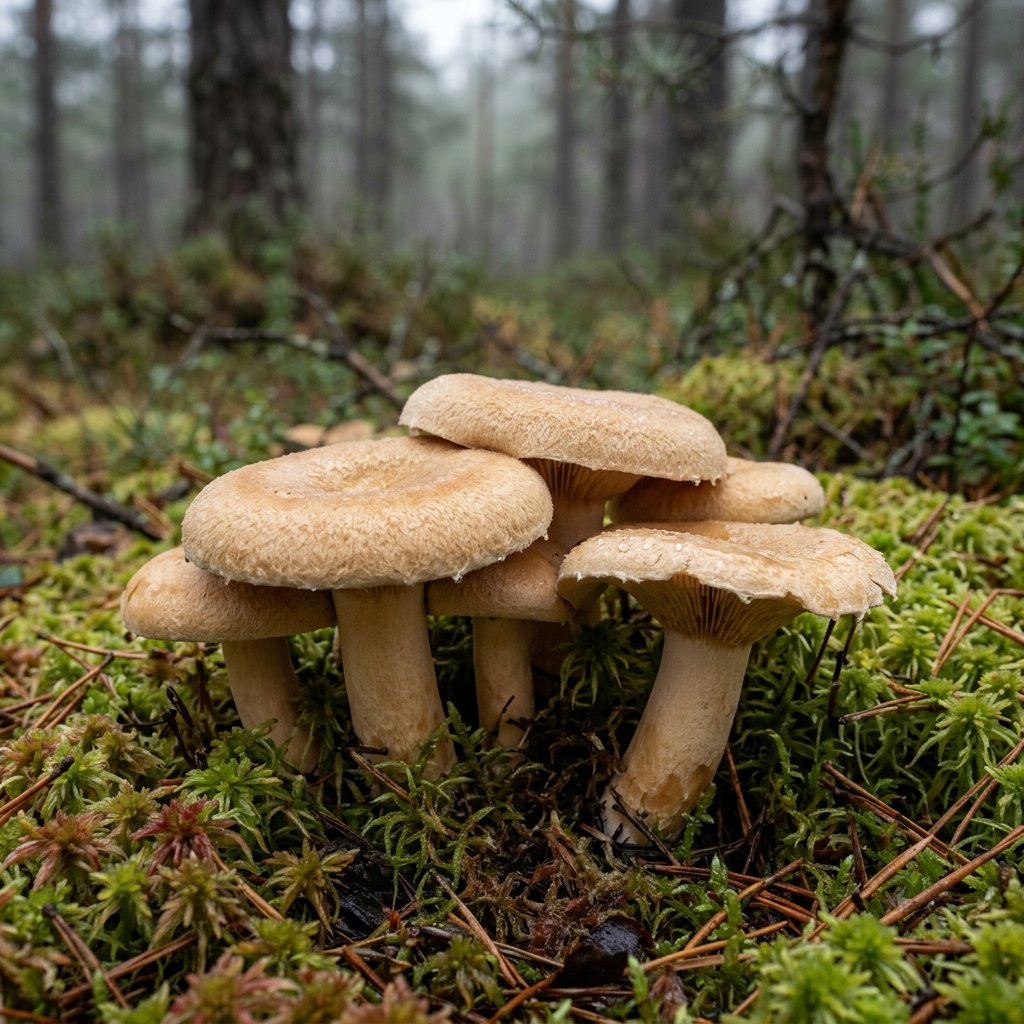
Known as the Fen Sowgill, this mushroom is a master of olfactory illusion. While many fungi smell earthy or damp, the Fen Sowgill fills the air with the intense, mouth-watering aroma of spicy curry or sweet maple syrup as it begins to dry. It is a specialist of the wetlands, often found hiding among carpets of moss in damp, acidic woodlands.
🔍 How to Identify
- 🍄 The Cap: The cap is velvety and matte, ranging in color from a pale ochre to a warm pinkish-buff. It typically starts convex and flattens out, often developing a shallow, bowl-like depression in the center.
- 💧 The "Milk": A key identifier is its latex. Unlike many of its "Milkcap" cousins that bleed thick white or yellow liquid, this mushroom produces a clear, watery sap when the gills are cut or bruised.
- 🍂 The Gills: The gills are crowded and slightly "decurrent," meaning they begin to run down the top of the stem. They transition from a pale cream color to a deeper cinnamon-tan as the mushroom matures.
🌲 Habitat & Ecology
- 🛶 Wetland Specialist: This fungus is highly specialized, preferring the damp, acidic embrace of sphagnum moss. You will almost always find it in peat bogs, heaths, or marshy woodlands, usually forming a partnership with Pine or Birch trees.
- 🌫️ Humidity Indicator: It thrives in areas where the ground remains consistently saturated. If you spot a patch of Fen Sowgills, it is a reliable sign that the soil is quite acidic and the local ecosystem is relatively undisturbed.
⚠️ Safety & Toxicity
- 🚫 WARNING: Toxic. Although its scent is incredibly inviting, the Fen Sowgill is not safe for consumption.
- 🤢 Details: It contains irritating compounds that can cause severe gastrointestinal distress, including nausea and vomiting. Because the dried mushroom smells so strongly of food (like fenugreek or curry), it can be particularly tempting for curious pets. It should be treated as a "look but don't taste" species.
✨ Fun Fact
The intense "curry" smell of this mushroom is caused by a chemical compound called sotolon. This is the exact same molecule used by food scientists to create artificial maple syrup flavoring and is also found in high concentrations in fenugreek seeds!
More Details
| Hymenium Type | Lamella |
| Stipe Character | Bare Stipe |
| Spore Print Color | Tan |
| Mushroom Cap Shape | Depressed Mushroom Cap |
| Hymenium Attachment | Decurrent Hymenium Attachment |
| Mushroom Ecological Type | Mycorrhiza |