Info
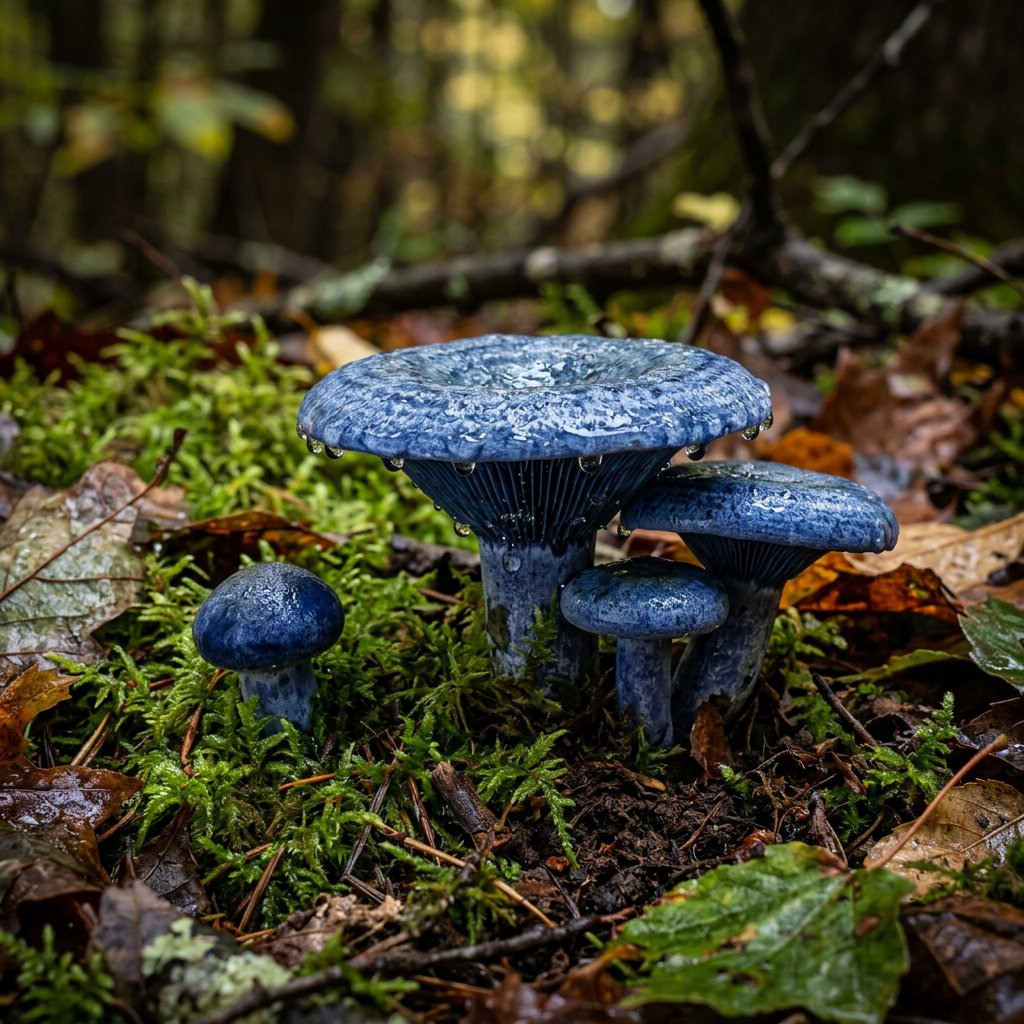
Known as the Indigo Milk Cap, this mushroom looks like something plucked straight from a fantasy forest. With its vibrant denim-blue hue and circular patterns, it stands out against the forest floor like a sapphire. In many cultures, particularly in Mexico and Central America, it is a prized find for the dinner table, often sold in vibrant heaps at traditional markets.
🔍 How to Identify
- 🌀 The Zonate Cap: The cap is typically 5 to 15 cm wide and features distinctive concentric circles of darker and lighter blue. As it ages, the center often sinks, giving it a funnel-like shape.
- 💧 Indigo Latex: This is its most famous trait. If you slice the gills or the flesh, a thick, deep blue "milk" or latex will bleed out. This liquid is the mushroom's primary defense and will slowly turn dark green when exposed to the air.
- 🕸️ Blue Gills: The gills are crowded and share the same brilliant blue color as the cap. They are "decurrent," meaning they run slightly down the length of the stem.
🌲 Habitat & Ecology
- 🌳 Tree Partners: This mushroom is mycorrhizal, meaning it lives in a symbiotic "handshake" with trees. You’ll typically find it growing on the ground near oaks or pines, as it swaps soil nutrients for sugars from the tree's roots.
- 🍂 Forest Floor: It prefers the humid months of mid-summer to late autumn. It often hides under heavy leaf litter or pine needles, sometimes appearing as a "mushrump"—a small mound of earth pushed up by the emerging cap.
⚠️ Safety & Toxicity
- 🛑 WARNING: Never eat any wild mushroom unless you are 100% certain of its identity. While Lactarius indigo is a widely recognized edible species, it belongs to a large family of "Milk Caps," some of which can cause severe stomach upset.
- 🍄 Preparation: It is considered a "choice" edible with a firm, meaty texture. However, foragers should be aware that the brilliant blue color usually fades to a duller, silvery-grey when the mushroom is cooked.
✨ Fun Fact
The indigo milk of this mushroom is so potent that it has been used as a natural dye for textiles and even as a primitive ink for writing and painting!
More Details
| Hymenium Type | Lamella |
| Stipe Character | Bare Stipe |
| Spore Print Color | Yellow |
| Mushroom Cap Shape | Depressed Mushroom Cap |
| Hymenium Attachment | Adnate Hymenium Attachment |
| Mushroom Ecological Type | Mycorrhiza |