Info
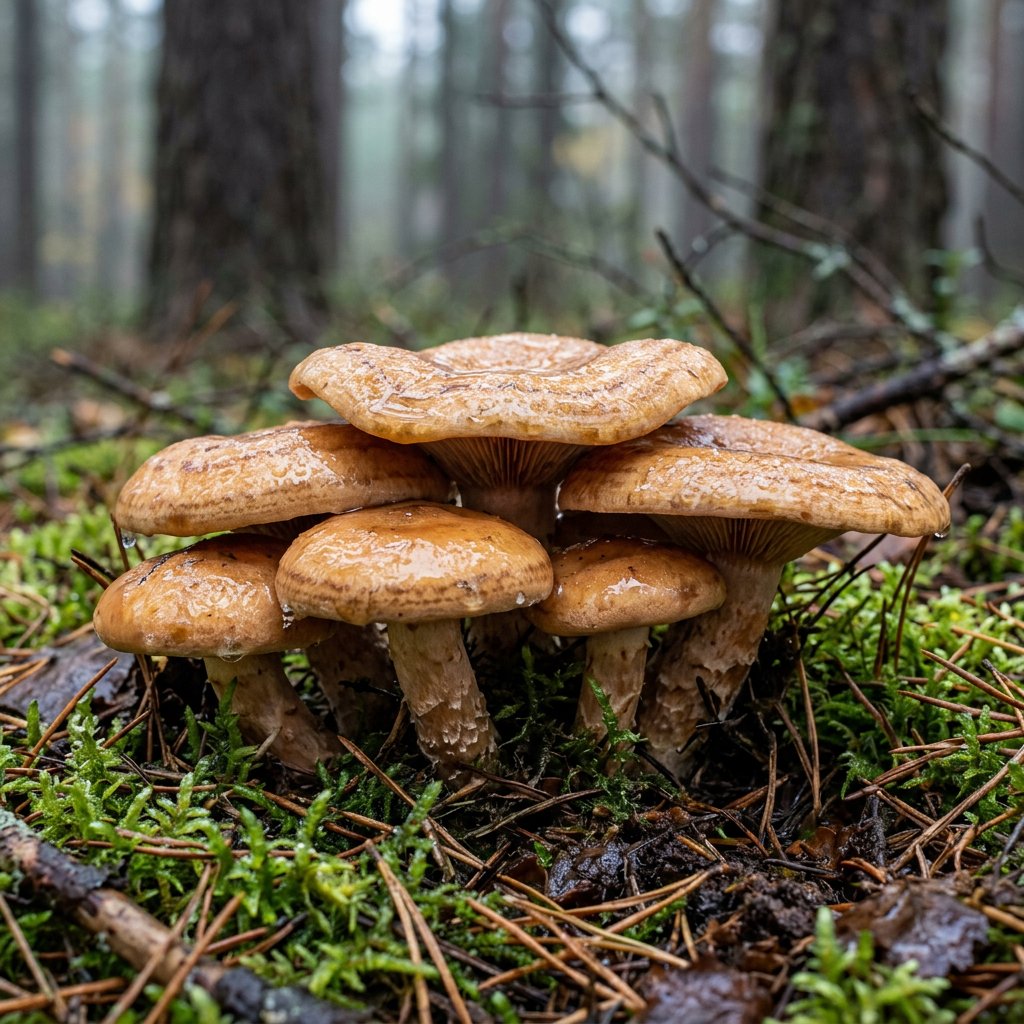
Often called a "ghostly" inhabitant of the forest, Lactarius musteus is a subtle, pale mushroom that blends seamlessly into the misty pine barrens it calls home. Known for its sticky texture and the characteristic "milk" it exudes when cut, this species is a specialist of acidic soils and ancient pine stands.
🔍 How to Identify
- 🍄 The Cap: Typically smooth and distinctly slimy or viscid when damp. Its color is a muted, pale grey-buff or clay-tan, often appearing slightly "frosted" at the edges.
- 🥛 The Latex: Like all milkcaps, it "bleeds" a white, milky sap when the gills are damaged. In this species, the milk remains white and does not change color when exposed to air.
- 🍦 The Gills: The gills are crowded and pale, starting almost white and maturing to a soft cream or buff color, slightly running down the stem.
🌲 Habitat & Ecology
- 🌲 Pine Specialist: This mushroom forms a vital symbiotic (mycorrhizal) relationship with pine trees (Pinus). It helps the trees absorb nutrients while receiving sugars in return.
- 🌫️ Acidic Grounds: It prefers poor, sandy, or boggy soils. You are most likely to find it tucked among mosses or heather in damp, cool pine forests during late summer and autumn.
⚠️ Safety & Toxicity
- 🚨 WARNING: Lactarius musteus is generally classified as inedible and should not be consumed.
- 👅 Bitter Defense: The flesh and the milky sap have a very acrid, peppery, or bitter taste. While not known to be "deadly," eating it can cause significant stomach upset and gastrointestinal distress.
- 🐾 Pet Safety: Keep curious dogs away from these mushrooms during forest walks, as the acrid compounds can irritate their digestive tracts.
✨ Fun Fact
The "milk" inside this mushroom isn't just for identification; it acts as a high-tech security system! The sticky latex can actually glue the mouthparts of predatory insects together, effectively stopping them from eating the mushroom before they can do any real damage.
More Details







