Info
Known as the Bleeding Milkcap, this striking fungus is one of the most dramatic treasures of the forest floor. It earns its name from the deep, beet-red "milk" (latex) that oozes from its gills when cut, looking more like a scene from a gothic fairy tale than a mushroom. This species is a vital partner to the forest, living in a symbiotic "mycorrhizal" relationship with conifers.
🔍 How to Identify
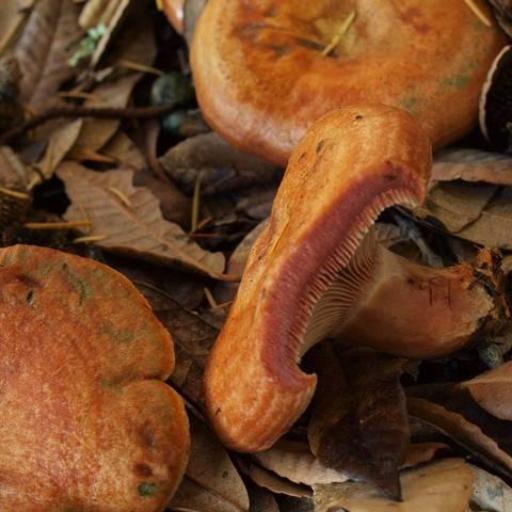
- 🎨 The "Bleeding" Latex: When the gills are cut or bruised, they exude a thick, dark maroon or wine-red fluid. Unlike some of its relatives, this milk starts red rather than turning red from orange.
- 🍄 Zonate Cap: The cap is typically orange to reddish-brown, often marked with faint concentric circles (zones) and a shallow, funnel-like depression in the center as it matures.
- 🦠 Green Bruising: A key identification feature is the "verdigris" (copper green) staining. Anywhere the mushroom is handled, or where the red milk has dried, the flesh will eventually turn a distinct, moldy-looking green.
🌲 Habitat & Ecology
- 🤝 Tree Symbiosis: You will almost exclusively find this mushroom growing near Douglas firs and occasionally other conifers. It helps the tree absorb water and minerals in exchange for sugars.
- 🍂 The Hidden Harvest: It prefers the cool, damp forest floors of Western North America. It often hides under "duff" (fallen needles and leaves), requiring a keen eye to spot the orange caps peeking through the brown debris.
⚠️ Safety & Toxicity
- 🛑 WARNING: Never consume any wild mushroom unless you have identified it with 100% certainty alongside an expert.
- 🍴 Edibility: Lactarius rubrilacteus is considered a "choice" edible by foragers, prized for its firm texture and nutty flavor. However, it can be easily confused with other "Milkcaps" that cause severe stomach upset.
- 🤢 Preparation: Like many wild mushrooms, it must be cooked thoroughly. Eating it raw or undercooked can lead to digestive distress in sensitive individuals.
✨ Fun Fact
- 🧪 Chemical Magic: The dramatic color change from deep red to forest green is a result of the mushroom's unique enzymes oxidizing when they hit the air—a process very similar to how a copper penny turns green over time!
More Details
| Hymenium Type | Lamella |
| Stipe Character | Bare Stipe |
| Spore Print Color | Cream |
| Mushroom Cap Shape | Convex Mushroom Cap |
| Hymenium Attachment | Decurrent Hymenium Attachment |
| Mushroom Ecological Type | Mycorrhiza |







