Info
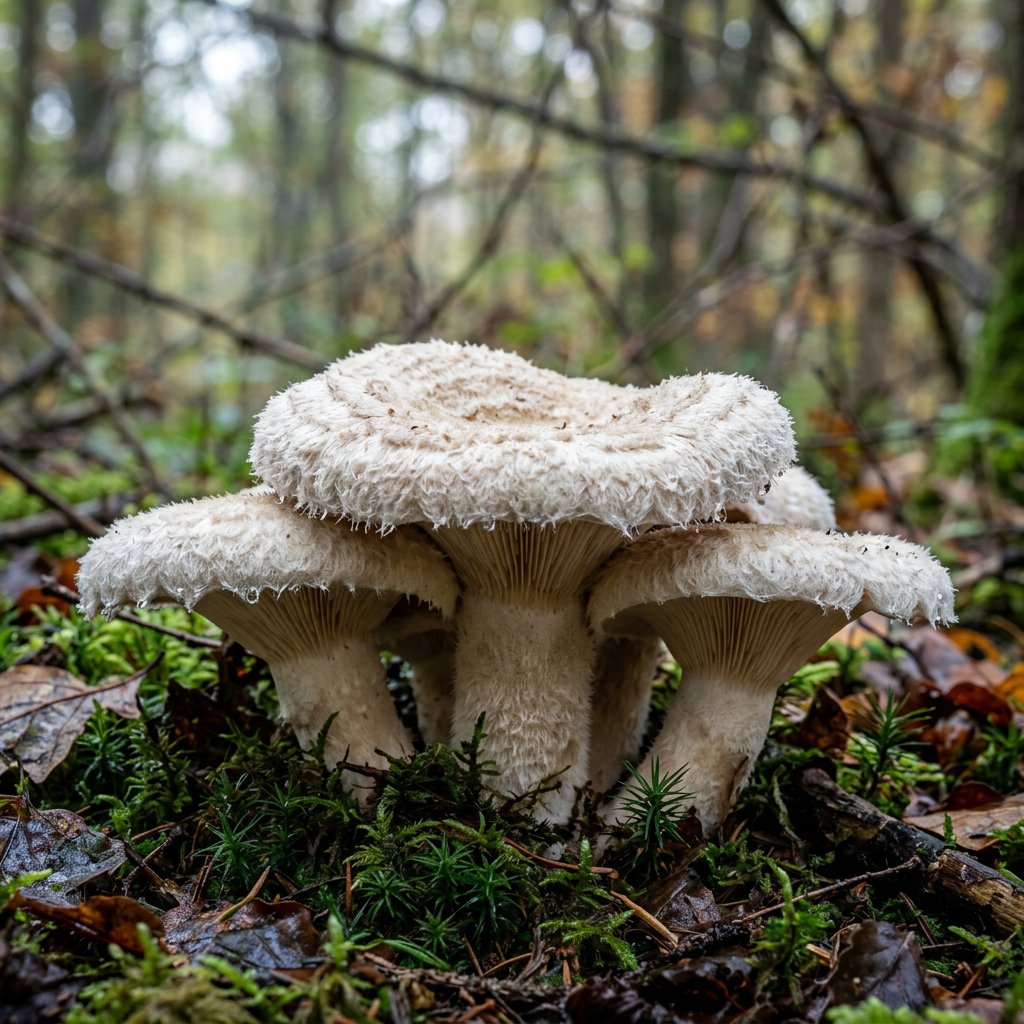
Often called the Fleecy Milkcap, this fungal giant looks like a lost, woolly cloud resting on the forest floor. It belongs to the Lactarius genus, a group famous for "bleeding" a milky substance when damaged. While its massive size and soft texture might look inviting, this mushroom hides a fiery secret that keeps most foragers at a distance.
🔍 How to Identify
- ☁️ The Cap: This mushroom is huge, sometimes reaching 30cm across. It starts convex but eventually forms a deep funnel shape. The surface is dry, matte, and covered in tiny hairs that give it a "fleecy" or velvety feel.
- 🥛 The Latex: If you nick the gills, the mushroom exudes a thick, white "milk." Unlike some of its cousins, this milk stays white and does not change color when exposed to air, though it is incredibly acrid to the taste.
- 📏 The Gills & Stem: The gills are creamy-white and relatively far apart (distant). The stem is short, stout, and incredibly firm, often feeling as solid as a piece of wood.
🌲 Habitat & Ecology
- 🌳 Tree Partners: The Fleecy Milkcap is mycorrhizal, meaning it lives in a symbiotic relationship with trees. It is most commonly found in broadleaf woodlands, specifically forming bonds with Beech and Oak.
- 🍂 Leaf Litter: It typically appears from late summer through autumn. Because of its sheer strength, it is often seen pushing through heavy layers of soil and dead leaves, sometimes emerging with "hats" of dirt still stuck to its cap.
⚠️ Safety & Toxicity
- 🚫 WARNING: The Fleecy Milkcap is generally considered inedible.
- 🔥 The Burn: The flesh and milk contain potent irritants. If tasted, it produces an intense, peppery "burn" on the tongue. If swallowed, it can cause severe gastrointestinal distress, including stomach cramps and vomiting.
- 🐾 Pet Safety: While it isn't usually deadly, the chemical irritants can be very painful for pets. Ensure dogs do not snack on these during woodland walks.
✨ Fun Fact
- 🧪 Chemical Defense: The name vellereus comes from the Latin word for "fleecy." Scientists believe its woolly texture and fiery chemical "milk" evolved as a dual-layered defense system to stop slugs and insects from eating it!
More Details







