Info
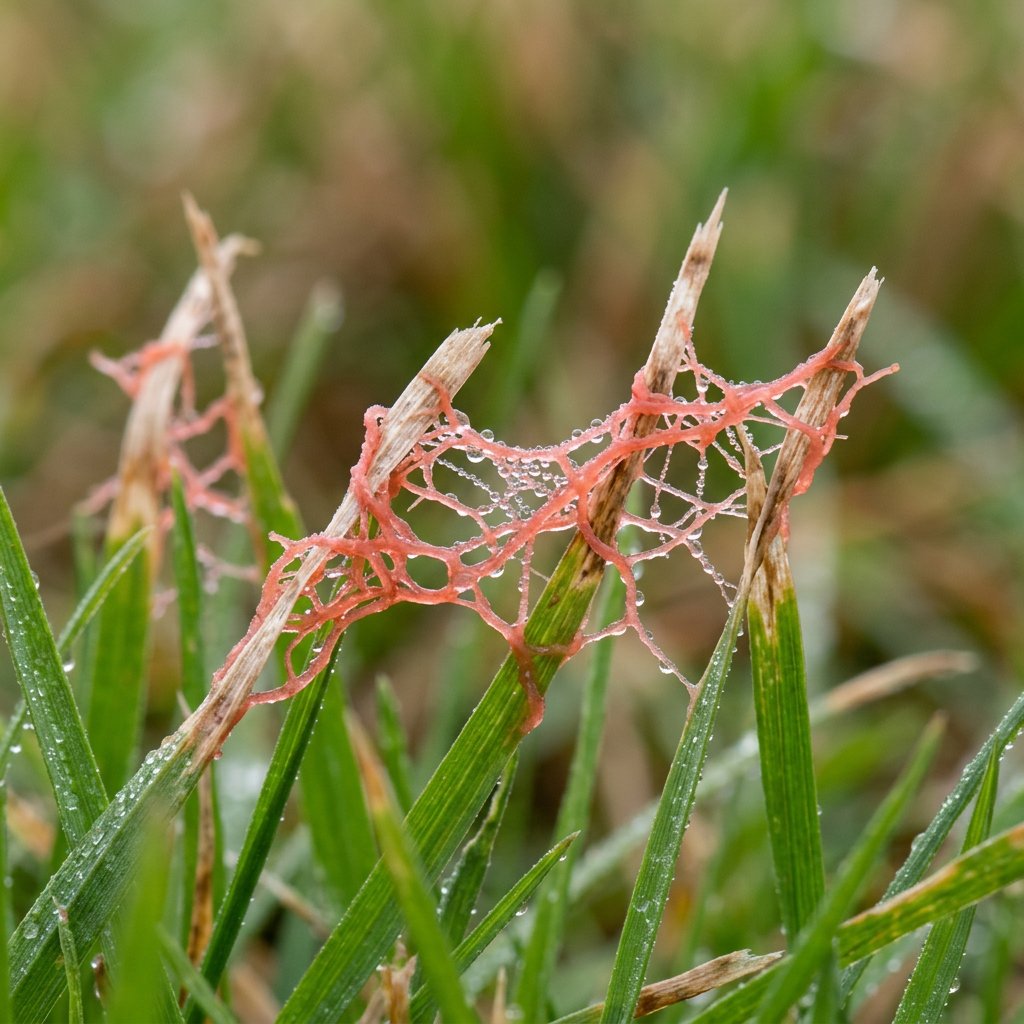
Often appearing like a splash of neon pink paint or delicate coral strands tangled in your lawn, Laetisaria fuciformis—commonly known as Red Thread—is more of a landscape artist than a traditional mushroom. While it doesn't produce the typical cap-and-stem shape we expect, this fungus is a fascinating example of how nature reacts to specific weather patterns and soil health, often turning a dull green backyard into a pastel pink meadow overnight.
🔍 How to Identify
- 🧶 Neon Threads: The most distinct feature is the "sclerotia"—antler-like, bright pink or reddish brittle threads that extend from the tips of grass blades.
- ☁️ Cottony Mycelium: In very humid conditions, you may see a pale pink, fuzzy growth that looks like tiny tufts of cotton candy clinging to the turf.
- 🍂 Straw-Like Patches: From a distance, the affected grass looks bleached or tan, but upon closer inspection, the pink structures are woven through the dead-looking blades.
🌲 Habitat & Ecology
- 💧 The Perfect Storm: This fungus thrives in cool, wet environments (usually between 60°F and 75°F). It is most common during long periods of spring rain or heavy autumn dew when the grass stays wet for hours.
- 🌱 A Sign of Hunger: Laetisaria is an "opportunistic" pathogen. It primarily attacks lawns that are low in nitrogen. If you see it appearing, your grass is likely "hungry" and needs a boost of nutrients to outgrow the infection.
- 🌾 Grass Preferences: It isn't picky, but it particularly loves Red Fescue, Ryegrass, and Kentucky Bluegrass, often spreading via lawnmowers or foot traffic.
⚠️ Safety & Toxicity
- ✅ Status: NOT TOXIC. Unlike many fungi, Red Thread is considered harmless to humans, dogs, and cats.
- 🛡️ Lawn Safety: While it looks dramatic, it rarely kills the grass entirely. It mostly lives on the surface of the blades. Your lawn isn't "dying"; it's just having a bad hair day that can usually be fixed with proper fertilization.
✨ Fun Fact
The "threads" of Laetisaria are incredibly hardy; they can dry out completely and remain dormant in the thatch of your lawn for years, "waking up" the moment the temperature and moisture levels are exactly to their liking!
More Details