Info
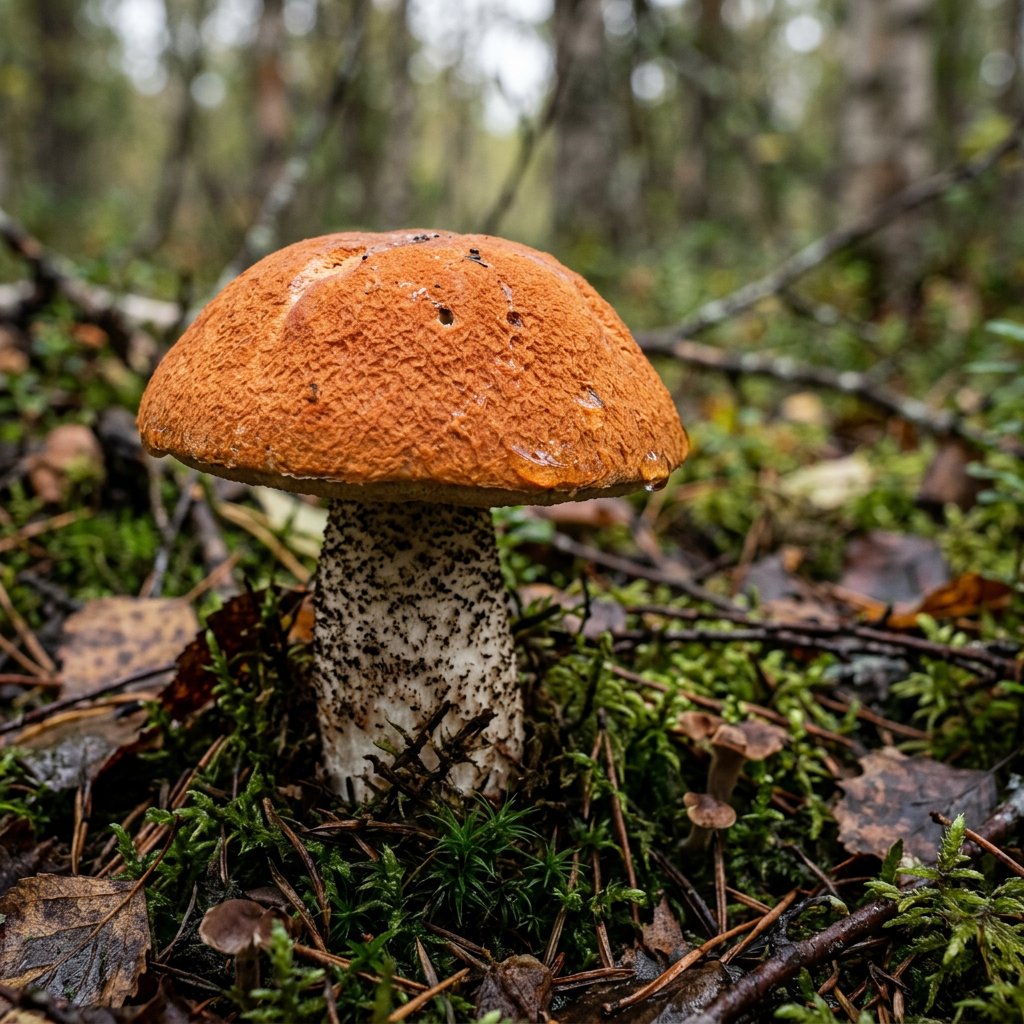
The Orange Birch Bolete is a striking forest inhabitant often found peeking through fallen autumn leaves. Known for its vibrant, sunset-colored cap, it looks like a storybook mushroom come to life under the canopy of its favorite trees. While it is a popular find for foragers across Europe and North America, it is a "shapeshifter" that requires careful identification and preparation.
🔍 How to Identify
- 🍄 The Cap: A bold orange to brick-red dome that can grow up to 20cm wide. The surface is dry and slightly velvety to the touch, often with a tiny "overhang" of skin at the very edge of the cap.
- 🌫️ The Pores: Instead of gills, the underside features a sponge-like layer of tiny tubes. These start out off-white or pale gray and slowly turn a dingy brown as the mushroom ages.
- 🦓 The Stem: A tall, sturdy, white stalk covered in distinctive blackish-brown "scabers" (small, rough scales). These give the stem a textured, shaggy appearance similar to a birch tree's bark.
🌲 Habitat & Ecology
- 🌳 The Birch Connection: This fungus is strictly mycorrhizal with Birch trees (Betula species). It lives in a symbiotic relationship with the tree's roots, exchanging nutrients for sugars.
- 💧 Damp Ground: You will most likely find them in damp, acidic soils at the edges of woodlands, heaths, or even in suburban gardens, provided there is a Birch tree nearby to host them.
⚠️ Safety & Toxicity
- 🛑 WARNING: Never eat this mushroom raw. Leccinum versipelle contains compounds that cause severe nausea, vomiting, and stomach cramps if not destroyed by high heat.
- 🍳 Preparation: Even when cooked, the flesh undergoes a dramatic chemical reaction, turning from white to an unappetizing ink-black. It must be cooked thoroughly (at least 15-20 minutes) to be safe for consumption. Some individuals may still experience sensitivity even after cooking.
✨ Fun Fact
- ✨ The species name versipelle translates from Latin to "changing skin" or "turn-coat." This refers to the mushroom's dramatic bruising reaction; when sliced, the white flesh quickly blushes pink, then turns a bruised blue-gray, before finally settling on a deep charcoal black.
More Details
| Mushroom Cap Shape | Semi-Spherical Mushroom Cap |







