Info
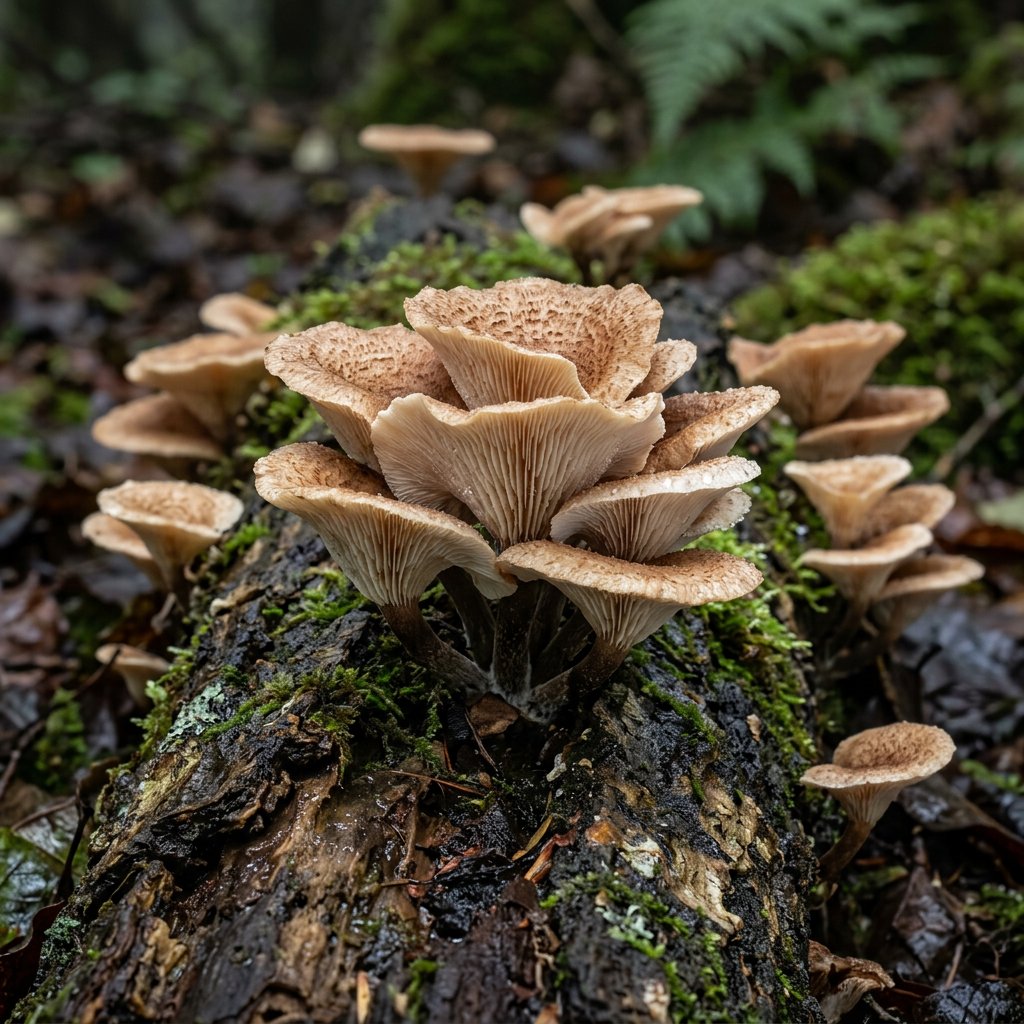
Known as a resilient wood-decaying fungus, Lentinus flexipes is a master of recycling. Often found clinging to fallen hardwood in tropical and subtropical forests, this mushroom is recognized for its "flexible foot" and leathery texture. While it doesn't have the magical folklore of a Toadstool, it plays a vital role in the forest's lifecycle, turning old wood back into nutrient-rich soil.
🔍 How to Identify
- 🍄 The Cap: Usually funnel-shaped or deeply depressed in the center, ranging from cream to tan or pale ochre. The surface often feels slightly velvety or scaly when young.
- 🥢 The Gills: Very thin and crowded, these gills are "decurrent," meaning they run significantly down the length of the stem.
- 🏷️ The Stem (Stipe): This is the namesake feature—"flexipes" refers to its flexible, tough, and often curved stem. It is usually attached slightly off-center to the cap.
🌲 Habitat & Ecology
- 🪵 Wood Recycler: This fungus is saprotrophic, meaning it feeds on dead organic matter. You’ll almost always find it growing on decaying logs, stumps, or buried branches of broadleaf trees.
- 🌧️ Rainy Season Regular: It thrives in high humidity and warmth. After heavy tropical rains, these mushrooms can appear in large clusters, acting as "clean-up crews" for the forest floor.
⚠️ Safety & Toxicity
- 🚫 WARNING: Do not consume. While Lentinus flexipes is not widely documented as "deadly" like some Amanitas, it is generally considered inedible due to its extremely tough, leathery, and cork-like consistency.
- 🧤 General Caution: Many wood-growing mushrooms have toxic look-alikes. Ingesting unidentified wild mushrooms can lead to severe gastrointestinal distress or worse. Always admire this species from a distance or through a camera lens.
✨ Fun Fact
The genus name Lentinus comes from the Latin word "lentus," which means "pliant" or "tough." This refers to the fact that unlike the common button mushrooms in your grocery store, these mushrooms don't easily snap—they bend!
More Details







