Info
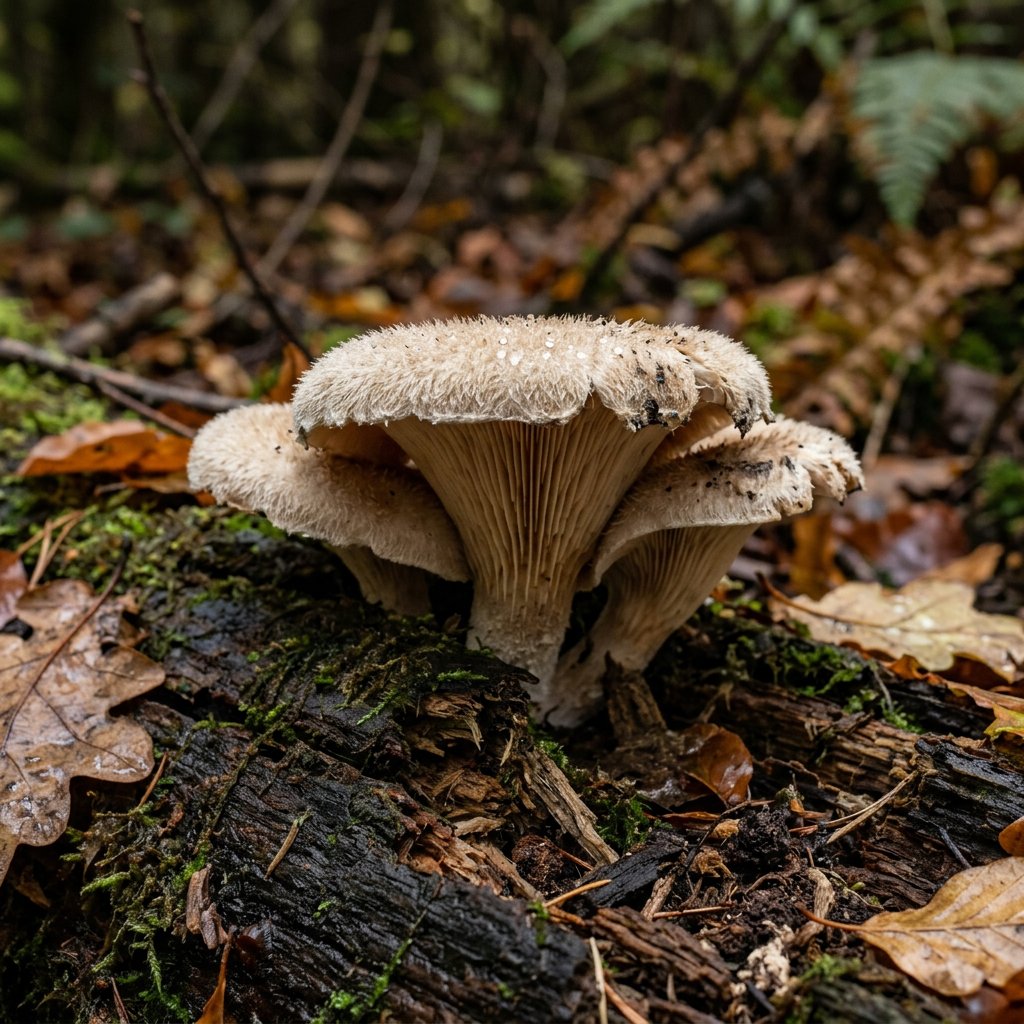
Often called the Tough Lentinus, this mushroom is a true giant of the hardwood forest. With its velvety, cream-colored cap and sturdy build, it looks like a soft, inviting cushion from a distance, but don't let its appearance fool you—this fungus is as resilient as old leather. It is a master of wood decay, often standing tall on old stumps or high up in tree hollows long after more delicate mushrooms have withered away.
🔍 How to Identify
- 🍄 The Cap: Large and impressive (reaching up to 8–10 inches across), the cap is typically cream to pale tan. Its most striking feature is its "fuzzy" or velvety texture, covered in fine, matted hairs.
- 📜 The Gills: The gills are white to yellowish and are "decurrent," meaning they run significantly down the length of the stem. They are crowded and often have slightly jagged edges.
- 🪵 The Stem: The stalk is thick, solid, and incredibly tough. It is often positioned off-center (eccentric) and shares the same hairy, velvety texture as the cap.
🌲 Habitat & Ecology
- 🌳 Hardwood Specialist: You will almost exclusively find this mushroom growing on decaying hardwoods, particularly beech, maple, and oak. It plays a vital role in the ecosystem by breaking down complex wood fibers.
- ☁️ High-Altitude Fruiting: Unlike many mushrooms that hide in the leaf litter, Lentinus levis is known for fruiting high up on standing dead trees or large logs, making it a favorite for hikers to spot from a distance.
⚠️ Safety & Toxicity
- 🚨 WARNING: While Lentinus levis is not generally classified as a "deadly" poisonous mushroom, it is not considered edible.
- 🦷 Dental Hazard: The flesh is extremely fibrous, corky, and leathery. Attempting to eat it is described as being similar to chewing on a piece of wood or heavy cardboard, which can lead to severe indigestion or choking hazards. Always stick to known, safe culinary mushrooms.
✨ Fun Fact
In the world of scientific naming, this mushroom was a bit of a wanderer! It spent many years classified in the genus Panus before being moved to Lentinus. Its species name, levis, means "smooth" or "light"—an ironic choice given that the mushroom is famously hairy and quite heavy for its size!
More Details







