Info
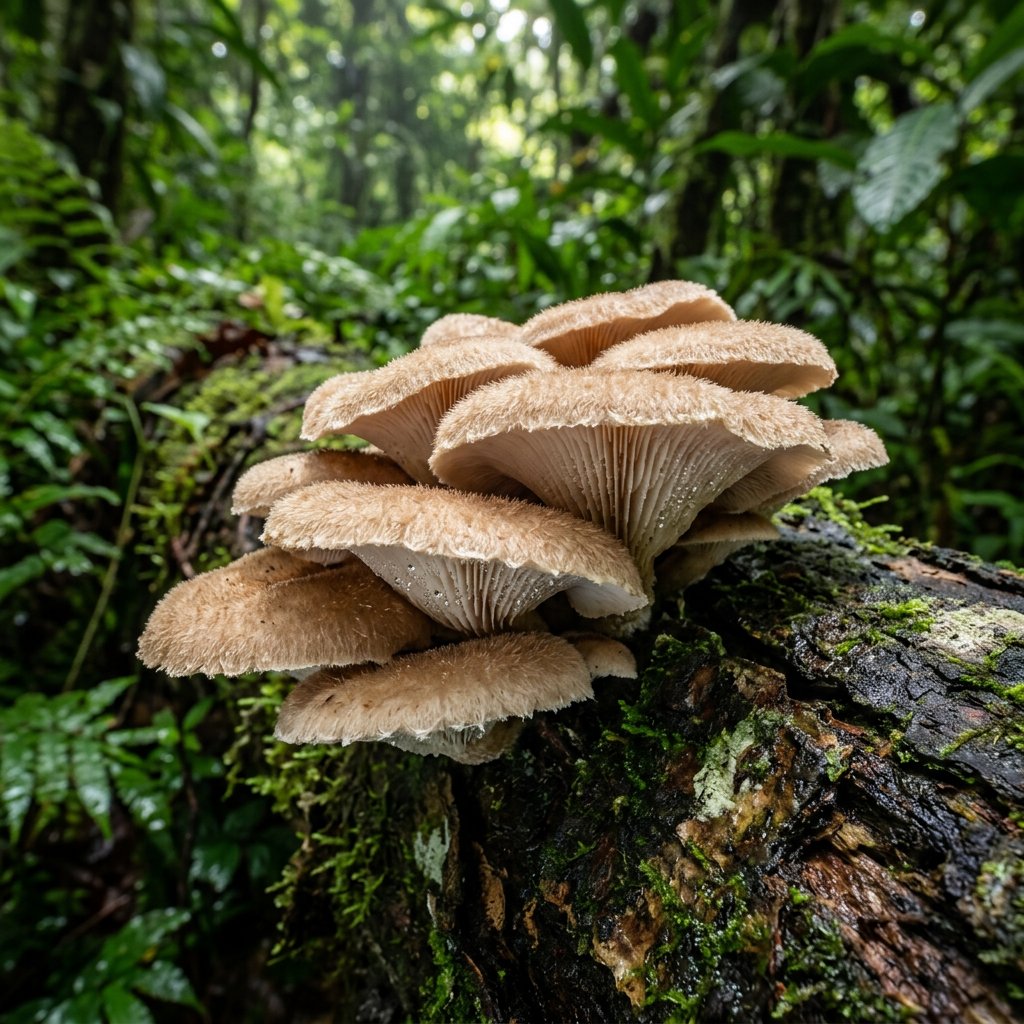
Often called the "Indian Oyster" or "Phoenix Mushroom," Lentinus sajor-caju is a culinary treasure across Southeast Asia, India, and Africa. In the wild, it appears as a graceful, funnel-shaped bloom emerging from decaying logs, acting as one of nature’s most efficient recyclers. While it shares a name with some oyster mushrooms, its unique texture and persistent ring make it a distinct find for foragers.
🔍 How to Identify
- 🍄 The Cap: Smooth and funnel-shaped (infundibuliform), ranging from creamy white to a light grayish-brown. As it matures, the edges often become wavy or slightly split.
- 🥢 The Gills: Very thin, crowded, and "decurrent," meaning they run significantly down the length of the stem.
- 💍 The Stem & Ring: The stem is tough, fibrous, and usually features a small, delicate ring (annulus) near the top—a key feature that distinguishes it from many other lookalikes.
🌲 Habitat & Ecology
- 🪵 Woodland Scavenger: This fungus is a "primary decomposer," specifically a white-rot fungus. You will almost always find it growing on dead or decaying hardwood logs and fallen branches in tropical and subtropical forests.
- 🌧️ Seasonal Flush: It is highly dependent on humidity. It typically fruits in large clusters shortly after heavy tropical rains, taking advantage of the moisture to expand its leathery caps.
⚠️ Safety & Toxicity
- 🍴 Status: EDIBLE, but proper identification is mandatory.
- 🥘 Preparation: While delicious and high in protein, the mushroom becomes extremely "corky" and leathery as it ages. For the best culinary experience, only young, soft specimens should be harvested.
- 🚫 Caution: Always ensure the mushroom was harvested from wood that hasn't been treated with chemicals or pesticides, as fungi can absorb toxins from their substrate.
✨ Fun Fact
In many cultures, Lentinus sajor-caju is used as a natural "meat substitute" because its fibrous texture holds up remarkably well to spicy stir-fries and long-simmering curries without falling apart!
More Details