Info
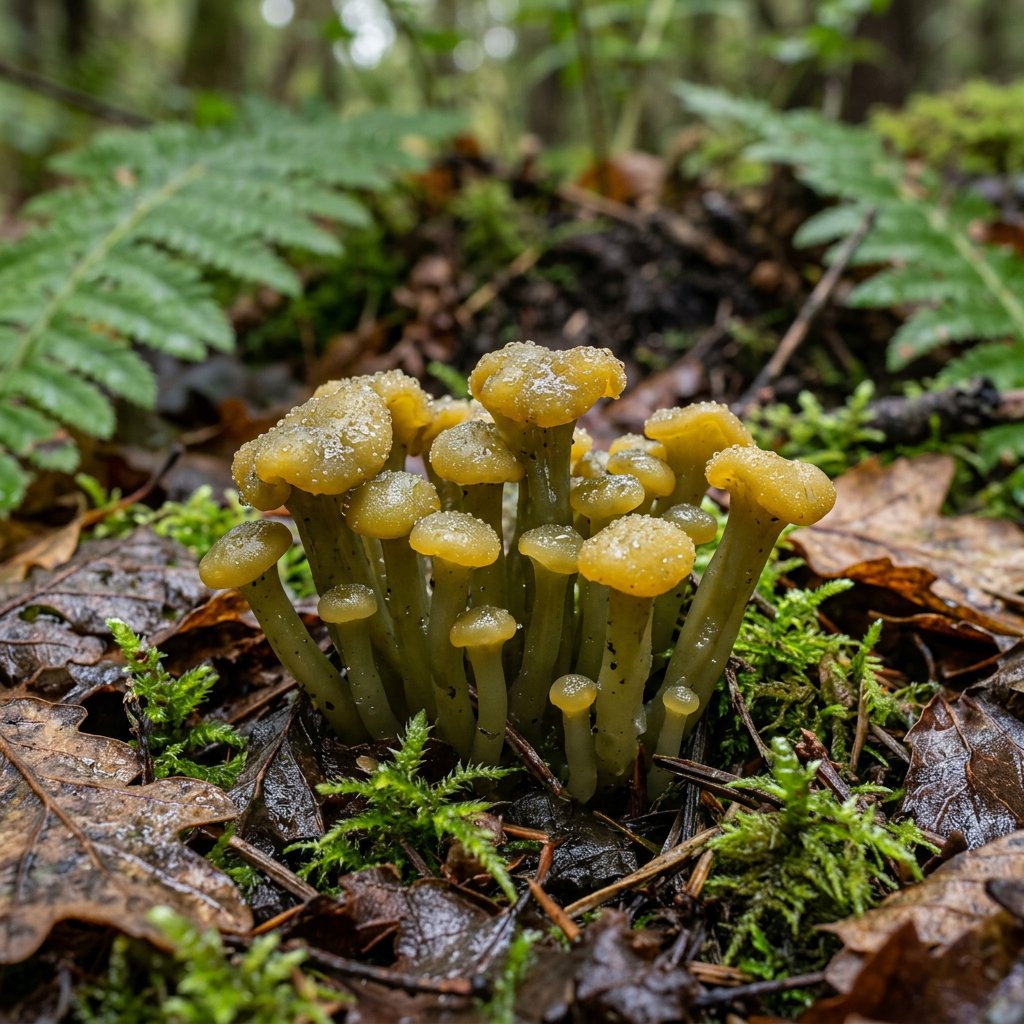
Often called the "Jelly Baby," Leotia lubrica is a whimsical find in damp, shaded woodlands. These tiny fungi look like translucent gummies or miniature, slimy brains scattered across the mossy forest floor. While their bright colors and bouncy texture make them look like woodland candy, they are a fascinating example of "ascomycete" fungi that play a vital role in breaking down organic matter.
🔍 How to Identify
- 🧠 The Cap: A small, irregular, and lobed head that looks wrinkled or brain-like. It is typically yellowish-green, ochre, or dull tan.
- 💧 Texture: True to its name, the entire mushroom is gelatinous and very slippery (lubricous) to the touch, especially in wet weather.
- 🦴 The Stem: A slender, tapering stalk that is often the same color as the cap, though it can sometimes be dotted with tiny green or yellow granules.
🌲 Habitat & Ecology
- 🍂 Forest Dwellers: You will most likely spot these in clusters among moss, damp leaf litter, or well-rotted wood in both broadleaf and coniferous forests.
- ☁️ Moisture Lovers: They thrive in high-humidity environments. If you find a mossy bank near a stream in late summer or autumn, keep your eyes peeled for their translucent glow.
⚠️ Safety & Toxicity
- 🚫 Status: WARNING: NOT EDIBLE. While some older guidebooks listed them as edible, modern research suggests they may contain small amounts of toxins similar to those found in False Morels.
- 🤢 Details: Consuming Jelly Babies can cause severe stomach upset and gastrointestinal distress. Due to their "candy-like" appearance, it is important to keep children and pets away from them during forest walks.
✨ Fun Fact
The scientific name Leotia lubrica is quite literal—Leotia is derived from the Greek word for "smooth," and lubrica is Latin for "slippery." It is essentially the "Slippery Smooth One" of the fungal world!
More Details







