Info
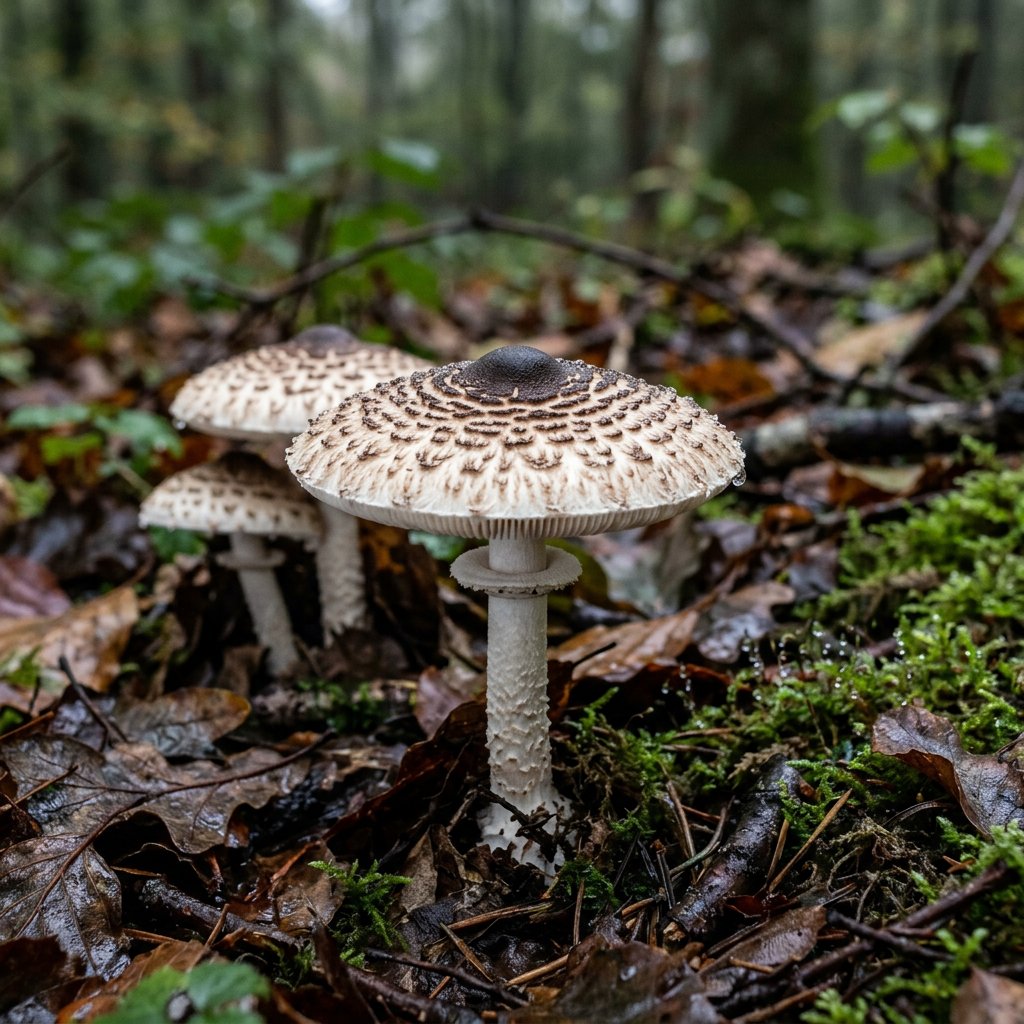
The Lepiota atrodisca, often called the Dark-disk Lepiota, is a tiny, hauntingly beautiful mushroom that looks like a miniature parasol forgotten in the grass. While its delicate, monochromatic pattern makes it a favorite for nature photographers, it carries a dark secret common to many small members of the Lepiota family. It is an elegant but dangerous resident of forest floors and suburban gardens alike.
🔍 How to Identify
- 🎨 The Cap: Small and fragile, the cap features a very distinct, velvety black or dark brown center (the "disk"). As it expands, the dark skin breaks into tiny scales (squamules) scattered over a snowy white background.
- ❄️ The Gills: Underneath, the gills are crowded, thin, and pure white. Crucially, they are "free," meaning they do not actually touch the stem.
- 🦯 The Stem: The stalk is slender, pale, and hollow. It usually features a delicate, skirt-like ring (annulus) near the top, though this ring is so fragile it often falls off or disappears as the mushroom matures.
🌲 Habitat & Ecology
- 🏡 Suburban Resident: Unlike many wild mushrooms that hide deep in the woods, the Dark-disk Lepiota is frequently found in "disturbed" areas, such as garden mulch, well-watered lawns, and urban parks.
- 🌲 Tree Associations: It is particularly common in coastal regions, often appearing in the leaf litter beneath Monterey Cypress, Eucalyptus, or various hardwoods where it helps break down organic matter into rich soil.
- 🍄 Growth Habit: You will rarely find them alone; they usually appear in small, scattered groups shortly after heavy autumn or winter rains.
⚠️ Safety & Toxicity
- 🛑 WARNING: Do not consume. Lepiota atrodisca is considered toxic and potentially deadly.
- 🧪 Amatoxins: Many small species in the Lepiota genus contain amatoxins—the same lethal compounds found in the notorious "Death Cap." These toxins cause severe liver and kidney damage, often with a "false recovery" period where the victim feels better before organ failure begins.
- 🚫 Pet Safety: Because they grow in lawns and gardens, keep a close eye on curious dogs. Small white mushrooms in the grass should always be treated as a high-risk hazard.
✨ Fun Fact
- 📖 Etymology: The name atrodisca is a literal description of its appearance. It is derived from the Latin words ater (black) and discus (a flat circular plate), referring to that unmistakable dark "bullseye" at the center of its cap!
More Details







